Illuminating the Role of Light in Indoor Crop Production
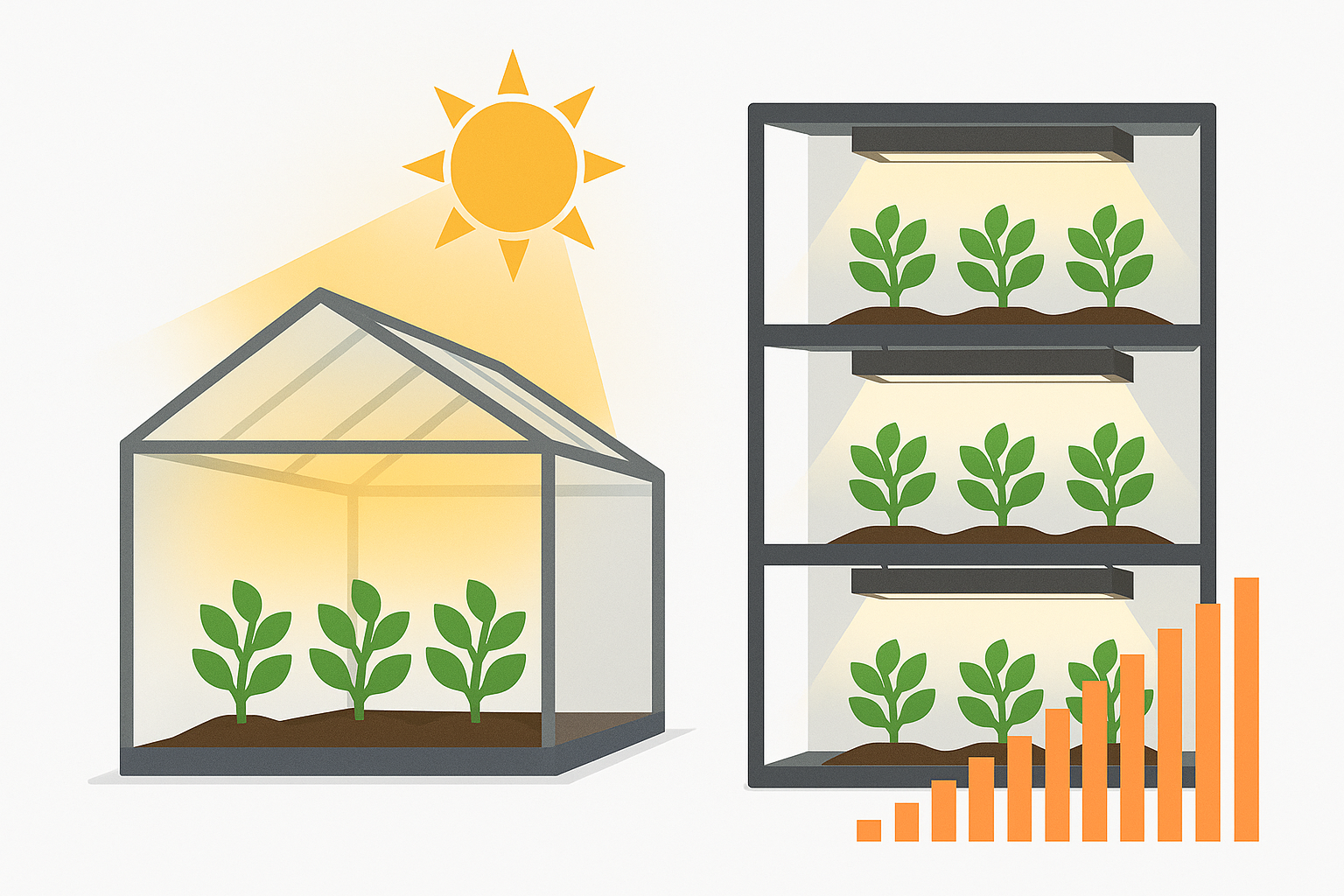
In Controlled Environment Agriculture (CEA) and vertical farming, photobiology (the study of how light affects plant biology) is a foundational discipline. Light is not merely a source of energy for photosynthesis; it is also a powerful environmental signal that governs plant development, morphology, physiology, and metabolism. In this context, the strategic management of artificial lighting systems is central to optimising crop performance indoors. As vertical farms move towards greater precision and efficiency, a solid understanding of photobiology in CEA and vertical farming is vital.
Light Quality, Quantity, Duration, and Direction: Core Parameters
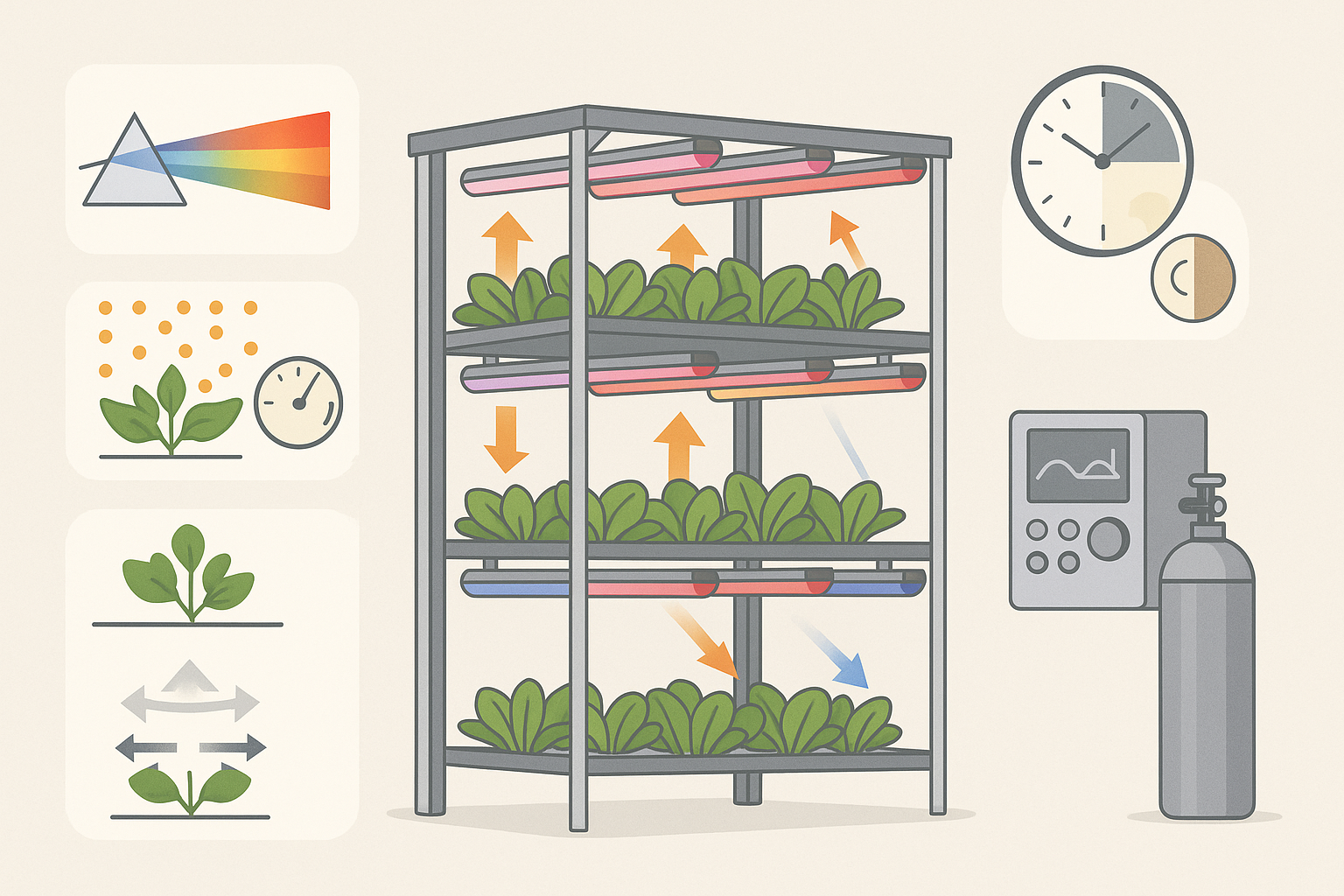
Light, as it pertains to crop growth, is defined by four interrelated parameters: spectral quality (wavelength), intensity (photosynthetic photon flux density or PPFD), photoperiod (daily light duration), and directionality. Each parameter plays a unique role in determining plant responses.
Spectral quality, particularly in the photosynthetically active radiation (PAR) range of 400–700 nm, influences photosynthesis and photomorphogenesis. Blue light (450–495 nm) promotes compact growth and stomatal regulation; red light (620–750 nm) stimulates stem elongation, flowering, and photosynthesis; while far-red (700–800 nm) can affect shade avoidance and flowering timing. Increasingly, ultraviolet (UV) and green wavelengths are being investigated for their role in secondary metabolite production and canopy penetration respectively.
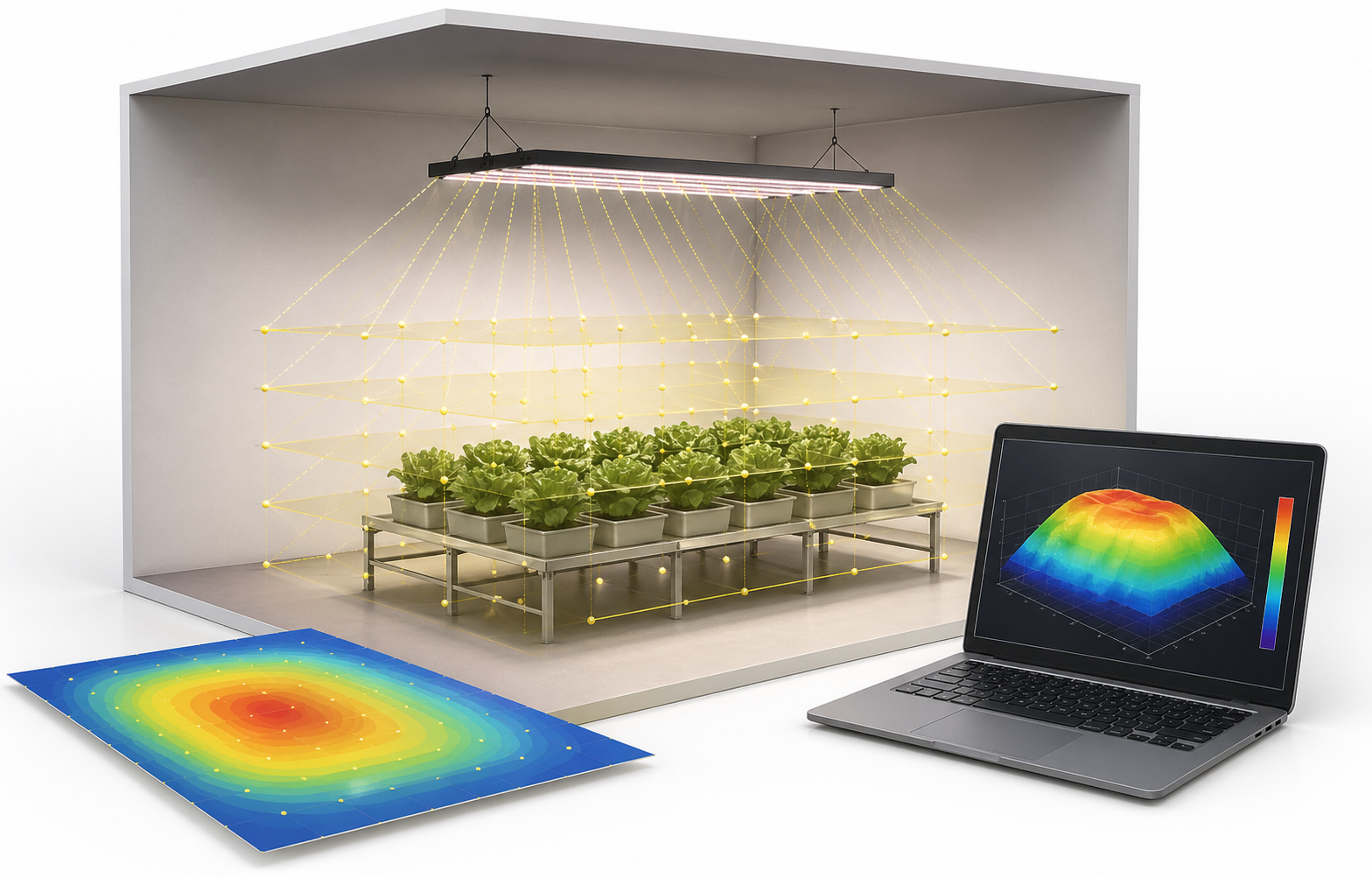
Light intensity, typically measured in µmol m⁻² s⁻¹, directly impacts the rate of photosynthesis. Too little light restricts energy capture and growth; too much can lead to photoinhibition and wasteful energy use. In vertical farms, light uniformity and intensity must be calibrated precisely for each crop species and developmental stage.
The photoperiod (how long lights are on each day) influences flowering and biomass allocation. Many crops exhibit photoperiodism, responding differently to long or short days. Managing this in an artificial context allows growers to manipulate flowering cycles, control vegetative growth, and potentially achieve multiple harvests per year.
Directionality, while often overlooked, can affect leaf orientation and light interception. In vertically stacked layers, side-lighting or intercanopy lighting may improve uniformity and increase yield per cubic metre.
Photoreceptors and Plant Perception of Light
Plants perceive and respond to light through specialised photoreceptors. Phytochromes detect red and far-red light; cryptochromes and phototropins are sensitive to blue light and UV-A; UVR8 senses UV-B. These photoreceptors initiate complex signalling cascades that regulate gene expression, cell elongation, chlorophyll synthesis, and circadian rhythms.
In vertical farming, manipulating these pathways can lead to targeted morphological traits such as shorter internodes, thicker leaves, or enhanced root systems. This level of control enables customisation of plant architecture to suit spatial constraints and crop scheduling within high-density environments.
LED Technology and the Evolution of Light Recipes
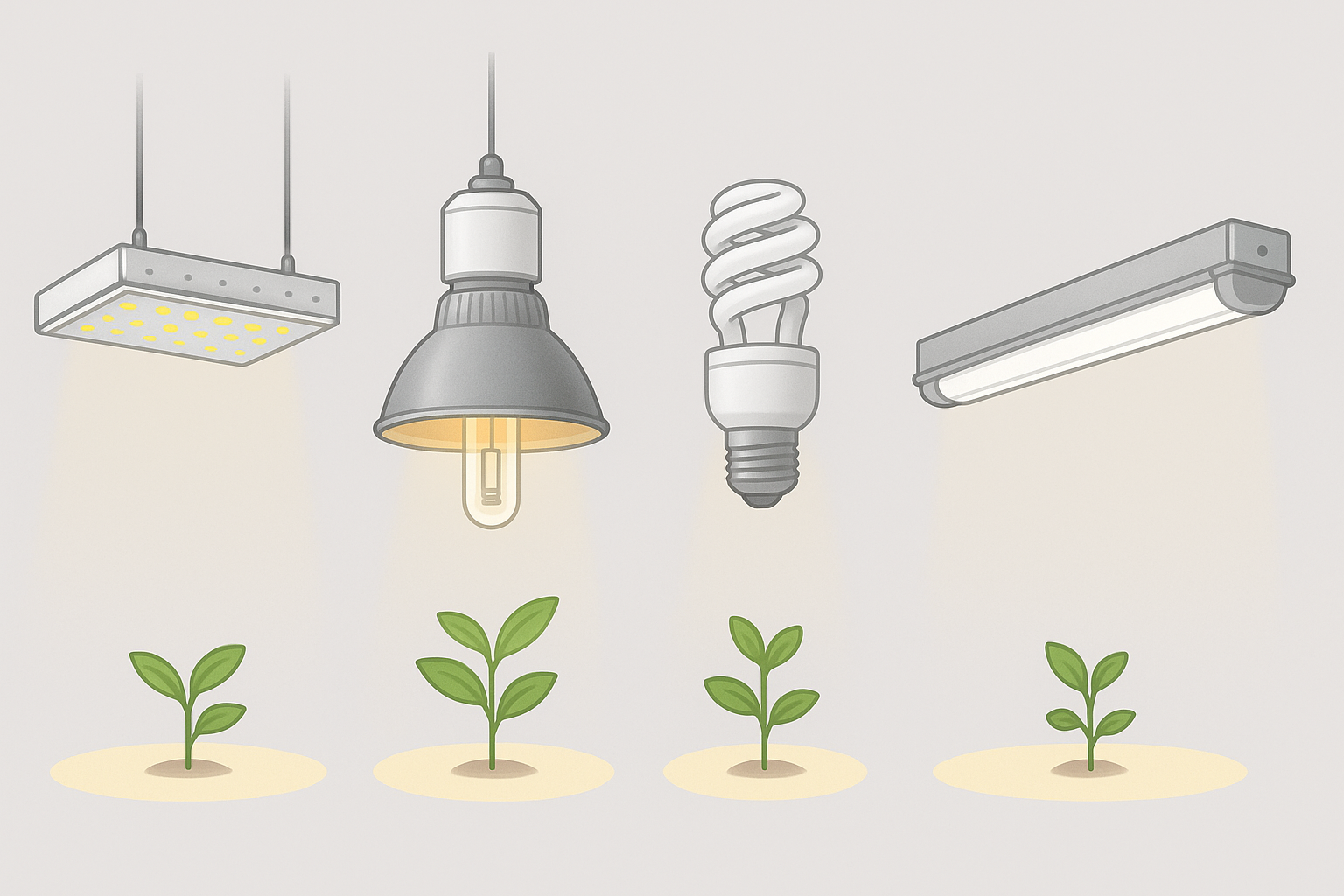
Light-emitting diodes (LEDs) have transformed artificial lighting in CEA. Unlike traditional high-pressure sodium (HPS) or fluorescent lights, LEDs offer spectral specificity, low heat emission, and high energy efficiency. They allow growers to craft ‘light recipes’; precise combinations of spectra, intensity, and duration tailored to specific species, cultivars, and production goals.
For example, lettuce grown under a blue-heavy spectrum may exhibit increased anthocyanin accumulation and compact leaf rosettes; tomatoes exposed to supplemental far-red light may flower earlier and yield more fruit. These recipes are being refined through empirical trials and machine learning models, integrating crop responses with real-time environmental data.
However, the diversity of species and cultivars means that no universal recipe exists. Optimisation remains context-dependent, and the challenge lies in balancing photosynthetic efficiency with cost, sustainability, and nutritional quality.
Energy Considerations and Sustainable Light Use
Lighting is one of the largest energy expenditures in vertical farming operations, often comprising over 50% of total electricity use. As a result, the photobiological benefits of artificial light must be weighed against energy efficiency and economic viability. Dimming strategies, dynamic lighting, and adaptive scheduling (e.g. circadian-mimicking patterns) are being explored to reduce consumption without compromising crop quality.
Moreover, solar-derived energy integration and improvements in LED efficacy are essential to reducing the carbon footprint of high-density indoor farms. The photobiology of crops thus intersects directly with broader questions of sustainability, climate policy, and resource allocation.
Implications for Nutritional Quality and Secondary Metabolites
Beyond yield and morphology, light can significantly influence the biochemical composition of crops. Studies have shown that UV-B exposure can increase flavonoid content; red-blue combinations may enhance antioxidant profiles; and dynamic lighting can improve nitrate reduction in leafy greens. These photobiological responses have important implications for food quality, shelf life, and human health.
As consumer demand grows for nutritionally dense produce, understanding how to harness light to enhance phytonutrients will be a key differentiator for vertical farms.
Future Directions: Towards Photobiological Optimisation
As vertical farming technologies mature, the science of photobiology will continue to underpin innovations in crop productivity, efficiency, and resilience. Integration with artificial intelligence and sensor networks may enable real-time photobiological modelling and adaptive lighting systems. Research into crop-specific photomorphogenic pathways, quantum efficiency under different spectra, and long-term photostress tolerance is ongoing.
However, challenges remain: What are the long-term impacts of artificial light regimes on seed quality and genetic stability? Can light be optimised in tandem with other environmental variables such as CO₂, humidity, and nutrient availability? And how might future policies shape the energy-use boundaries of indoor farming?
Conclusion
Photobiology in CEA and vertical farming is not a peripheral concern; it is central to the success of controlled environment crop production. Understanding how light shapes plant development, physiology, and productivity allows for greater precision, efficiency, and sustainability in high-density agriculture. As technologies advance, a more nuanced grasp of plant-light interactions will be essential: not only to maximise yield, but to meet the rising expectations for quality, nutritional value, and environmental responsibility in the crops of the future.