Understanding how to calculate PAR, PPF, PPE, and PPFD in lighting is fundamental to the design and optimisation of any controlled environment agriculture (CEA) or vertical farming system. These core metrics determine how much usable light a plant receives and how efficiently it is delivered. Given that light is one of the most critical inputs in indoor crop production, accurate quantification directly affects both crop yield and energy efficiency. This page introduces the essential concepts, why they matter, and how they are applied in real-world growing environments.
What Is Meant by Photosynthetically Active Radiation (PAR)?
Photosynthetically Active Radiation, or PAR, refers to the range of light wavelengths that plants use for photosynthesis: typically from 400 to 700 nanometres. Unlike general light measurements such as lux or lumens (which are weighted toward human vision), PAR focuses specifically on photon energy that is biologically useful to plants. PAR is not a metric in itself; rather, it defines the spectral window within which other light measurements, such as PPF and PPFD, are taken. It provides a framework for evaluating horticultural lighting systems in a way that relates directly to plant productivity.
PPF: Measuring Total Usable Light Output
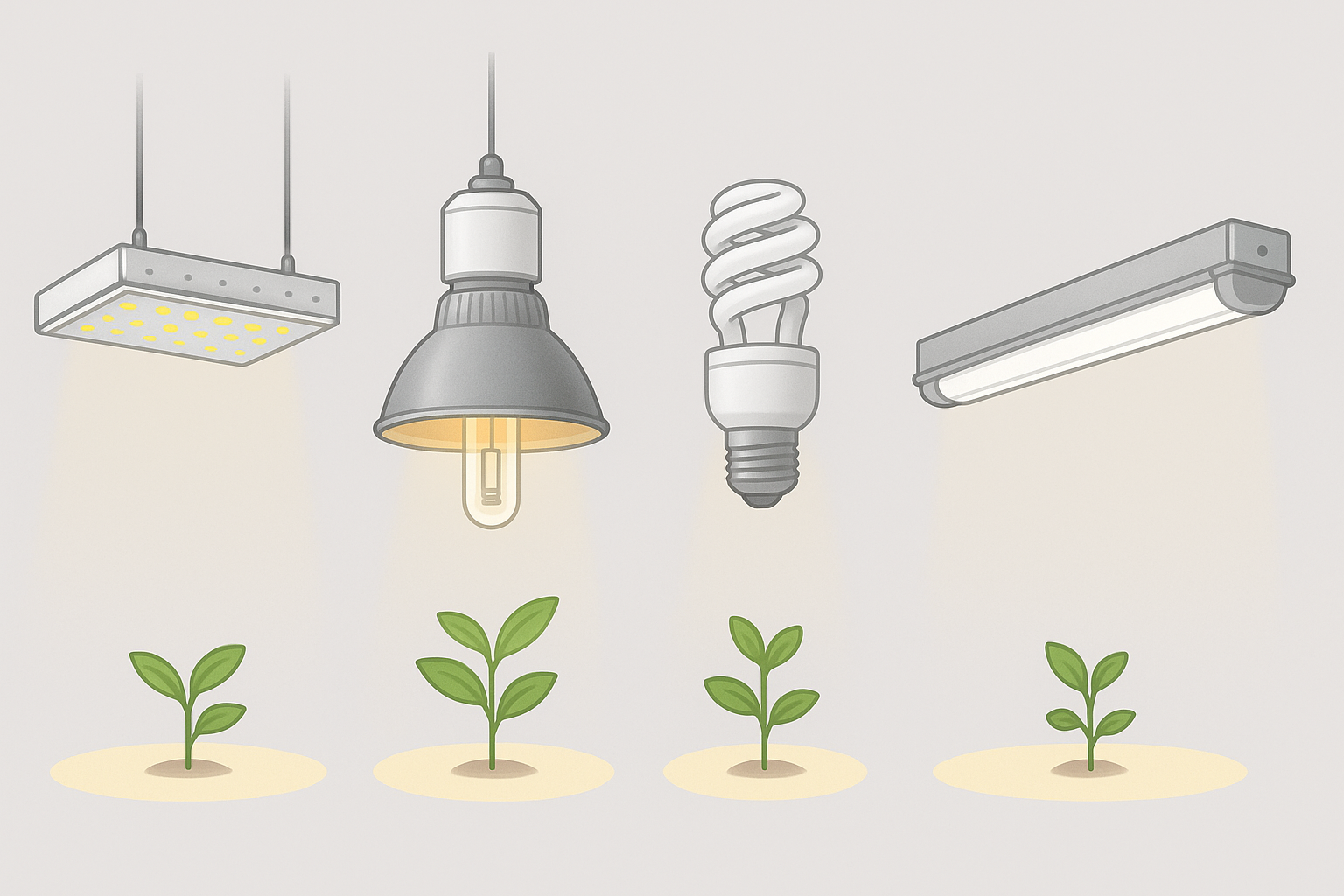
Photosynthetic Photon Flux (PPF) measures the total number of photons in the PAR range emitted by a light source each second. Expressed in micromoles per second (µmol/s), it quantifies how much usable light is being produced but not where it lands or how it is distributed. PPF is useful when comparing light sources; however, it does not account for losses due to fixture design or placement. For example, two LED systems may have similar PPF ratings, but if one has poor beam control or a high proportion of photons directed away from the crop surface, the actual benefit to plants may differ significantly.
PPF is measured using an integrating sphere, which captures all light emitted in every direction. This laboratory-based approach provides a standardised assessment, but it does not represent real growing conditions. As such, growers should interpret PPF in combination with other data points such as PPFD and fixture efficacy.
PPFD: Quantifying Light at the Canopy Level
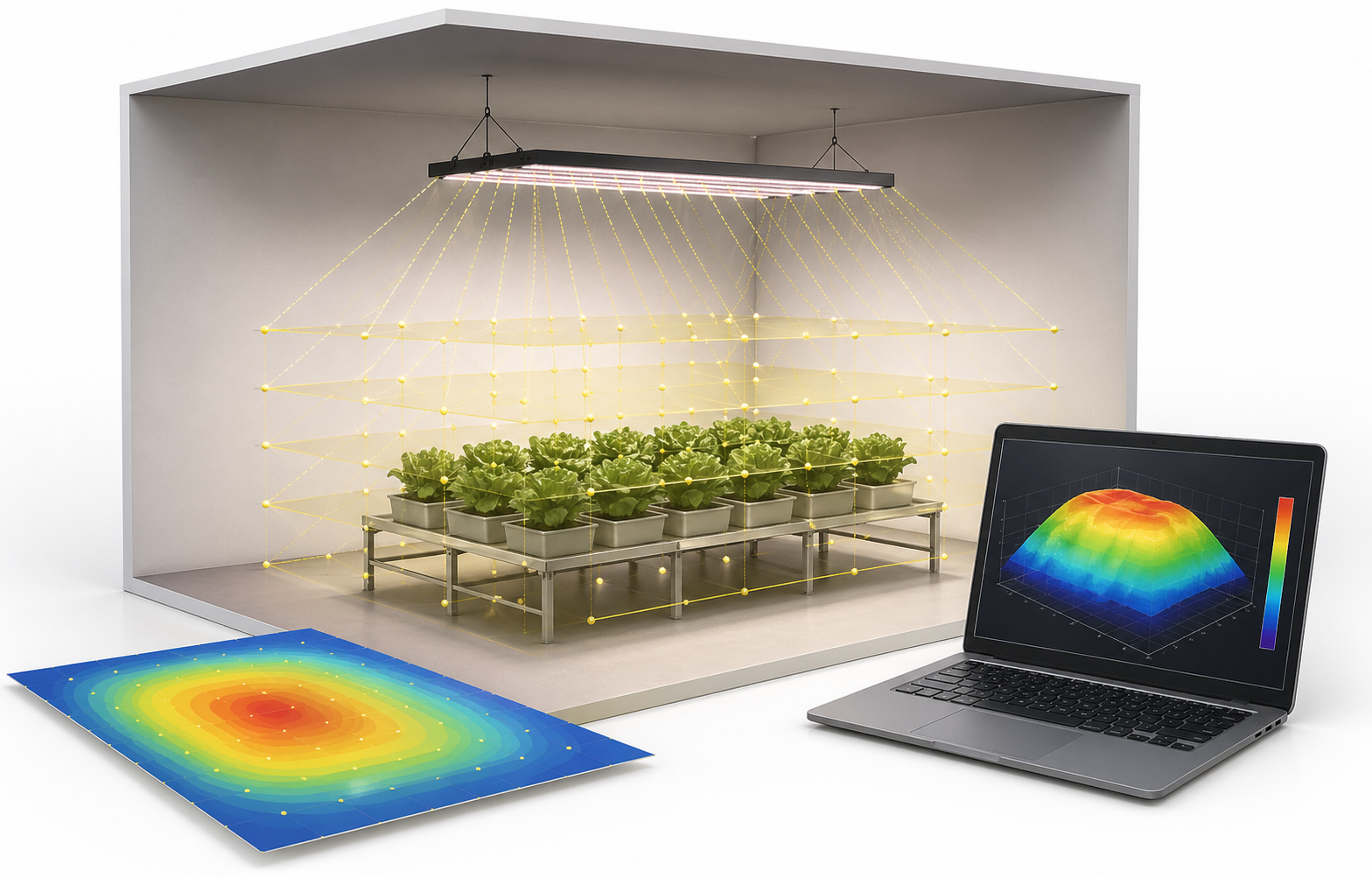
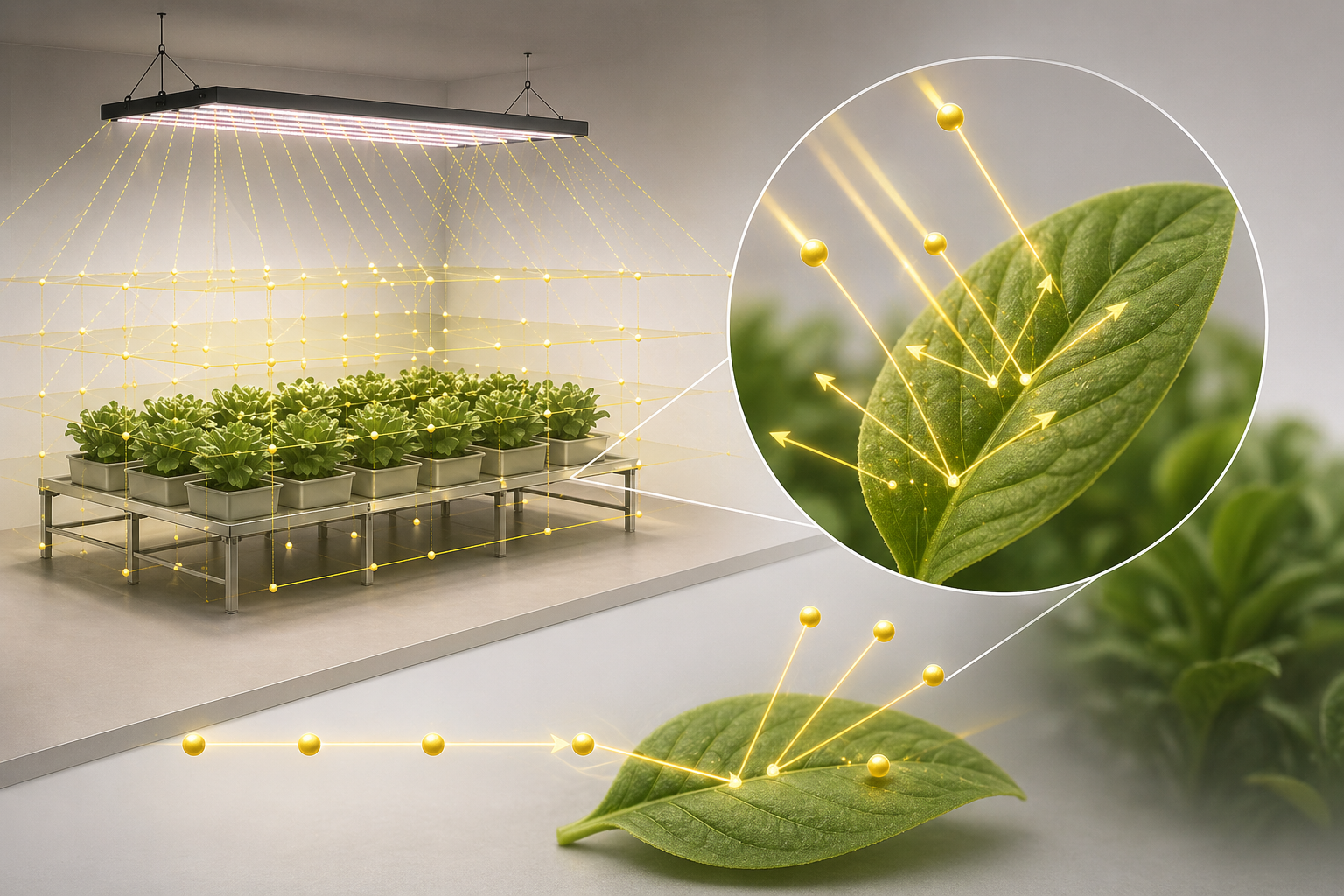
While PPF describes how much PAR-range light a fixture emits, Photosynthetic Photon Flux Density (PPFD) indicates how much of that light actually reaches a specific surface area, typically the crop canopy. Expressed in micromoles per square metre per second (µmol/m²/s), PPFD is the most directly relevant measure for evaluating the effectiveness of lighting in a growing environment. It reflects both fixture output and distribution pattern and can be affected by mounting height, reflector design, and inter-canopy obstructions.
To calculate PPFD accurately, multiple readings should be taken across the growing area using a quantum sensor designed to capture PAR-range photons. These measurements are typically averaged to provide a representative value for the canopy zone. Since plant response varies with intensity, ensuring uniform PPFD across the crop bed is vital. High variability can lead to uneven growth, inconsistent maturation, and reduced overall yields.
PPE: Evaluating Energy Efficiency of Light Production
Photosynthetic Photon Efficacy (PPE) measures how efficiently a lighting system converts electrical energy into PAR photons. Expressed in micromoles per joule (µmol/J), PPE is calculated by dividing the PPF of a fixture by its power consumption. For example, if a light produces 2000 µmol/s and uses 500 watts of electrical power, its PPE would be 4.0 µmol/J.
PPE is a crucial metric in assessing energy use in CEA systems, especially given the high operational costs associated with continuous lighting. Systems with higher PPE deliver more photosynthetically useful light per unit of energy, thereby reducing electricity bills and increasing sustainability. However, PPE should not be viewed in isolation: a highly efficient fixture that delivers light unevenly or emits significant amounts outside the PAR range may still underperform in real cultivation scenarios.
How to Apply These Metrics in Vertical Farming
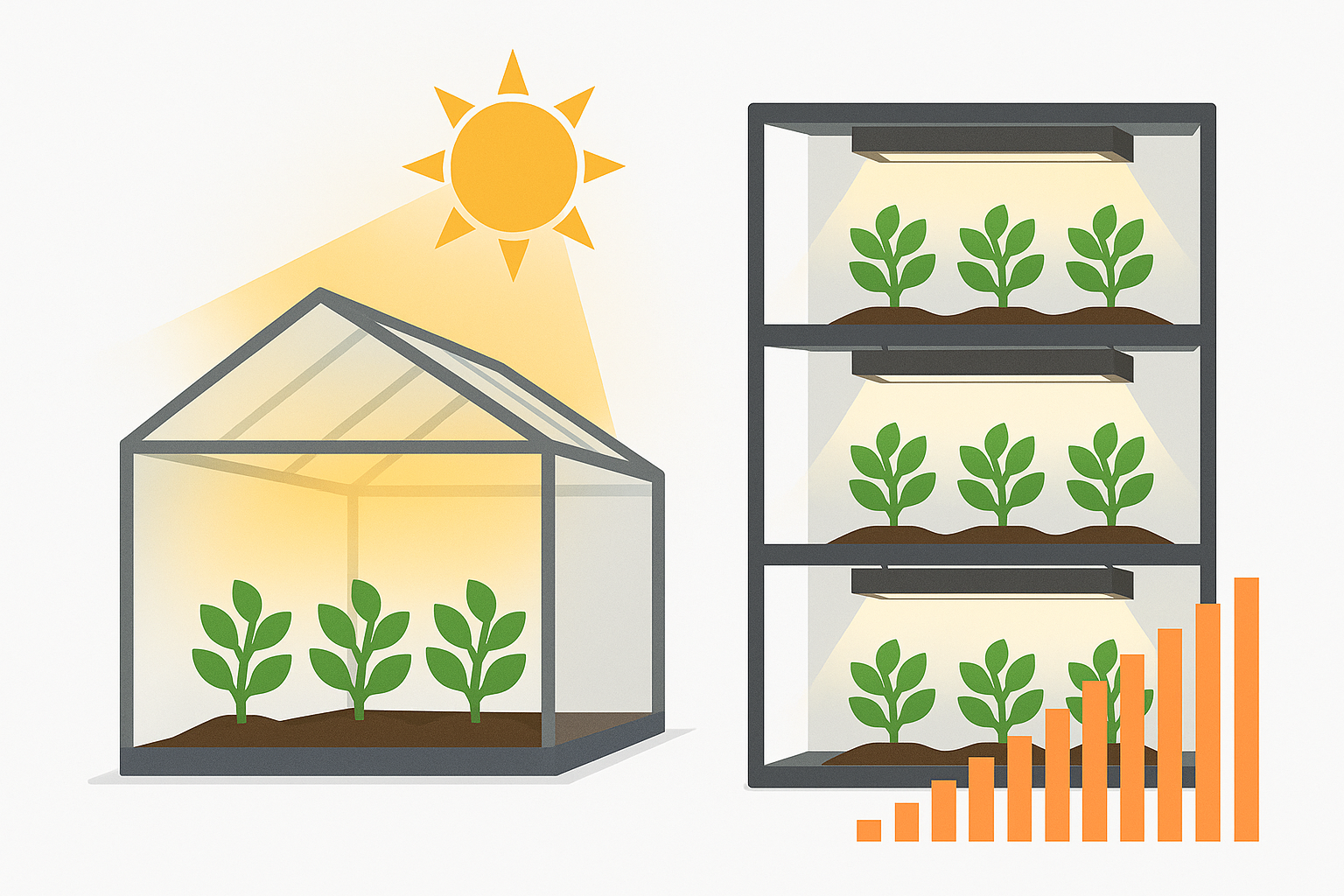
Understanding how to calculate PAR, PPF, PPE, and PPFD in lighting provides the foundation for data-driven decisions in vertical farming and other CEA applications. Lighting strategies must balance photon output with energy efficiency and spatial distribution. A high-output system with poor canopy penetration or excessive energy consumption is not cost-effective; likewise, a highly uniform system with low total PPF may limit crop development.
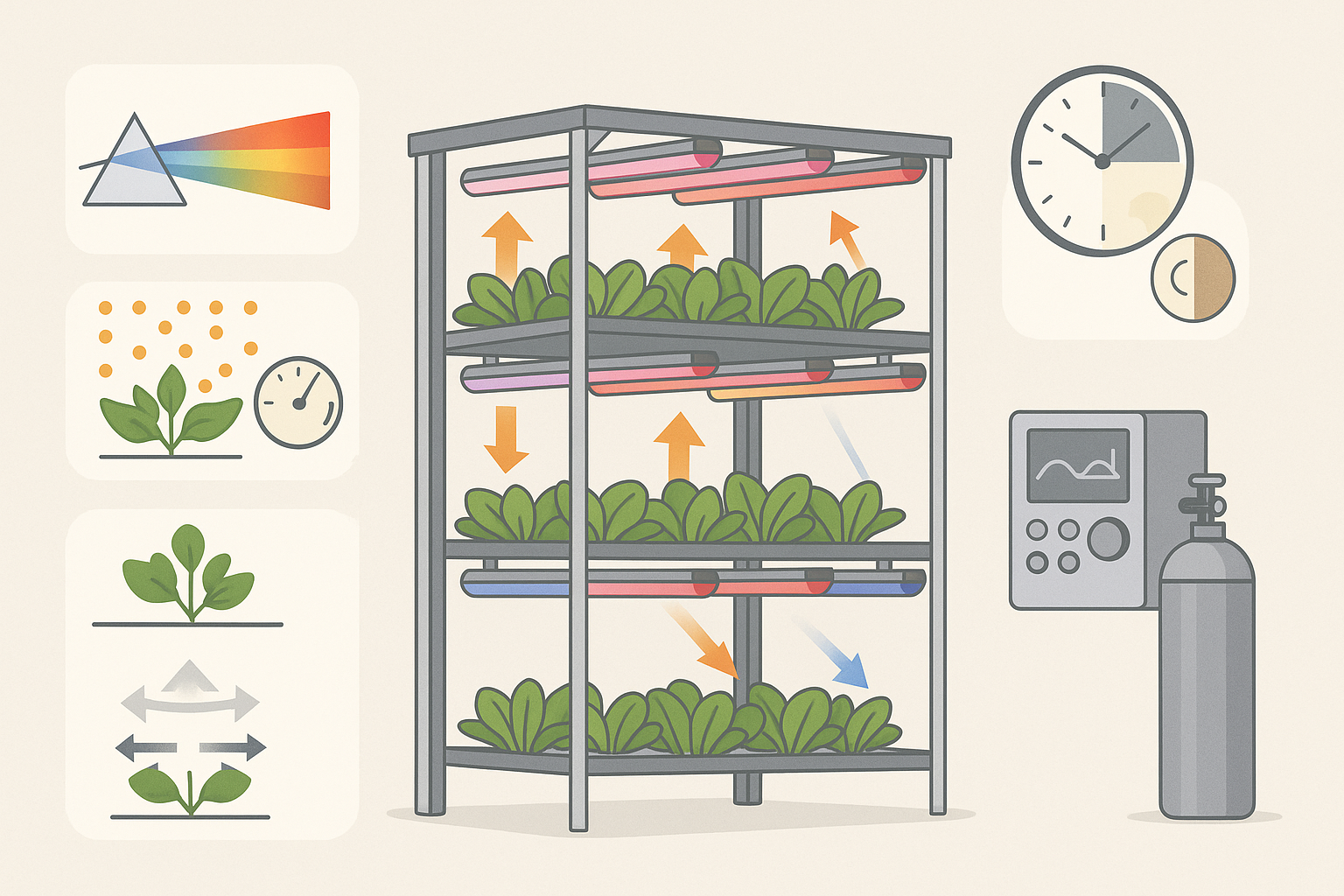
Vertical farms typically require tiered lighting setups, where fixtures are mounted close to the canopy. This makes accurate PPFD mapping particularly important, as minor variations in angle, distance, or reflector geometry can lead to substantial inconsistencies. Monitoring tools such as quantum sensors and spectrometers should be incorporated into routine system checks to verify that desired lighting levels are being maintained over time.
Considerations for Measurement and Interpretation
It is essential to ensure that all measurements are conducted under controlled conditions using calibrated instruments. Temperature, ambient light, and sensor orientation can all influence readings. Furthermore, light quality (i.e. spectral distribution) should be considered alongside quantity. While not directly part of PPF or PPFD, spectrum can significantly affect photomorphogenic responses and nutrient uptake in crops.
Another point of consideration is how these metrics evolve as systems age. LED efficacy, for instance, can degrade over time, reducing PPE and altering PPFD patterns. Regular recalibration and system audits are necessary to maintain optimal performance.
Conclusion
For any serious practitioner of indoor agriculture, understanding how to calculate PAR, PPF, PPE, and PPFD in lighting is not optional; it is a prerequisite for both economic and agronomic success. These metrics, when properly applied, allow growers to tailor lighting regimes to the physiological needs of their crops while also managing input costs and environmental impact. As vertical farming systems scale and diversify, the ability to interpret and act upon these light calculations will become even more central to the viability and competitiveness of controlled environment agriculture.
This resource serves as an entry point into the broader topic of plant photobiology and environmental control. For those seeking to deepen their knowledge, it is advisable to combine this understanding with studies in spectral quality, photoperiod management, and crop-specific lighting responses. Together, these disciplines form the scientific backbone of modern indoor cultivation.