What is Daily Light Integral and Why Does It Matter?
The concept of daily light integral (DLI) is foundational to designing effective lighting strategies in controlled environment agriculture (CEA) and vertical farming systems. DLI quantifies the total amount of photosynthetically active radiation (PAR) received by a plant over the course of a day. Expressed in moles of light per square metre per day (mol m⁻² d⁻¹), it integrates both light intensity and photoperiod to determine the cumulative light energy available for photosynthesis. Understanding and managing DLI is essential for ensuring that crops receive sufficient light to support healthy growth, maximise yields, and optimise resource use; particularly where sunlight is limited or artificial lighting is employed as the primary source of illumination.
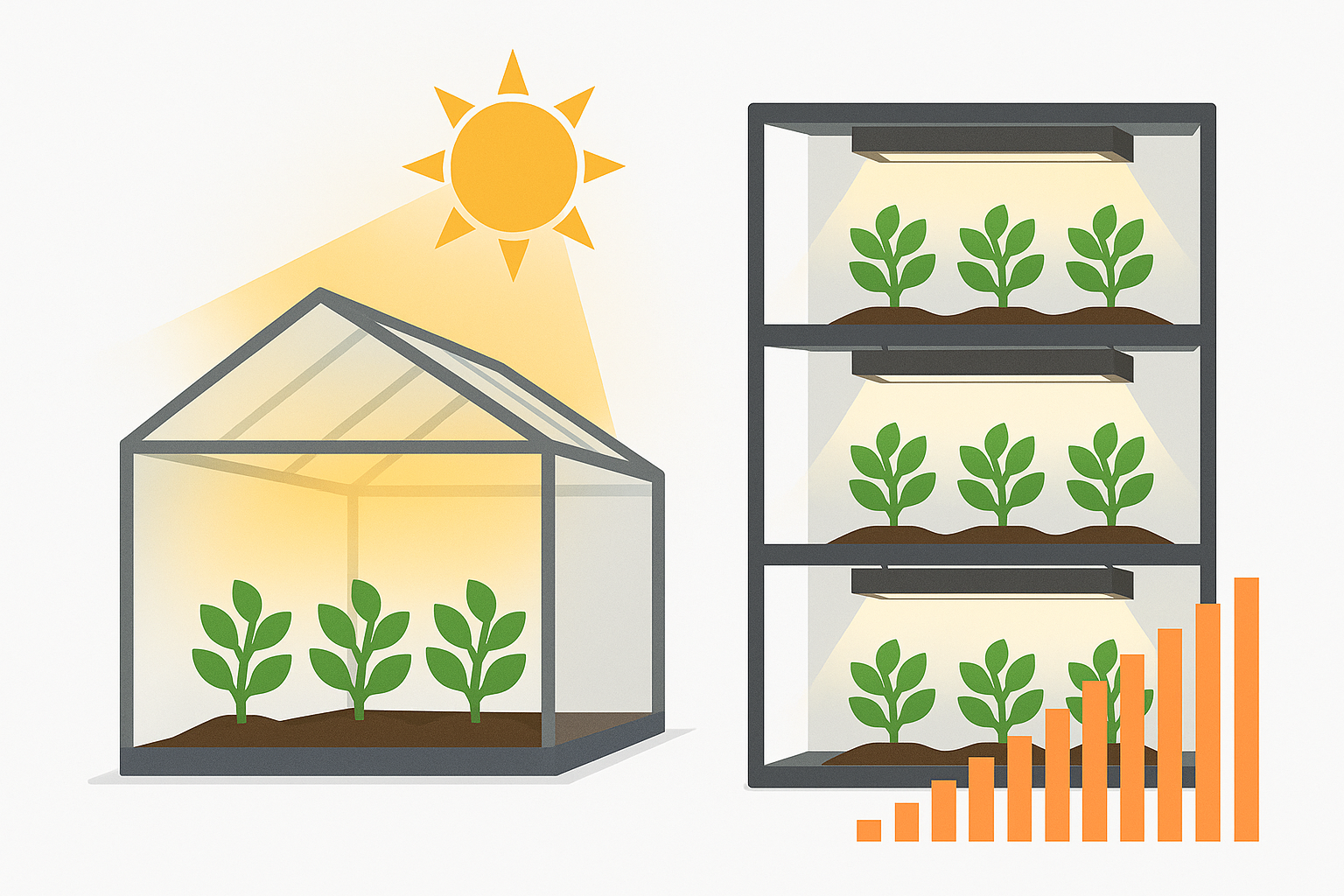
In open-field agriculture, natural sunlight provides the DLI, varying by season, latitude and weather. In contrast, indoor and vertical farms rely on artificial lighting systems, which must be calibrated to meet the specific DLI requirements of the crops being cultivated. This makes DLI not only a measurement but a strategic tool: one that informs light scheduling, spectrum control and energy efficiency in enclosed growing environments.
The Science Behind DLI: Measuring Light for Photosynthesis
Photosynthetically active radiation refers to the spectral range of light from 400 to 700 nanometres, the portion of the spectrum most relevant to plant growth. DLI is calculated by multiplying the photosynthetic photon flux density (PPFD), measured in micromoles of photons per square metre per second (µmol m⁻² s⁻¹), by the total number of seconds of light exposure per day, then converting to moles.
For instance, a PPFD of 200 µmol m⁻² s⁻¹ over a 12-hour photoperiod equates to a DLI of approximately 8.6 mol m⁻² d⁻¹. Most leafy greens thrive in a DLI range of 12 to 17 mol m⁻² d⁻¹, while fruiting crops like tomatoes may require upwards of 20 mol m⁻² d⁻¹. Without meeting these light thresholds, photosynthesis is limited; consequently, growth and productivity are compromised. Conversely, exceeding a crop's optimal DLI can result in photoinhibition, energy waste or physiological stress.
DLI in Vertical Farming: A Design and Operational Imperative
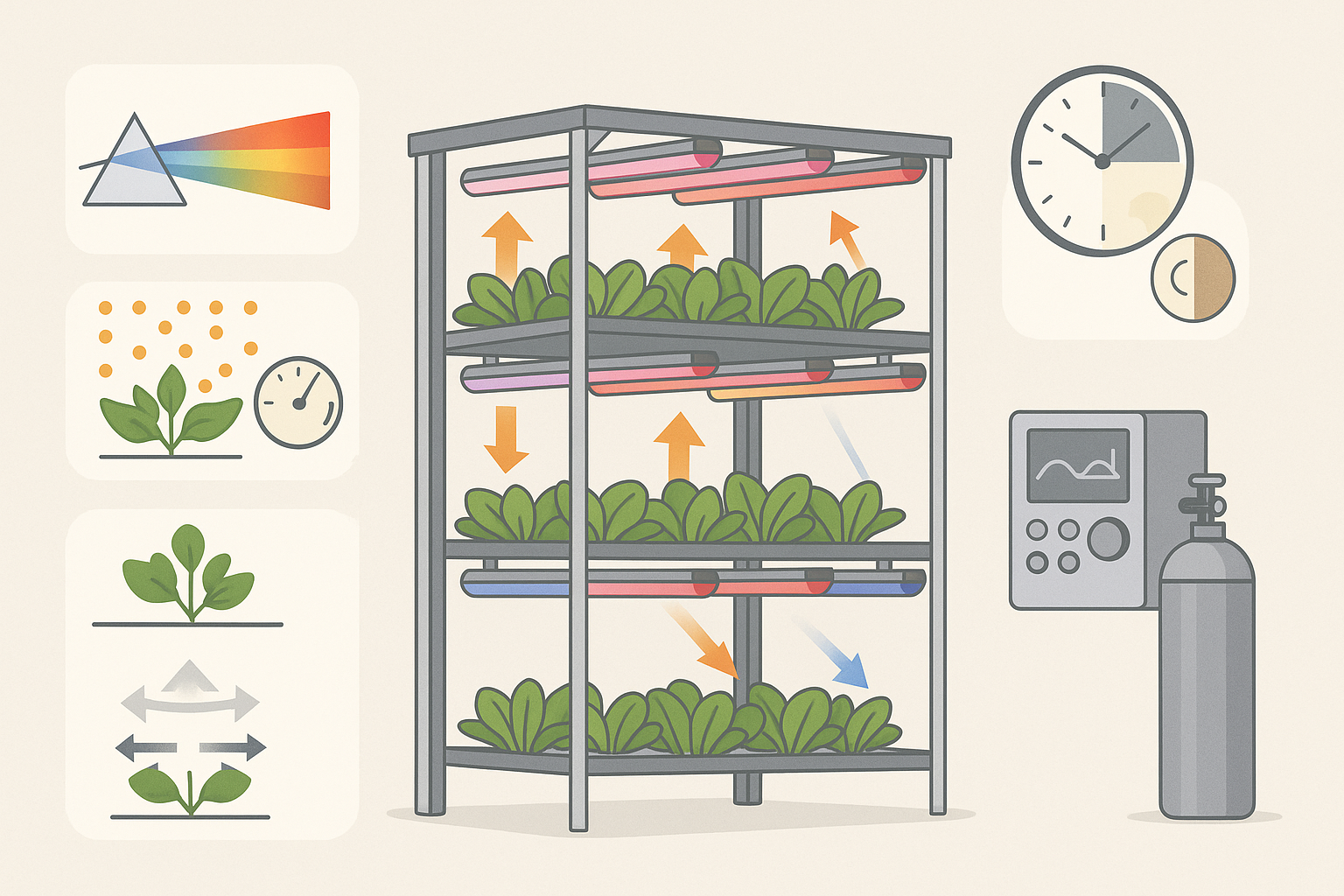
Unlike traditional greenhouses, vertical farms use stacked growing layers and artificial lighting to deliver uniform DLI across multiple crop canopies. This spatial complexity demands precision in light planning. Growers must consider not only the target DLI for each crop but also the distribution of light across all vertical tiers, the cumulative energy expenditure and the spectral quality of the light being delivered.
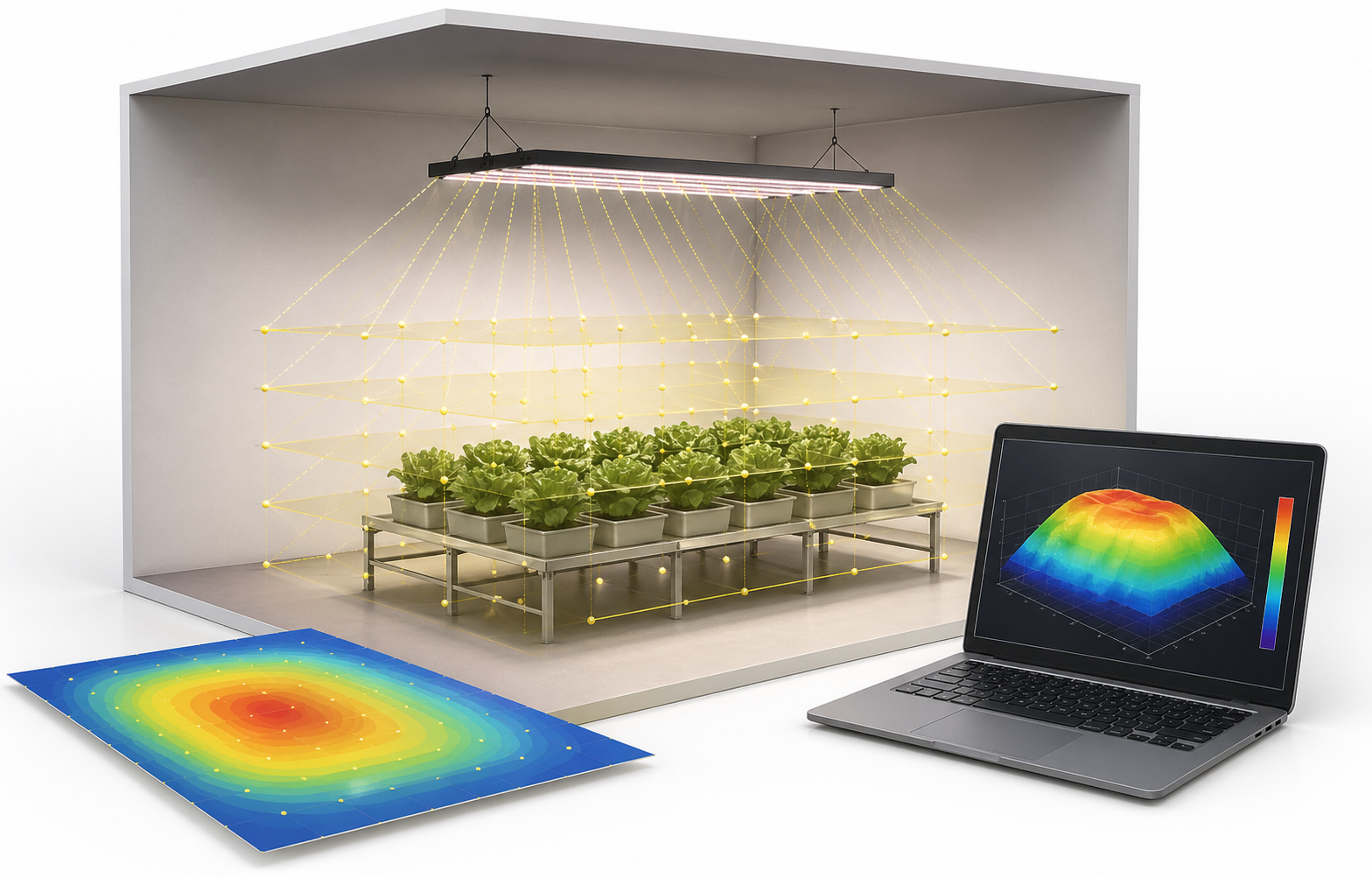
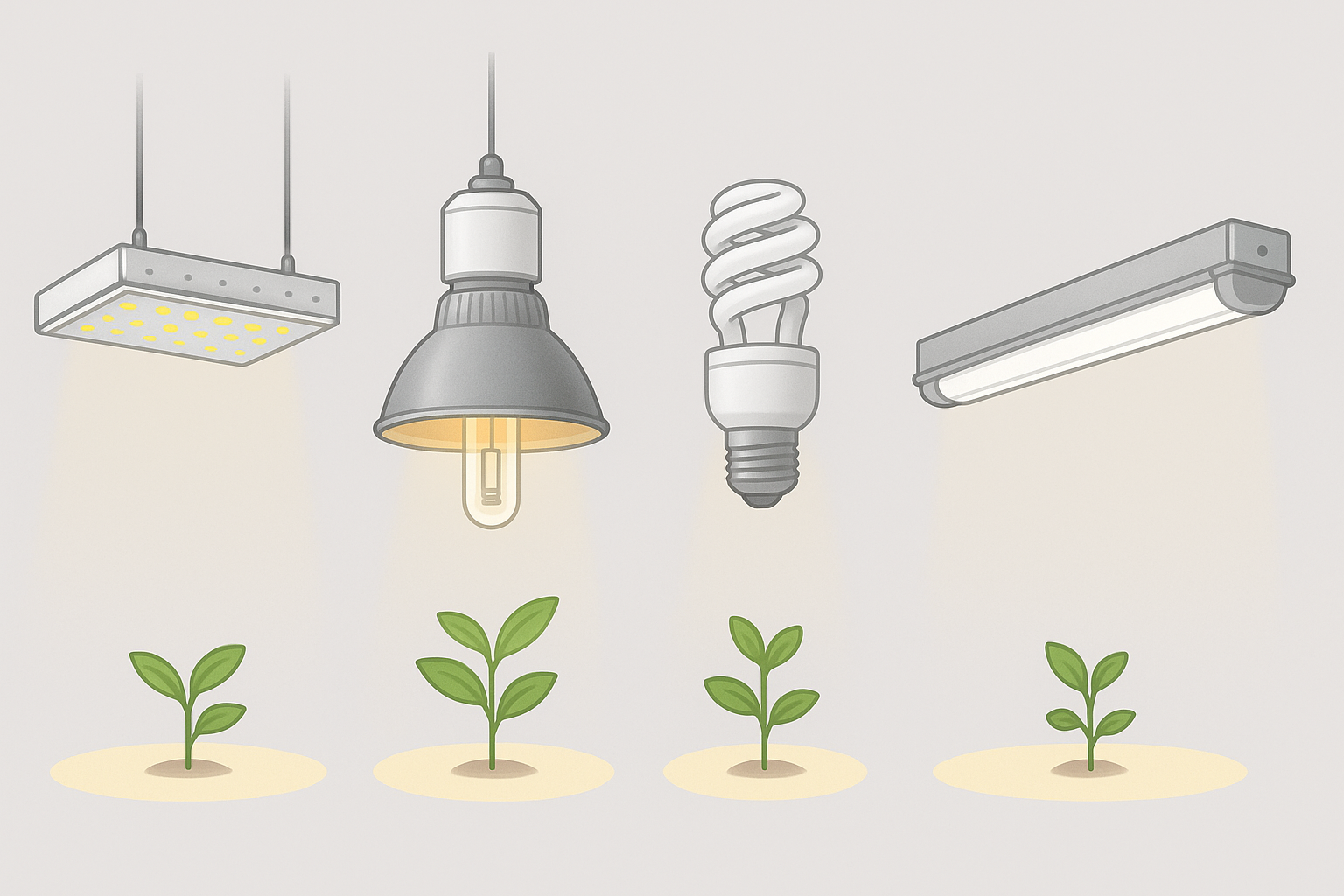
Lighting strategies in vertical farms are often built around LED systems due to their controllability, efficiency and customisable spectrum output. These systems allow for tailored delivery of PPFD over specified photoperiods to achieve consistent DLI targets. However, the physical arrangement of lights, canopy density and distance from light source to plant also affect the actual DLI received at the leaf surface. Regular measurement and calibration using light sensors is therefore essential to ensure the designed DLI is being met in practice.
Optimising DLI: Balancing Yield, Quality and Energy Efficiency
Effective DLI management is not simply about maximising light input. Rather, it involves delivering the right amount of light at the right time to support physiological processes without

incurring unnecessary costs. For example, many crops exhibit diminishing returns beyond a certain DLI threshold, where additional light does not result in proportional increases in biomass or fruiting. This principle, known as the law of diminishing returns in plant response, must be integrated into lighting strategies to avoid overexposure and energy waste.
Photoperiod manipulation is another critical aspect. By extending or reducing the length of the day, growers can adjust DLI without increasing light intensity, thus improving control over crop development stages. In lettuce production, for instance, extending the photoperiod to 18 hours while maintaining moderate PPFD can achieve the same DLI as a shorter, high-intensity cycle, with reduced peak power demand and improved energy efficiency.
Moreover, DLI influences not only quantity but also quality attributes such as pigmentation, nutrient density and taste. Studies have shown that increasing DLI can enhance anthocyanin accumulation in red-leaved lettuce or boost vitamin C levels in microgreens. Therefore, understanding the nuanced effects of DLI allows growers to tailor lighting for specific market traits as well as yield.
Technological Integration: Monitoring and Automation
The integration of DLI measurement into environmental control systems is becoming increasingly standard in advanced CEA operations. Sensors placed at canopy level provide real-time data on PPFD, which can be used to calculate rolling DLI values. These measurements feed into automation platforms that adjust light intensity or duration dynamically in response to crop growth stages, external light availability or energy pricing.
Machine learning models and digital twins are also being developed to simulate crop response under varying DLI regimes, enabling predictive management rather than reactive correction. As these technologies mature, they will facilitate more precise and adaptive lighting strategies, further embedding DLI as a central metric in vertical farming design and operation.
Conclusion: DLI as a Foundational Metric in Controlled Agriculture
Daily light integral is far more than a technical measure; it is a central organising principle for light management in controlled environments. Whether configuring LED arrays, designing crop rotations or calculating cost per unit yield, DLI serves as a unifying metric that links plant physiology, engineering constraints and economic performance.
In vertical farming and other forms of CEA, where environmental variables must be meticulously controlled, a robust understanding of DLI underpins every aspect of lighting strategy. By aligning light delivery with plant requirements and system limitations, growers can enhance productivity, conserve energy and improve crop quality, which will establish DLI as an indispensable tool in the future of sustainable indoor food production.