Introduction
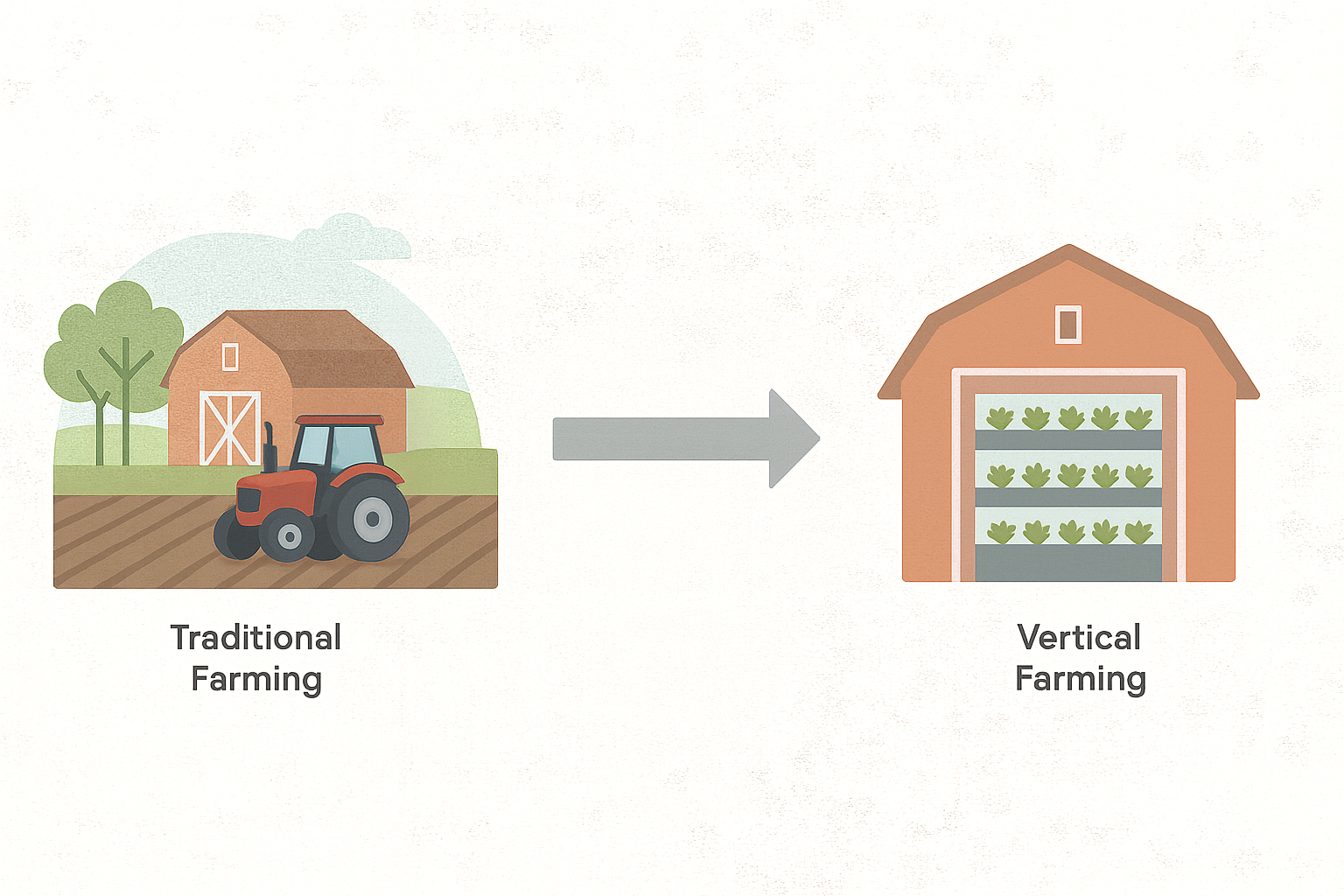
Across Europe and beyond, many conventional farmers are exploring ways to adapt to increasingly volatile markets, changing weather patterns, and shifting consumer demand. One emerging pathway for traditional farm diversification is vertical farming: a strategy in which farmers integrate controlled environment agriculture (CEA) systems alongside or within their existing agricultural enterprises. By producing crops indoors, often in vertically stacked systems with precisely controlled climates, farmers can create a complementary income stream that is less exposed to the risks of outdoor production.
This concept is not about replacing field agriculture. Rather, it is about adding resilience to the farm business model. For many growers, diversification through CEA represents an opportunity to meet local demand for fresh produce year-round, to enter new markets such as specialist herbs or pharmaceutical crops, and to make better use of existing farm infrastructure.
Why Diversification Matters for Farmers
Diversification has long been a strategy for stabilising farm incomes. Historically this might have involved adding livestock to an arable operation, opening farm shops, or investing in agri-tourism. In recent decades, policy changes and market pressures have made the search for alternative revenue streams more urgent. Climate variability has added further challenges, with unpredictable weather affecting both yields and quality.
Against this backdrop, CEA offers something different. Unlike many diversification options, it allows farmers to continue producing food while reducing dependence on external factors such as rainfall, soil quality, and pesticide regimes. The production system is more predictable, which supports planning for both sales and labour. Moreover, because crops are grown close to the consumer, logistics and food miles are reduced, aligning with growing consumer interest in sustainability.
How Vertical Farming Fits Into Farm Business Models
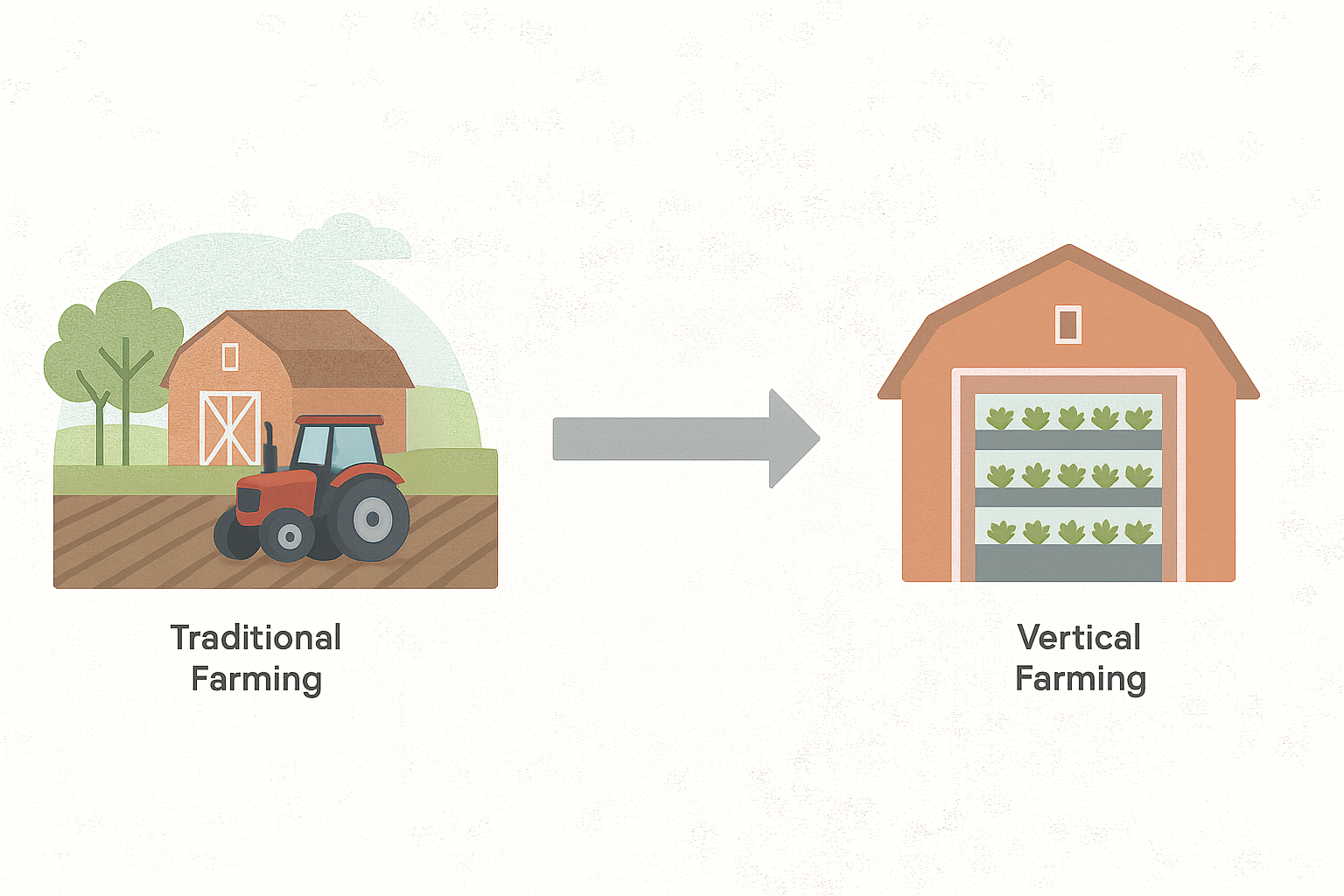
The adoption of vertical farming for traditional farm diversification can take several forms. Some farmers choose to repurpose redundant buildings, such as barns or storage sheds, for small-scale hydroponic production. Others invest in modular container farms that can be installed relatively quickly on underutilised land. More ambitious ventures involve purpose-built CEA facilities, often as joint ventures between farmers and external investors.
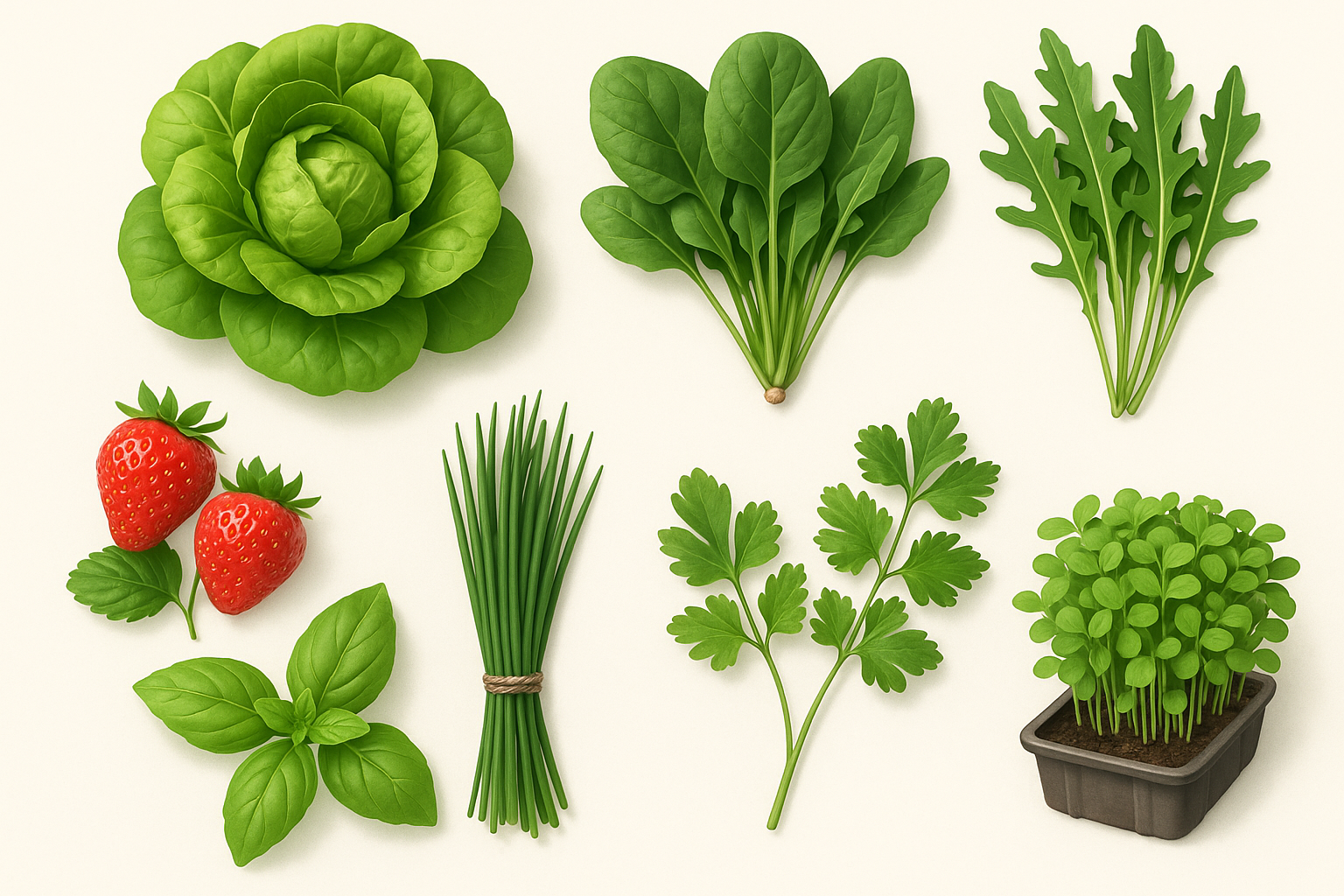
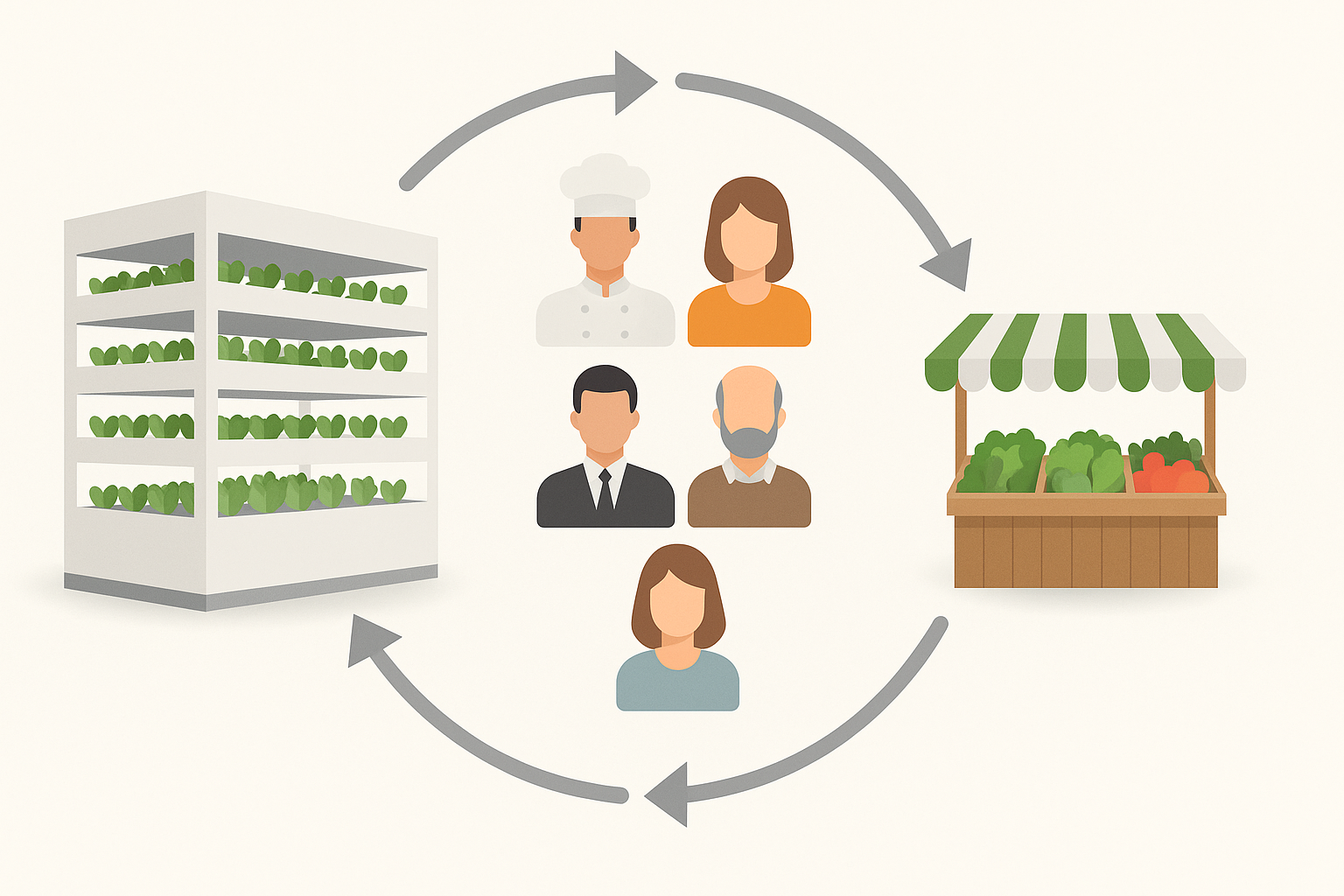
The scale of production is highly flexible. A farmer may begin with a pilot system to test crop performance and market demand, before scaling up if the economics prove viable. Crops most commonly grown include leafy greens, microgreens, herbs, and soft fruits, as these offer short growth cycles and relatively high market value. In some cases, farmers focus on niche crops for local restaurants, while others supply wholesale distributors or direct-to-consumer subscription schemes.
Advantages and Constraints
The key advantage of vertical farming within a traditional farm context is diversification of income away from purely seasonal and weather-dependent crops. Indoor systems offer year-round production, which helps to spread risk and smooth cash flow. They also enable farmers to participate in emerging value chains, such as the supply of fresh herbs to supermarkets or specialist crops for nutraceuticals.
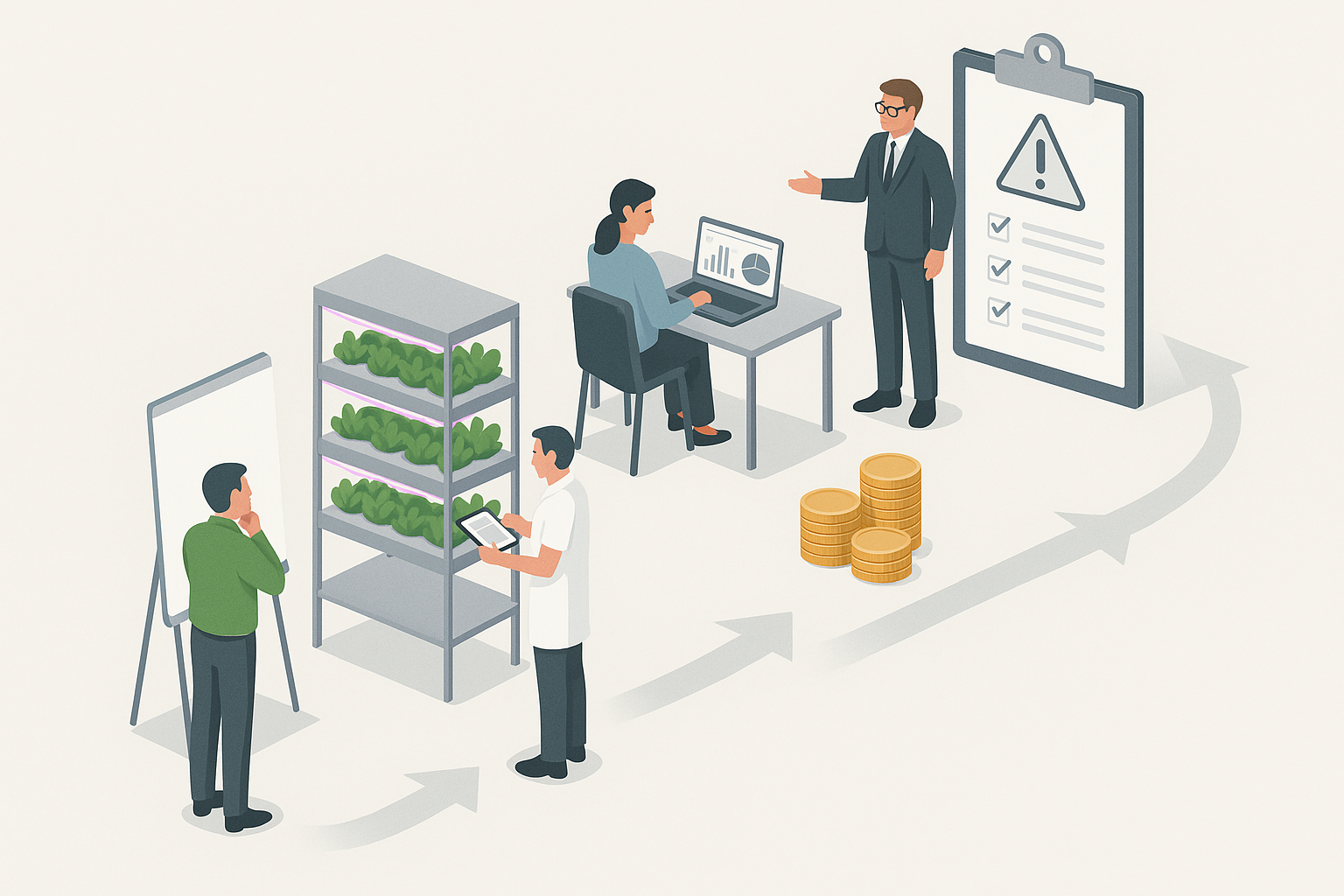
There are, however, significant constraints. Capital investment can be substantial, especially for high-tech vertical farms equipped with advanced climate control and LED lighting. Energy use is another major factor: while renewable energy integration can mitigate costs, it requires planning and often further investment. Farmers must also develop new technical expertise, as managing nutrient solutions, lighting regimes, and environmental conditions is very different from operating tractors or managing livestock.
Despite these challenges, many farmers see CEA as a complement to, rather than a replacement for, conventional production. For example, a grower might continue to cultivate cereal crops for commodity markets while running a smaller vertical farm enterprise to target premium local produce markets. This layered approach can increase resilience and provide new opportunities for younger generations to stay involved in farming.
Market and Policy Drivers
Consumer demand for locally grown produce is a strong driver for diversification into CEA. Urban populations expect access to fresh, high-quality vegetables throughout the year, and supermarkets are keen to reduce supply chain risks associated with imports. At the same time, policy initiatives across Europe and the UK increasingly emphasise sustainable agriculture, food security, and rural innovation. Grants, subsidies, or low-interest loans are sometimes available to support farmers who invest in diversification through indoor production.
In addition, partnerships with universities, agri-tech companies, and supply chain actors are creating opportunities for farmers to access knowledge and reduce the risks of adoption. Collaborative models, in which farmers host CEA units managed jointly with external partners, are beginning to appear in several regions. Such approaches distribute financial risk and technical responsibility, making diversification more accessible.
Technical Considerations for Integration
For farmers considering vertical farming, integration into existing operations requires careful thought. Energy supply and efficiency are central, as lighting and climate control account for most of the operating costs. Where farms have access to renewable energy, such as solar panels, anaerobic digestion, or biomass, CEA systems may be more financially and environmentally viable.
Water use is typically lower than in field production, as hydroponic and aeroponic systems recycle water and nutrient solutions. This makes CEA particularly attractive in regions where water scarcity is an emerging challenge. Labour demands may also be different: while CEA systems reduce some forms of manual work, they often require skilled monitoring and maintenance. Farmers may need to retrain staff or hire new employees with expertise in plant physiology and environmental management.
The Future of Diversification Through Indoor Farming
Looking ahead, vertical farming for traditional farm diversification is likely to expand as technologies mature and costs decrease. Modular systems are becoming more efficient, LED lighting continues to improve in energy performance, and digital tools for monitoring crops are increasingly accessible. At the same time, public awareness of food security, supply chain resilience, and environmental sustainability is growing.
It is unlikely that all farms will find CEA a suitable option. The financial and technical barriers remain significant, and the markets for indoor-grown produce must continue to expand to absorb supply. Nevertheless, for certain farmers, especially those near urban centres or with existing underused buildings and energy infrastructure, diversification into vertical farming could provide a valuable long-term addition to their business model.
Conclusion
The integration of CEA into traditional farming enterprises represents both an opportunity and a challenge. For some farmers, it will be a way to secure more stable income streams, reduce dependence on unpredictable weather, and participate in new markets. For others, the costs and technical requirements may prove too high. Nevertheless, the need to reinforce traditional food production systems, to ensure future food security in an era of significant environmental change, may make the requirement for existing farm diversification more pressing.
As with any diversification strategy, the success of vertical farming will depend on clear business planning, realistic assessment of markets, and a willingness to develop new skills. Yet, when approached carefully, it has the potential to strengthen farm resilience and support the wider goals of sustainable and secure food production.