Introduction
Business planning for Controlled Environment Agriculture (CEA) and vertical farming operations is a financial and strategic challenge that requires careful consideration of economic realities, operational constraints, and market opportunities. CEA offers the ability to grow food in precisely managed indoor systems, yet the path from concept to profitable enterprise is far from straightforward. Here we consider some of the core aspects of economics and business planning in CEA, providing context for why sound financial modelling, risk assessment, and operational design are central to success.
The Economic Context of Vertical Farming
Vertical farming exists at the intersection of agriculture, technology, biology, and urban infrastructure. Its value proposition is rooted in efficient land use, year-round production, and the potential to supply fresh produce close to population centres. However, these advantages are balanced against high capital expenditure, significant energy costs, and complex labour requirements. Traditional agriculture benefits from natural sunlight and open land; vertical farming replaces these with artificial lighting, environmental control systems, and stacked growing layers, each of which increases operating expenditure.
Understanding the economics of vertical farming requires recognising the distinction between theoretical efficiency and actual financial sustainability. While crop yields per square metre can be substantially higher than those of field agriculture, profitability depends on whether the additional costs of infrastructure and energy can be offset by market premiums for freshness, consistency, or sustainability.
Capital Investment and Operational Costs
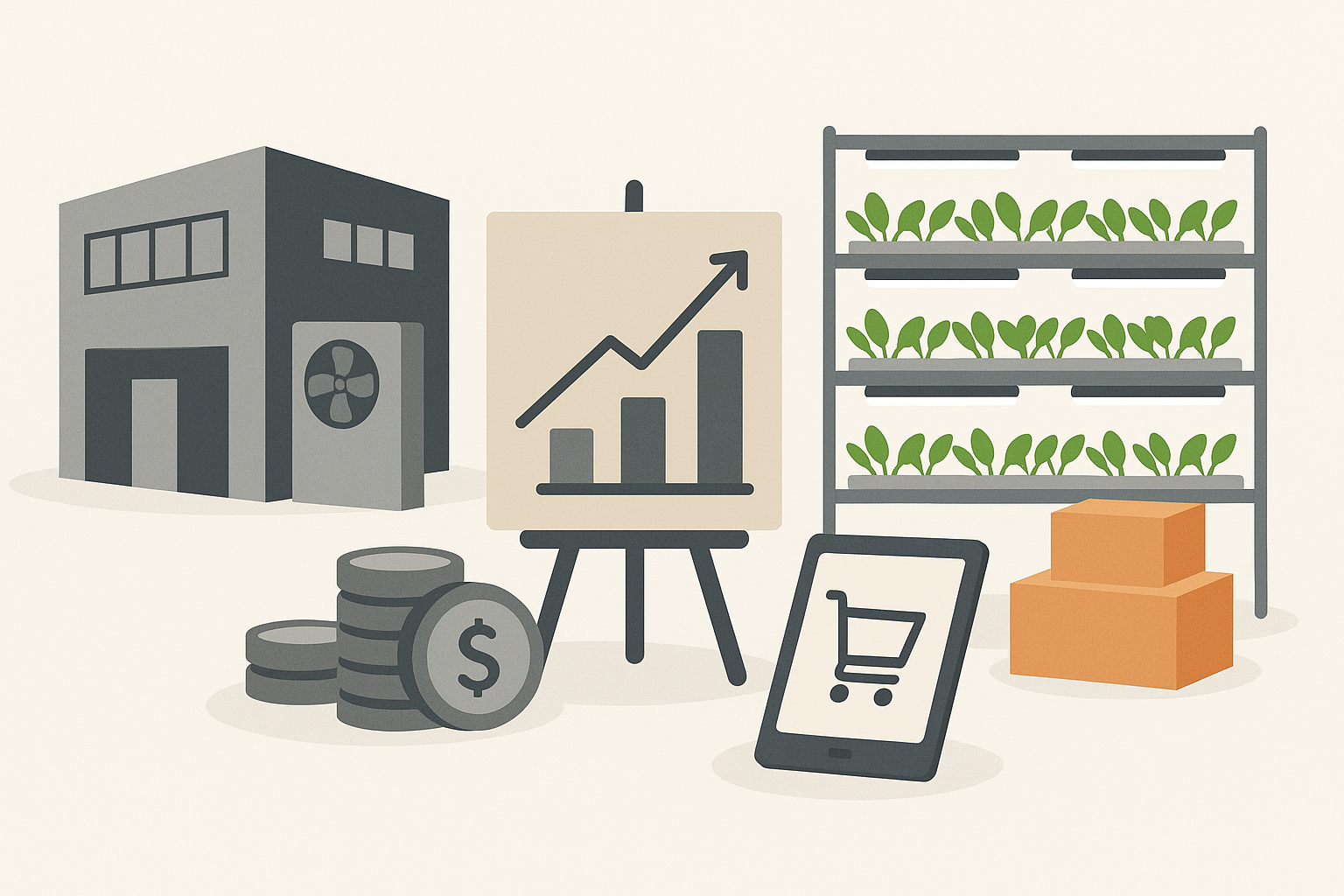
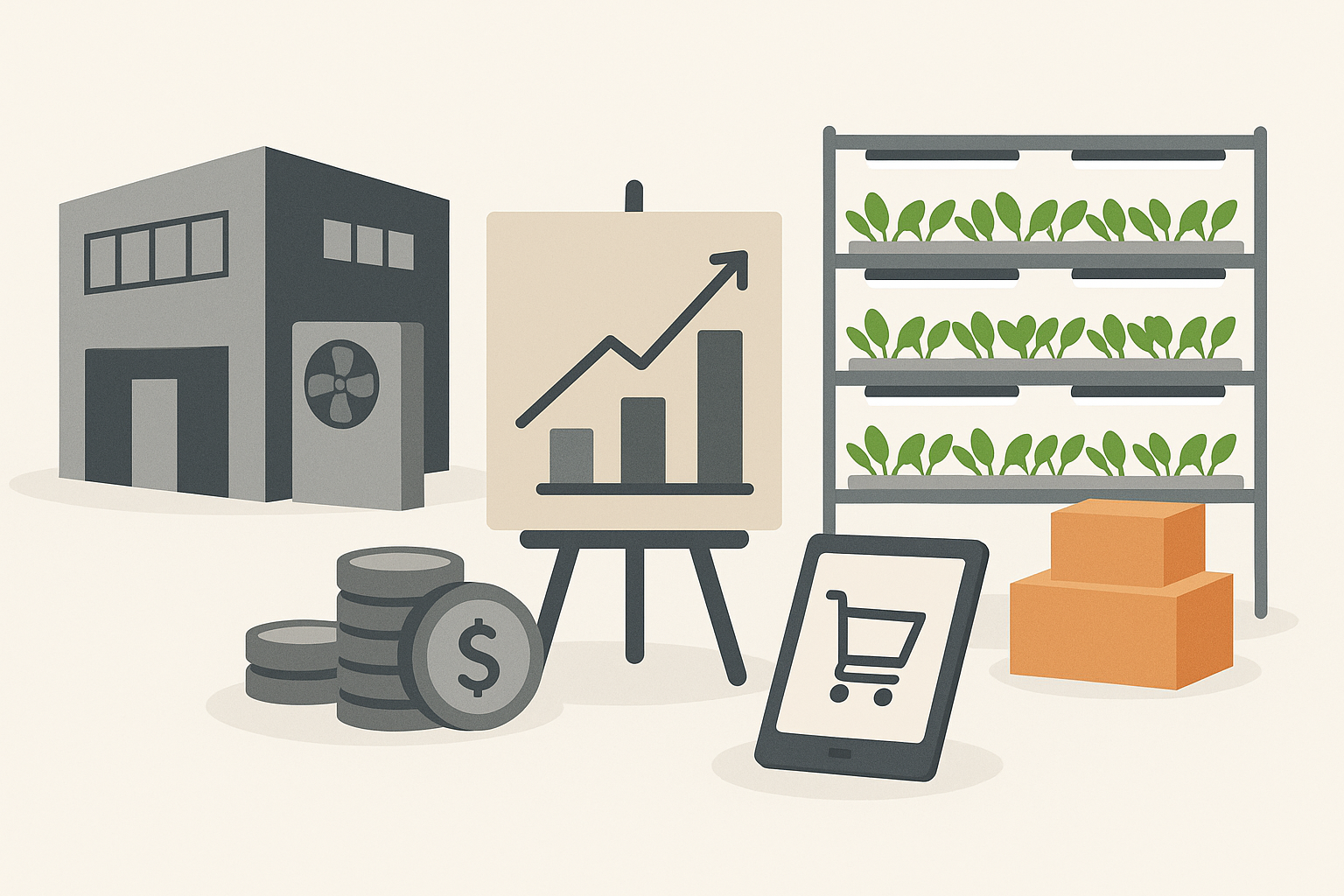
Capital investment in vertical farming typically includes the purchase or lease of property, structural retrofitting, growth systems such as hydroponic or aeroponic equipment, climate control and HVAC systems, and LED lighting infrastructure. These costs can run into millions for commercial-scale facilities. Once established, operational expenses include electricity, nutrient solutions, water, labour, and ongoing system maintenance.
Electricity is often the most significant recurrent cost, sometimes accounting for more than 50% of operational expenditure. Business plans must therefore model different energy price scenarios and consider strategies such as co-location with renewable energy sources or participation in demand-response energy markets. Labour is another major expense, particularly in manual harvesting, packaging, and system oversight. Automation technologies may reduce costs over time but require further capital outlay.
Revenue Streams and Market Dynamics
Revenue in vertical farming is closely linked to crop choice and the structure of regional food markets. Leafy greens and herbs dominate current production due to their relatively short growth cycles and high market value. However, the long-term economics of the industry will depend on diversification into crops such as strawberries, tomatoes, or pharmaceutical plants, which carry higher technical complexity but may generate stronger margins.
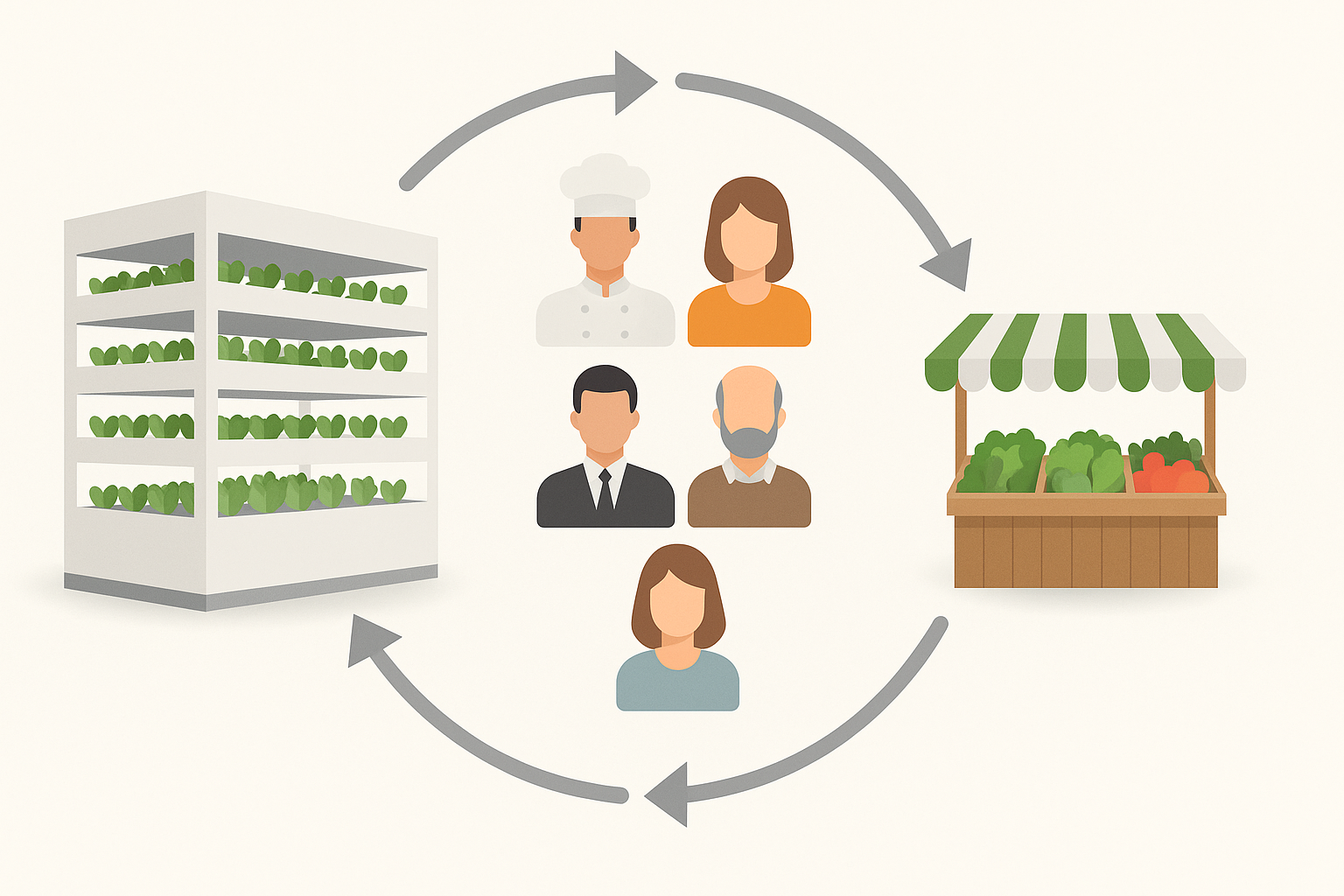
Market access is also critical. Vertical farms serving local supermarkets, restaurants, or subscription-based delivery schemes may achieve higher prices than farms attempting to compete directly with bulk outdoor agriculture. The business model must be aligned with the purchasing power and preferences of the target market: premium local produce for urban consumers may justify higher prices, while wholesale markets may not.
Risk, Scalability, and Financial Modelling
Every vertical farming business plan must address risk. Factors such as energy price volatility, supply chain disruptions, pest outbreaks in closed environments, or changes in consumer demand can affect viability. Scalability is another challenge. While pilot projects may demonstrate technical success, scaling up introduces new issues in logistics, workforce management, and capital financing.
Financial modelling should therefore incorporate sensitivity analyses. For example, what happens to profitability if electricity prices rise by 20%, or if market prices for leafy greens fall due to increased competition? Similarly, cash flow forecasting must consider the time lag between initial investment and revenue generation, which may stretch over several years. Sound planning requires contingency funds and investor patience.
Policy, Sustainability, and Long-term Strategy
Policy frameworks also shape the economics of vertical farming. Government incentives for renewable energy, sustainable agriculture, or urban development may reduce costs or open new markets. Conversely, regulatory requirements for food safety, water discharge, or building compliance can increase expenditure. A well-developed business plan must map these external influences and anticipate future changes.
Sustainability is not only a marketing tool but also a financial factor. Energy-efficient designs, water recycling, and low-waste nutrient delivery systems can reduce operating costs over time. As public scrutiny of energy-intensive industries grows, demonstrating genuine environmental responsibility may become a prerequisite for investment and consumer trust.
Building a Viable Business Plan
A robust business plan for vertical farming integrates economic modelling, operational detail, and strategic foresight. It should define the target market, set realistic financial expectations, and identify both risks and opportunities. Clarity is essential: over-optimistic projections, unsupported by data, undermine credibility with investors.
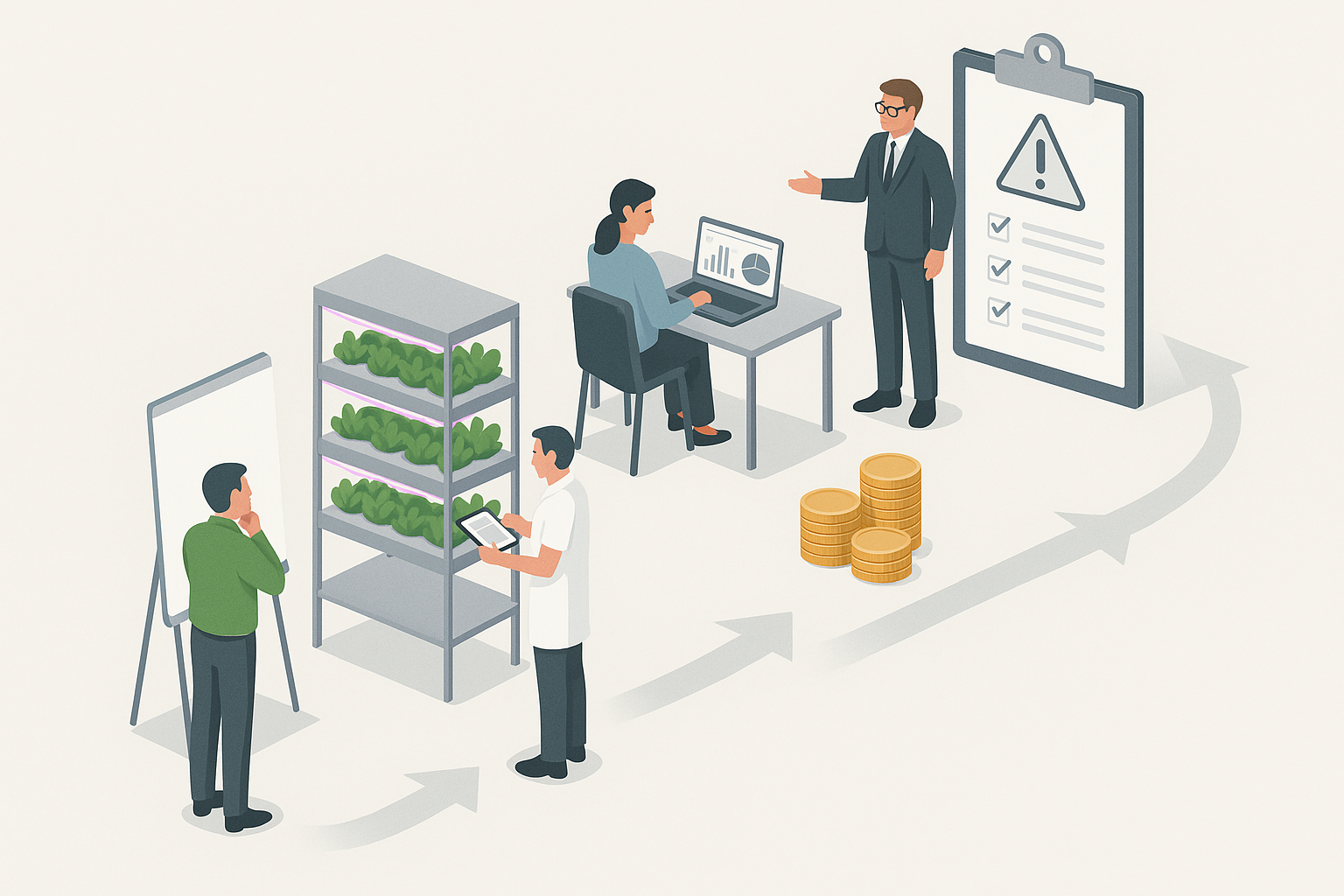
Successful plans often begin with a focused pilot project to validate technical systems and market demand, followed by staged expansion. This phased approach allows for iterative learning and refinement before committing to large-scale infrastructure. Partnerships with research institutions, food distributors, or energy providers may strengthen resilience and improve access to expertise and capital.
Conclusion
Business planning for vertical farming demands a clear-eyed view of economics and operational realities. While the technology holds promise for sustainable food production in urban and resource-constrained settings, and is essential in the context of future food security, its success depends on rigorous financial planning, careful crop selection, and alignment with market dynamics. Investors, entrepreneurs, and policymakers should approach the sector not as a guaranteed solution, but as a field where disciplined planning, innovation, and adaptability are essential.
Vertical farming is not simply a matter of growing upwards rather than outwards: it is an economic system shaped by capital investment, operating costs, and consumer demand. Those who succeed will do so not by ignoring these realities, but by mastering them.