Introduction to Vertical Farming Racks in Indoor Agriculture
Using vertical farming racks for indoor farming is a core design choice in many controlled environment agriculture (CEA) systems. These structures enable growers to stack plant production in multiple tiers, making the most of limited floor area while providing precise environmental control for each growing layer. The approach is particularly relevant to urban farming, where high land costs and space constraints drive demand for production systems that deliver maximum output from minimal footprints. Vertical racks are not simply shelving units: they form the backbone of an integrated production system in which lighting, irrigation, nutrient delivery, climate control, and monitoring technologies are engineered to function in harmony.
The value of vertical racking in CEA lies in its ability to combine spatial efficiency with crop quality optimisation. This is not a novel concept in agriculture; greenhouse growers have long experimented with multi-tier systems for propagation or specific crops. However, the integration of LED lighting, hydroponic or aeroponic irrigation, and advanced automation has transformed these racks from passive structures into active production platforms.
How Vertical Racks Support Optimised Plant Growth
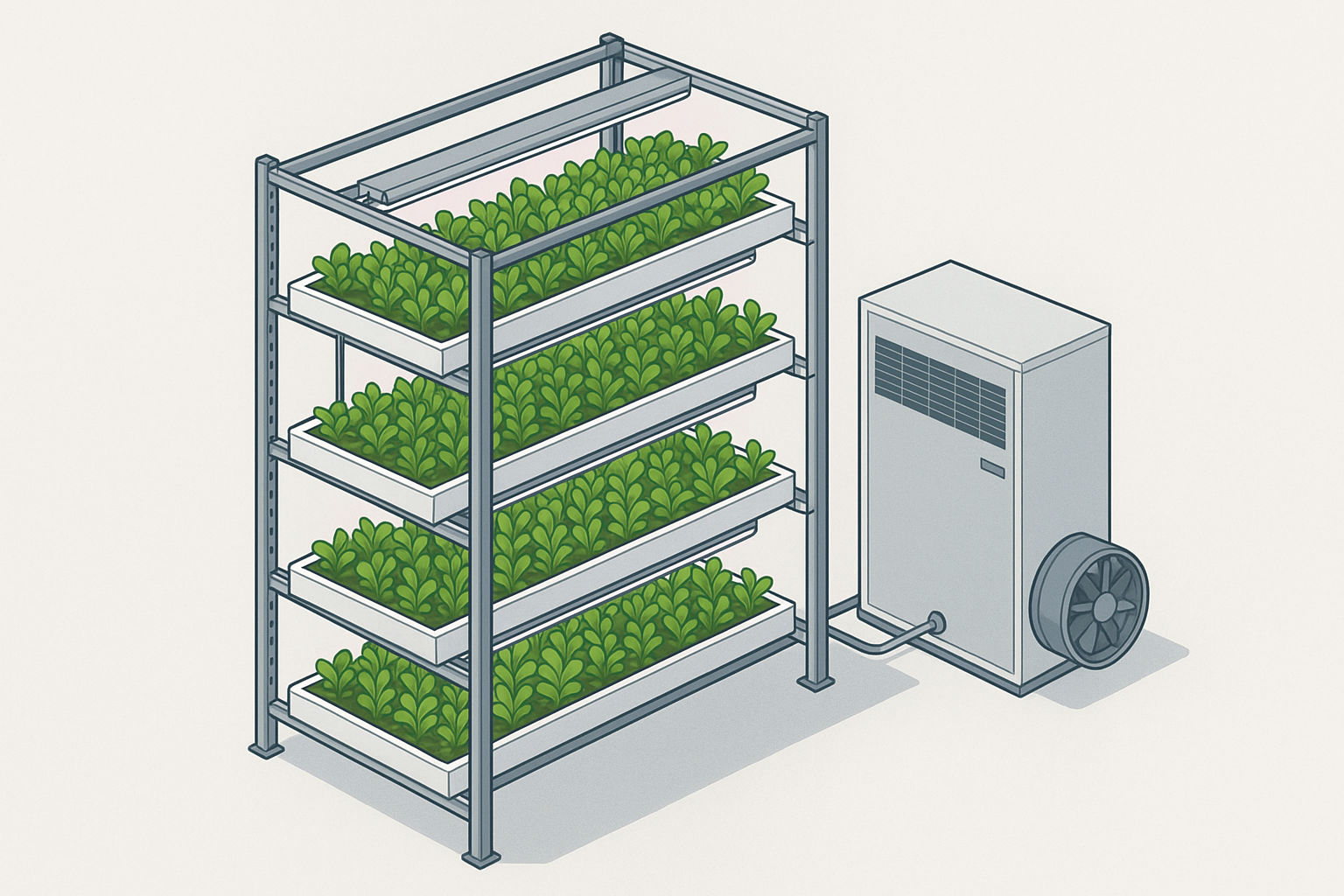
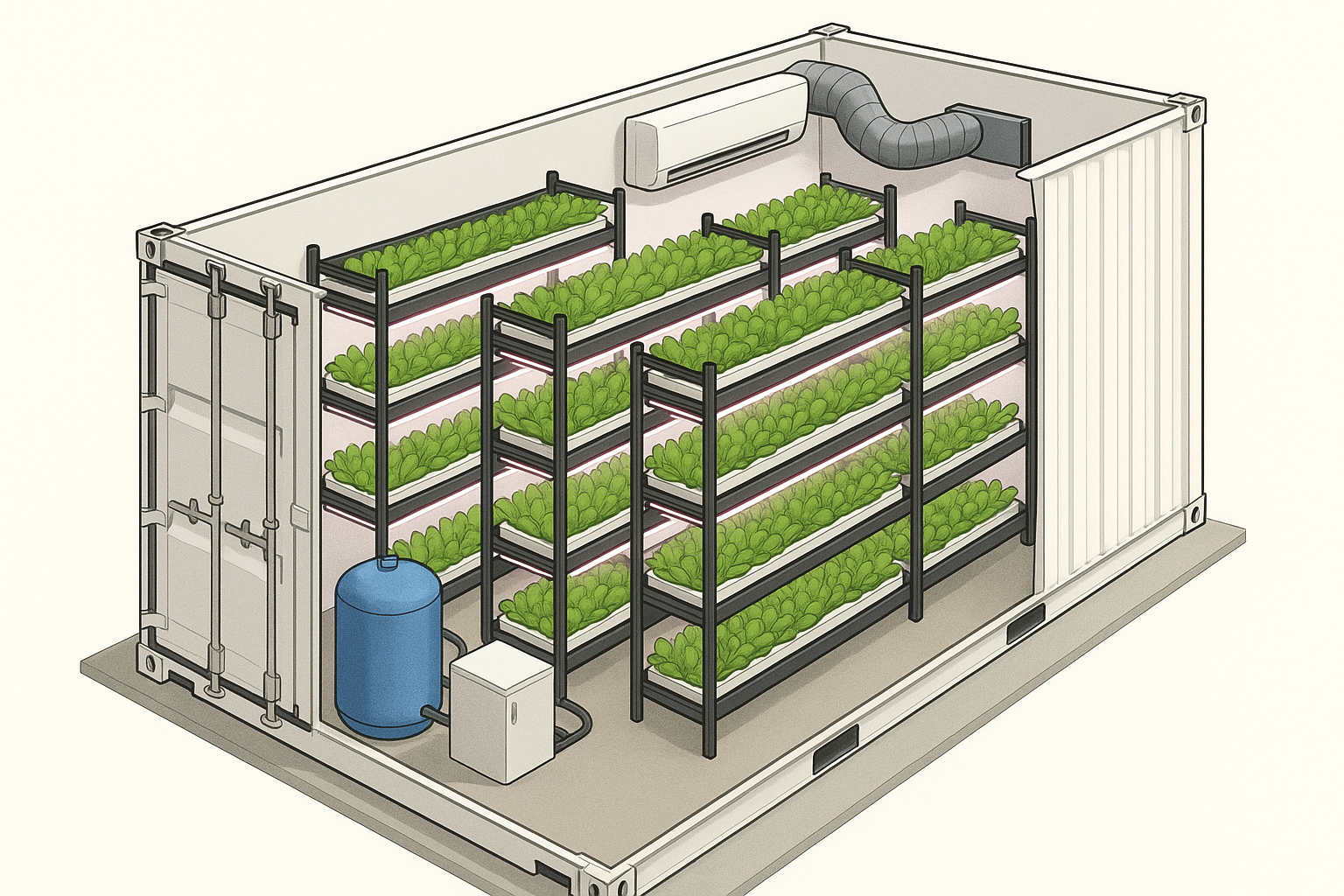
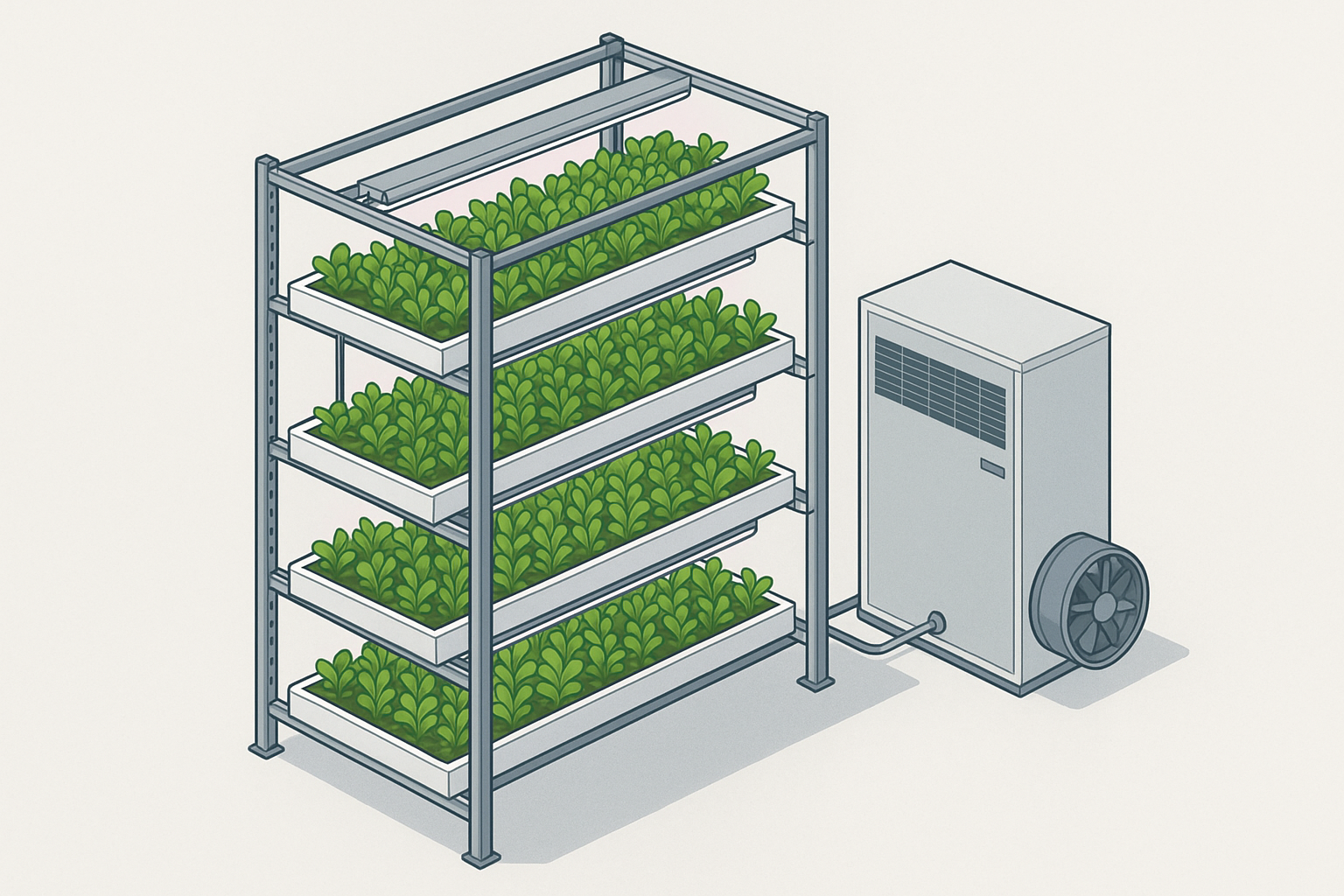
A vertical rack system in a CEA facility typically consists of multiple horizontal growing decks supported by a robust frame. Each deck is fitted with lighting, irrigation lines, drainage, and often air circulation components. By aligning these tiers within a climate-controlled enclosure, environmental parameters such as temperature, humidity, and CO₂ concentration can be maintained uniformly or varied deliberately between levels. This allows growers to fine-tune growing conditions for specific crop stages or varieties.
One important factor in the design of vertical racks is light uniformity. LED lighting can be positioned close to the plant canopy without producing excess heat, enabling tight vertical spacing. Rack height and tier spacing are calculated not only for crop morphology but also for efficient worker access during planting, maintenance, and harvesting. The modularity of rack design supports scalability: a facility can start with a small number of units and expand by adding more racks as demand grows.
Hydroponic channels, aeroponic misters, or substrate-based trays can all be incorporated into the rack system. Drainage and nutrient recirculation systems are usually integrated directly into the frame, reducing the footprint and minimising water loss. Airflow management is also critical; vertical racking changes how air moves through the growing area, so ducting or distributed fans are positioned to avoid stagnant zones that could increase disease risk.
Advantages in Space Efficiency and Yield Potential
The primary advantage of using vertical racks is the ability to multiply the growing surface area within the same floor space. In some facilities, three to seven growing tiers are possible, depending on ceiling height, crop type, and the ergonomics of labour tasks. This can increase yield per square metre of building footprint several-fold compared to single-layer systems.
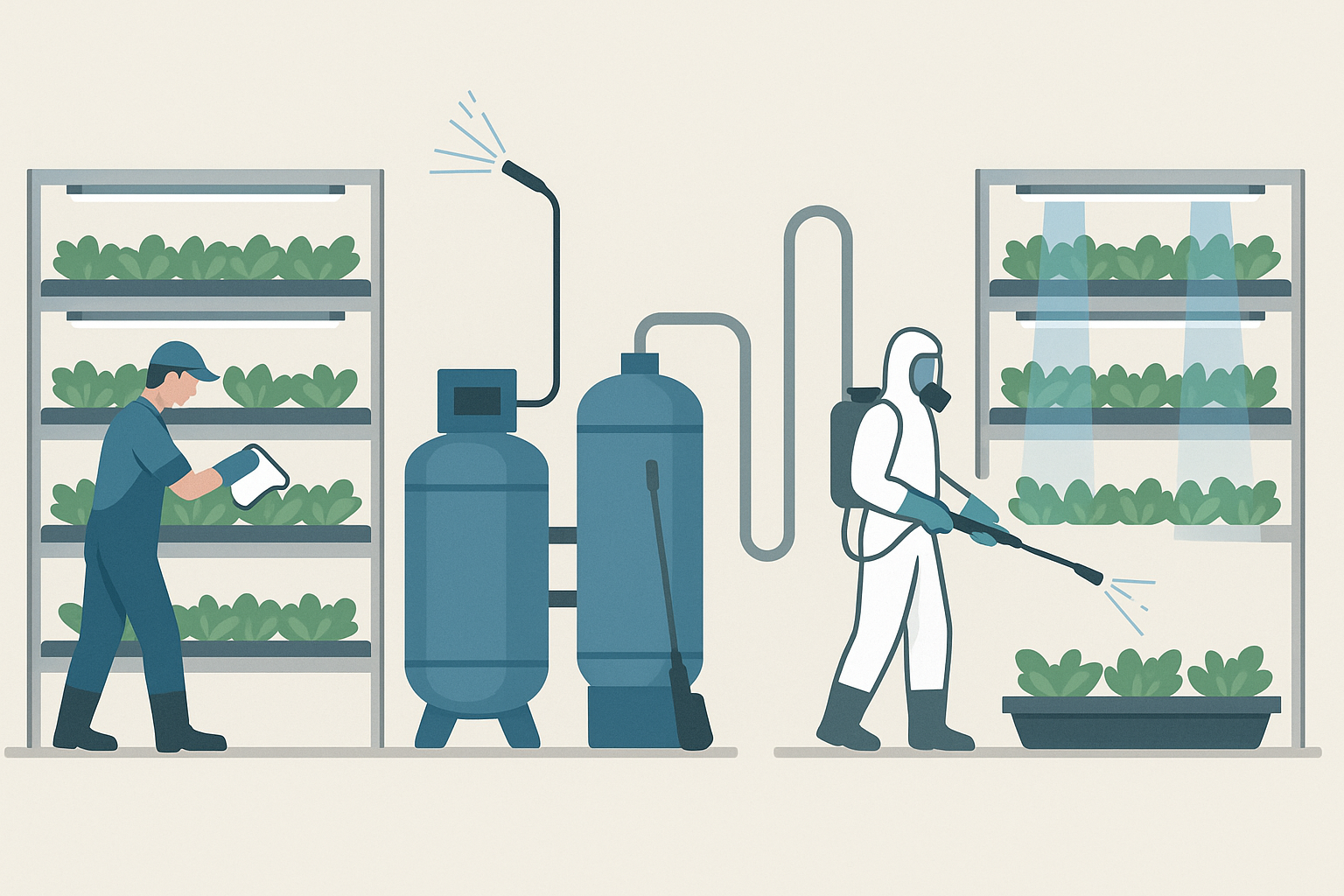
Higher density planting is balanced by the ability to provide each plant with targeted lighting and nutrients. Because the growing environment is sealed and controlled, vertical rack systems can reduce reliance on pesticides and mitigate seasonal variability. This consistency benefits both commercial growers seeking predictable output and researchers conducting controlled trials.
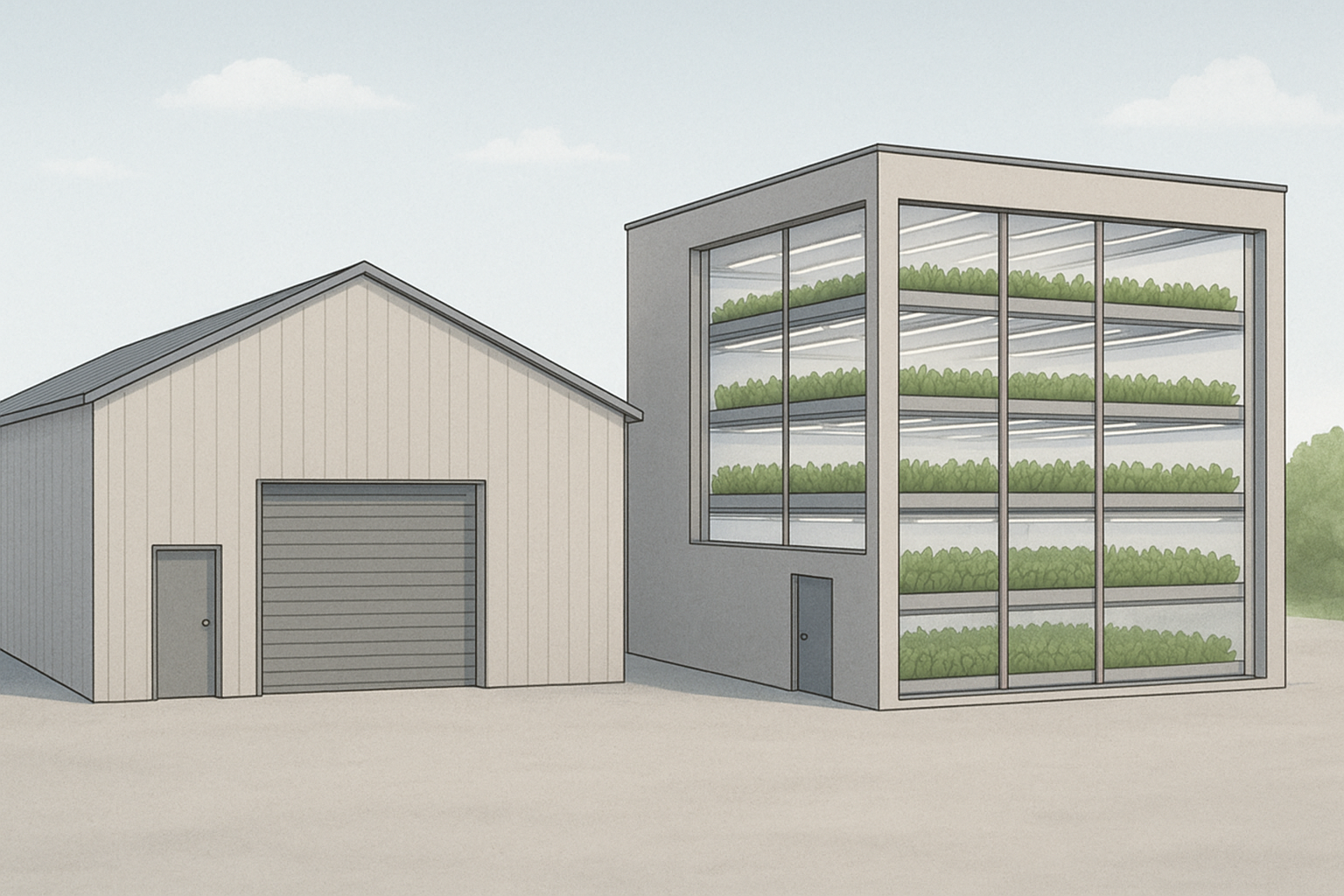
In urban contexts, vertical racks can enable production in unconventional locations such as retrofitted warehouses, basements, or repurposed retail units. This reduces the need to transport fresh produce over long distances, aligning with broader sustainability goals.
Engineering and Operational Considerations
While the advantages are clear, the adoption of vertical farming racks requires careful planning. Structural loading, for example, must account for the combined weight of plants, water and nutrient solution, and equipment. Safety considerations include secure anchoring, load distribution, and maintenance access.
Lighting and irrigation systems must be matched to the crop’s growth requirements, with an emphasis on energy efficiency. For instance, LEDs can be tuned for specific wavelengths that influence plant morphology, while irrigation cycles can be automated to maintain optimal root-zone conditions.
Energy consumption per kilogram of produce can be high if systems are not well designed. Therefore, pairing vertical rack installations with renewable energy sources, heat recovery systems, or optimised climate control algorithms is increasingly common in advanced facilities.
From an operational perspective, vertical racks can change labour dynamics. Although they reduce walking distances and can improve workflow efficiency, working at height or in confined spaces requires ergonomic design and, in some cases, mechanical lifts or movable platforms. Digital monitoring tools, such as remote sensors and automated alerts, help reduce the need for constant manual inspection, further improving labour efficiency.
Role in Future CEA Development
Vertical rack systems are central to the evolution of CEA towards higher output, lower environmental impact, and greater flexibility in location choice. The concept of stacking crops vertically is simple in theory yet potentially complex in execution. Success depends on engineering precision, crop-specific knowledge, and operational discipline. As technology costs fall and integration improves, these systems are likely to become accessible to a wider range of growers, from large-scale commercial operators to community-led initiatives.
For policy-makers, farming crops vertically presents a route to increasing local food production without expanding agricultural land use. For researchers, they provide a reproducible environment in which to explore plant physiology, breeding, and resource use efficiency. For investors, they represent a modular, scalable infrastructure that can adapt to different crops and markets.