Pest and disease management in indoor farming is a critical aspect of maintaining healthy crops, consistent yields, and economic viability. While Controlled Environment Agriculture (CEA) offers many advantages over traditional field production, such as physical barriers against many external threats and the ability to regulate climate variables, it is not immune to biological challenges. The controlled and often high-density conditions that make CEA productive can also create favourable environments for certain pests and pathogens if prevention and monitoring are not rigorously applied. Understanding the unique pest and disease dynamics within closed or semi-closed systems is essential for anyone seeking to operate a reliable and sustainable indoor farm.
Why Pests and Diseases Still Matter in Controlled Environments
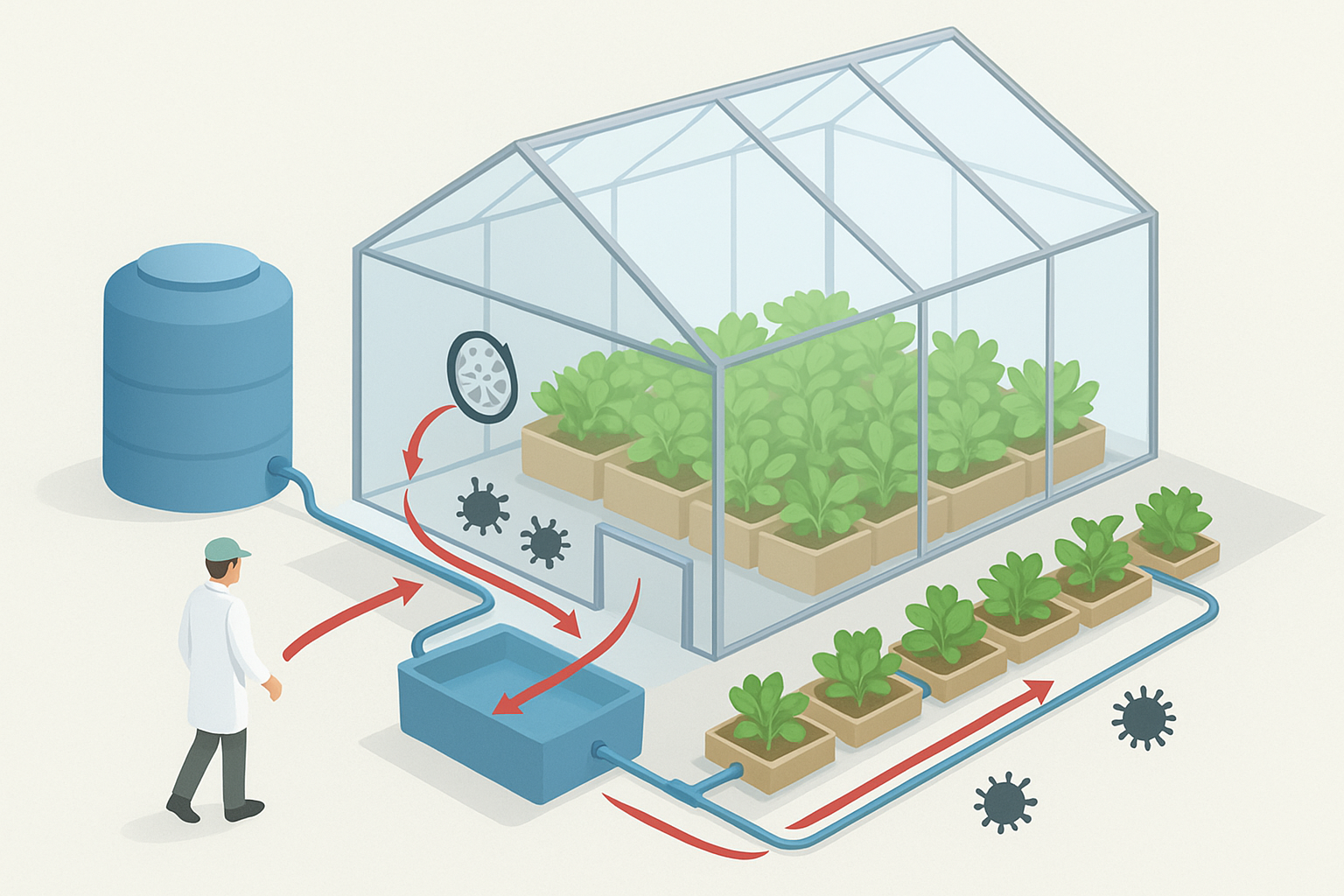
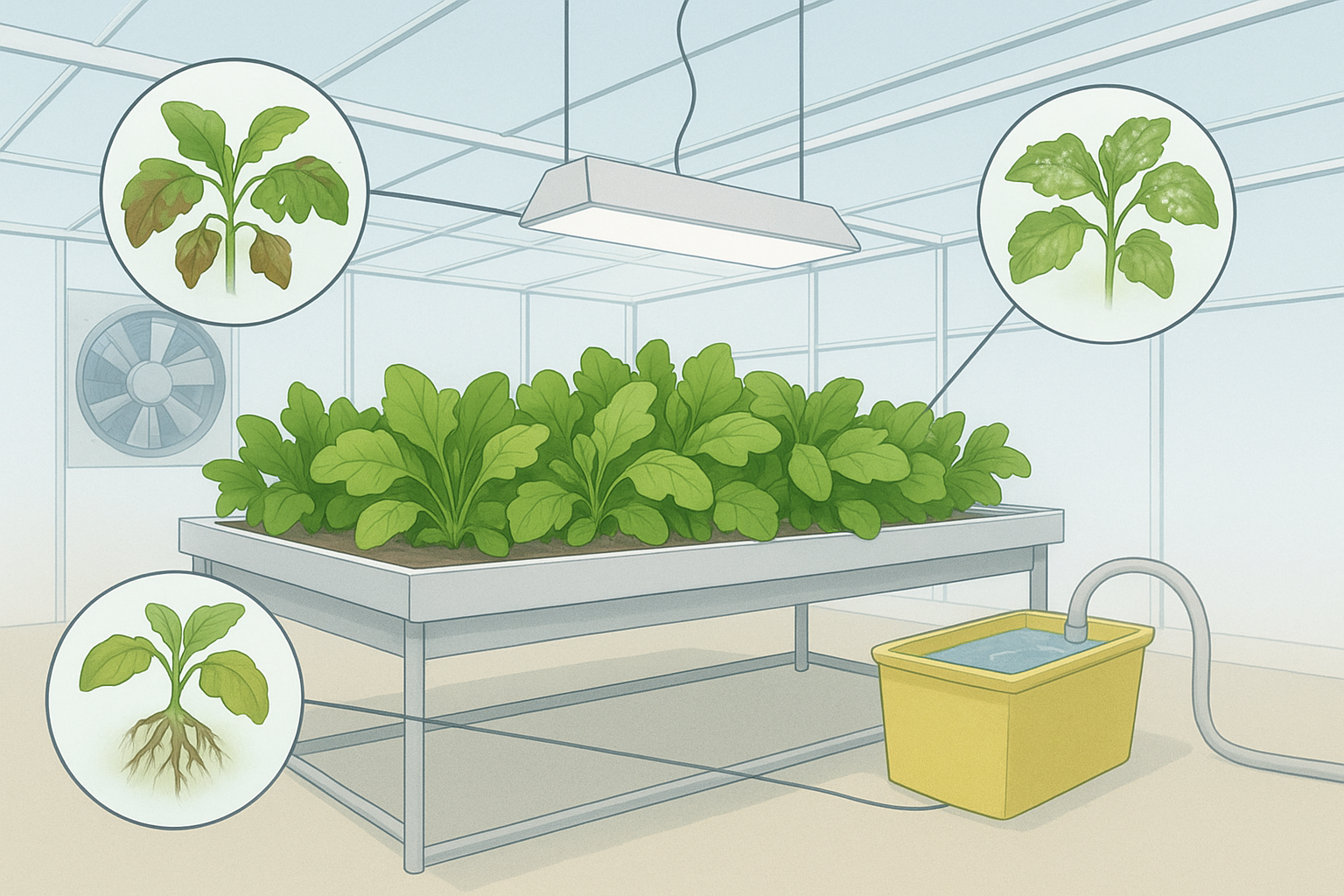
It is sometimes assumed that moving crop production indoors largely eliminates pest and disease pressures. In reality, although CEA facilities reduce exposure to wind-borne spores, migrating insects, and soil-borne pathogens, these threats can still infiltrate through contaminated planting materials, human movement, water systems, and ventilation inlets. Once inside, pests such as thrips, whiteflies, aphids, and spider mites can spread rapidly due to the absence of natural predators. Diseases caused by fungi, bacteria, and viruses, including powdery mildew, Botrytis grey mould, Pythium root rot, and Tomato Mosaic Virus, can persist in the stable temperature and humidity conditions that CEA systems provide. In some cases, the very consistency of the environment can enable pests and pathogens to reproduce continuously, with no seasonal die-off.
The Biological and Economic Stakes
Unchecked pest or disease outbreaks in indoor farms can lead to significant crop losses and even total crop failure. Economically, such events can jeopardise contracts, disrupt supply chains, and damage brand reputation. Scientifically, the challenge lies in managing organisms that can adapt quickly to control measures in confined systems. For example, repeated use of a single pesticide can select for resistant pest populations, and certain plant pathogens can survive for extended periods on surfaces or within substrates. The investment in CEA infrastructure also means that downtime for cleaning or replanting carries high opportunity costs. For these reasons, a preventive approach to pest and disease management is not merely advisable; it is essential for operational resilience.
Prevention, Monitoring, and Integrated Strategies
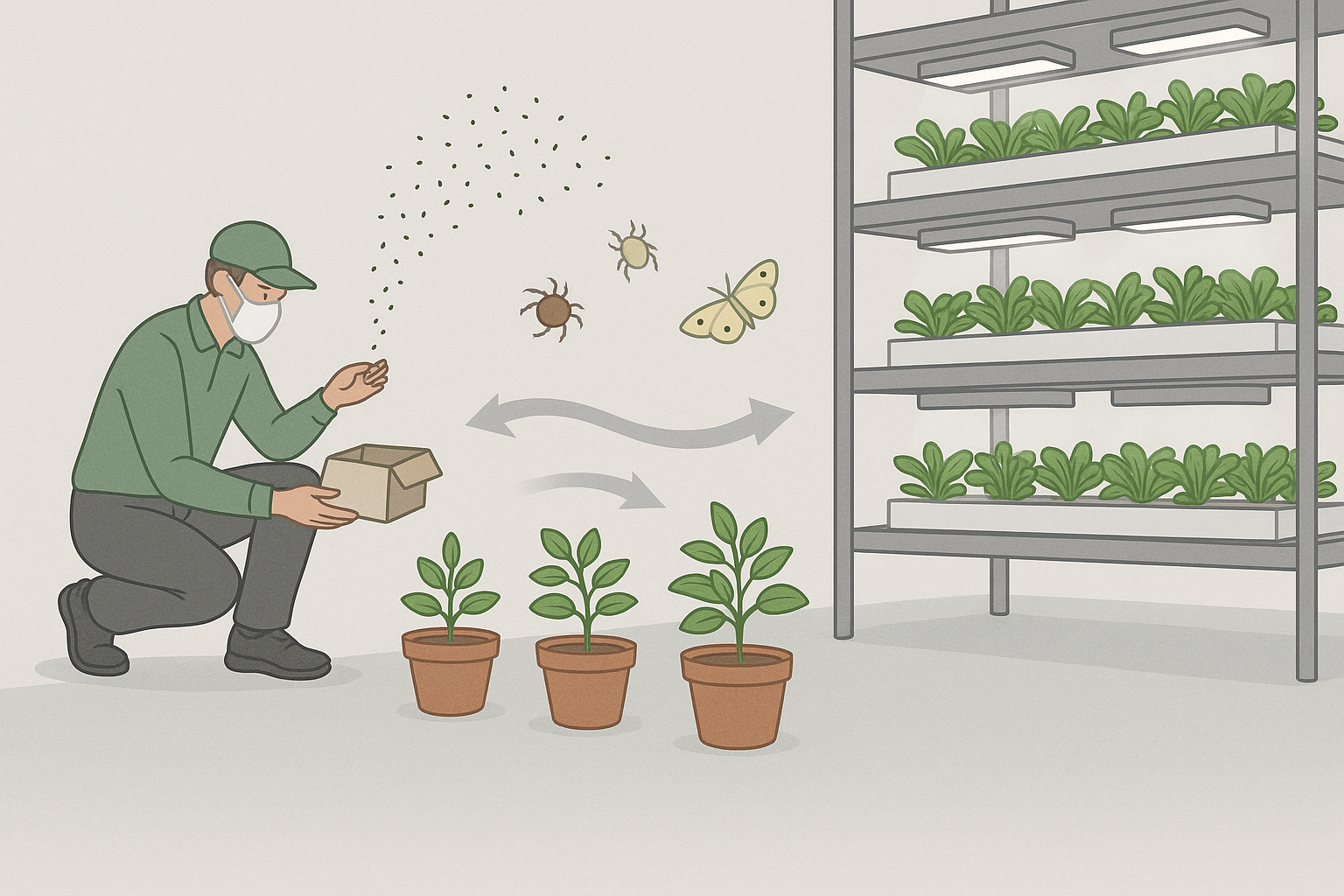
Modern pest and disease management in indoor farming is based on three interconnected pillars: prevention, monitoring, and control. Prevention begins with strict biosecurity protocols: sanitising tools and workspaces, controlling human and material entry into the growing space, and sourcing clean planting materials. Monitoring involves regular scouting, trap placement, and in some cases, automated sensor networks or imaging systems that can detect early signs of stress or infestation. Control strategies are increasingly aligned with Integrated Pest Management (IPM) principles: combining cultural, biological, and, when necessary, chemical methods in a way that minimises environmental impact and avoids resistance build-up. Biological control agents, such as predatory mites, parasitoid wasps, or beneficial fungi, can be introduced to suppress pest populations in some forms of CEA (though this style of management is typically incompatible with high-care CEA facilities), while environmental adjustments can reduce conditions that favour disease development.
The Role of Technology and Data
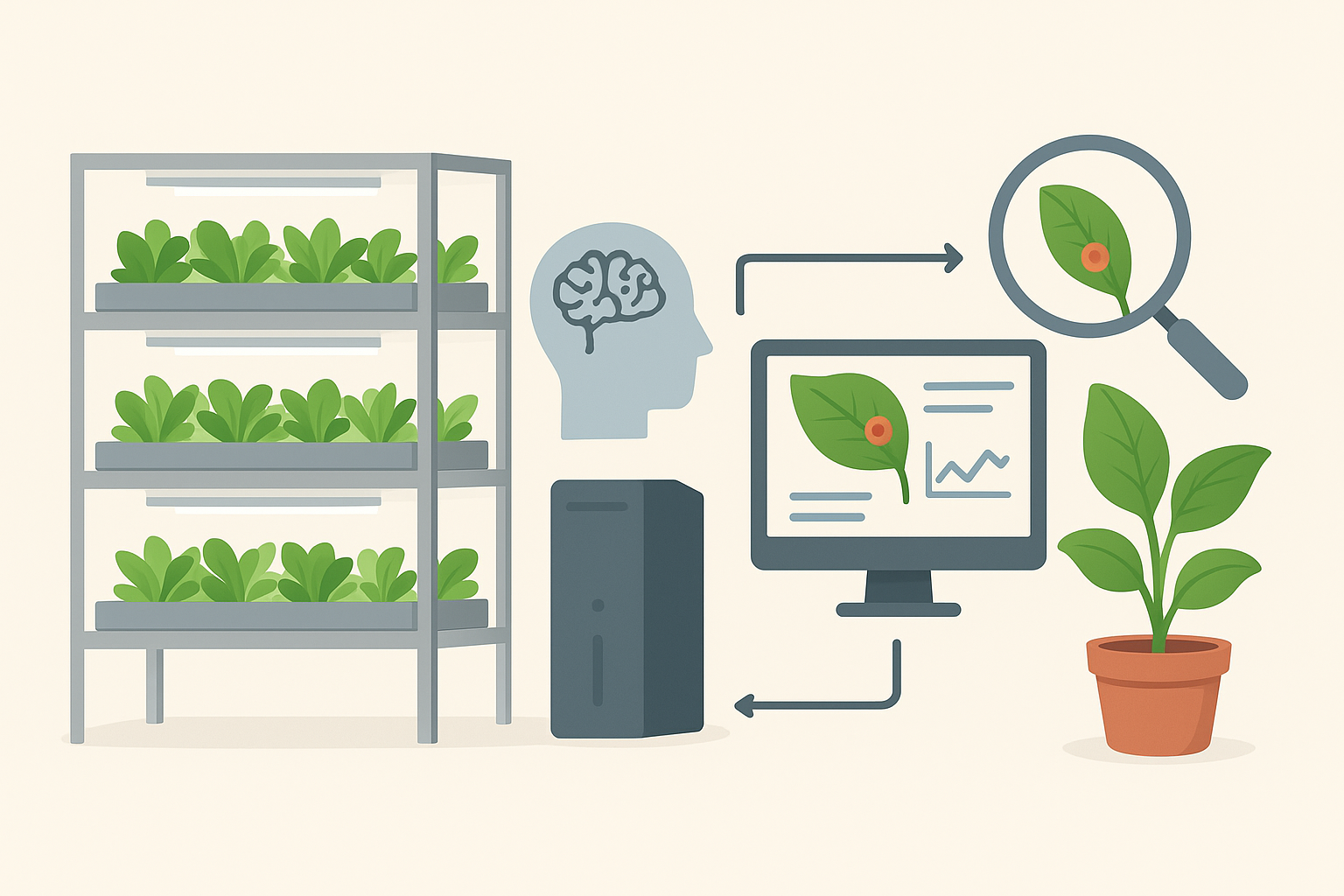
CEA facilities are increasingly turning to technology to support pest and disease management. Computer vision systems can identify pests on leaves before they are visible to the human eye; climate control software can automatically adjust humidity to levels that are less conducive to fungal growth; and molecular diagnostic tools can confirm the presence of a pathogen before symptoms become apparent. By integrating these technologies into standard operating procedures, indoor farms can shift from reactive to predictive management. This not only improves crop health but also reduces reliance on chemical inputs, supporting both sustainability and regulatory compliance.
Research, Policy, and the Future of Indoor Crop Protection
As the CEA sector grows, research into pest and disease ecology in closed environments is expanding. Studies are focusing on how controlled climates influence pest life cycles, how pathogens interact with artificial lighting regimes, and how microbiomes in hydroponic systems affect plant immunity. Policymakers are beginning to recognise that biosecurity guidelines for CEA facilities require different considerations than those for open-field agriculture, particularly regarding movement of plant material and the approval of biological control agents. The future of pest and disease management in indoor farming will likely be characterised by greater automation, increased use of beneficial organisms, and deeper integration of plant health monitoring into overall farm management systems.
By understanding the distinct challenges of pest and disease management in indoor farming and implementing rigorous, evidence-based strategies, CEA operators can protect their crops, safeguard their investments, and ensure consistent, high-quality production. In the end, the aim is not simply to control pests and pathogens after they appear, but to design and operate systems that make significant outbreaks unlikely in the first place. This proactive approach is the foundation of resilient, sustainable, and profitable indoor agriculture.