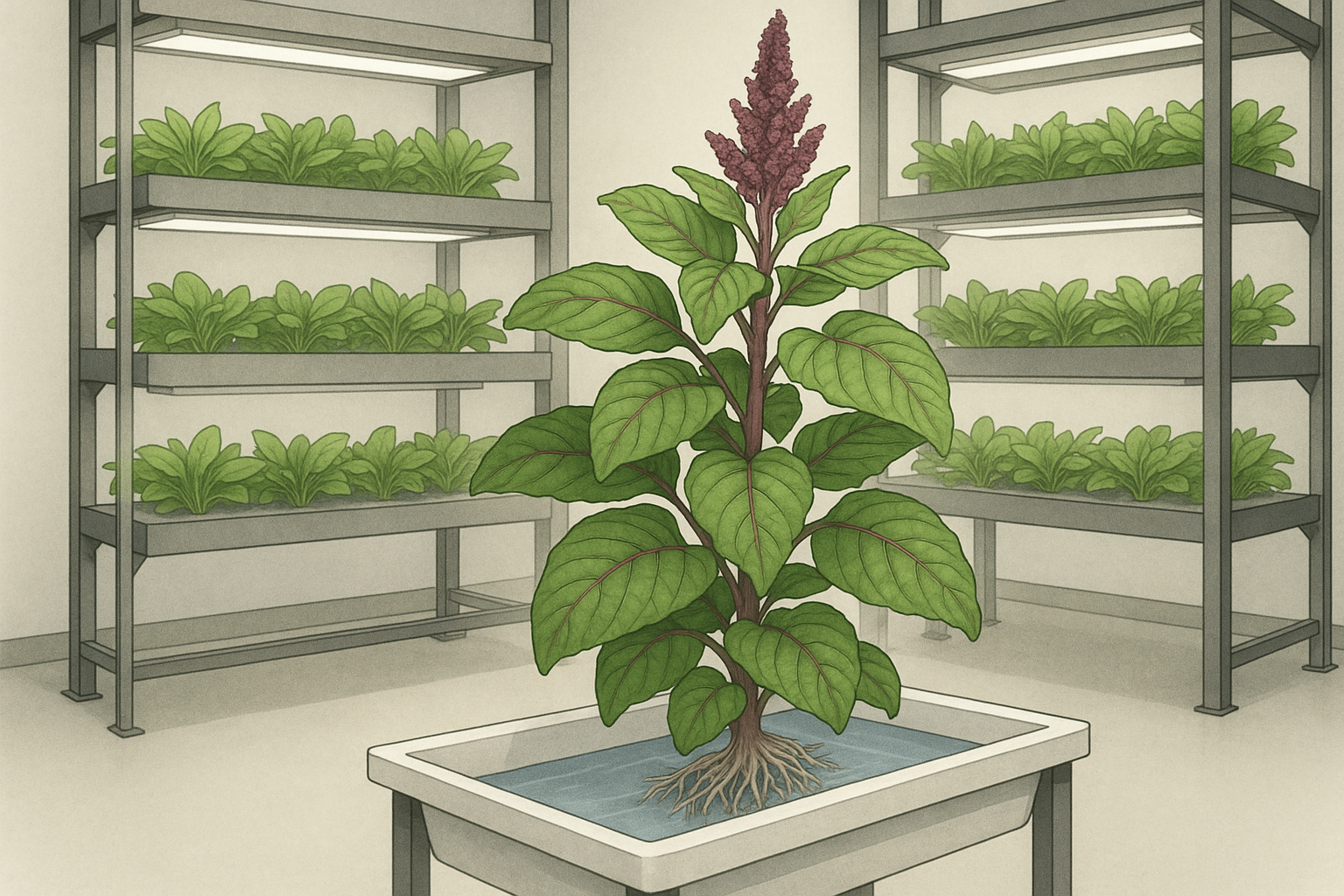
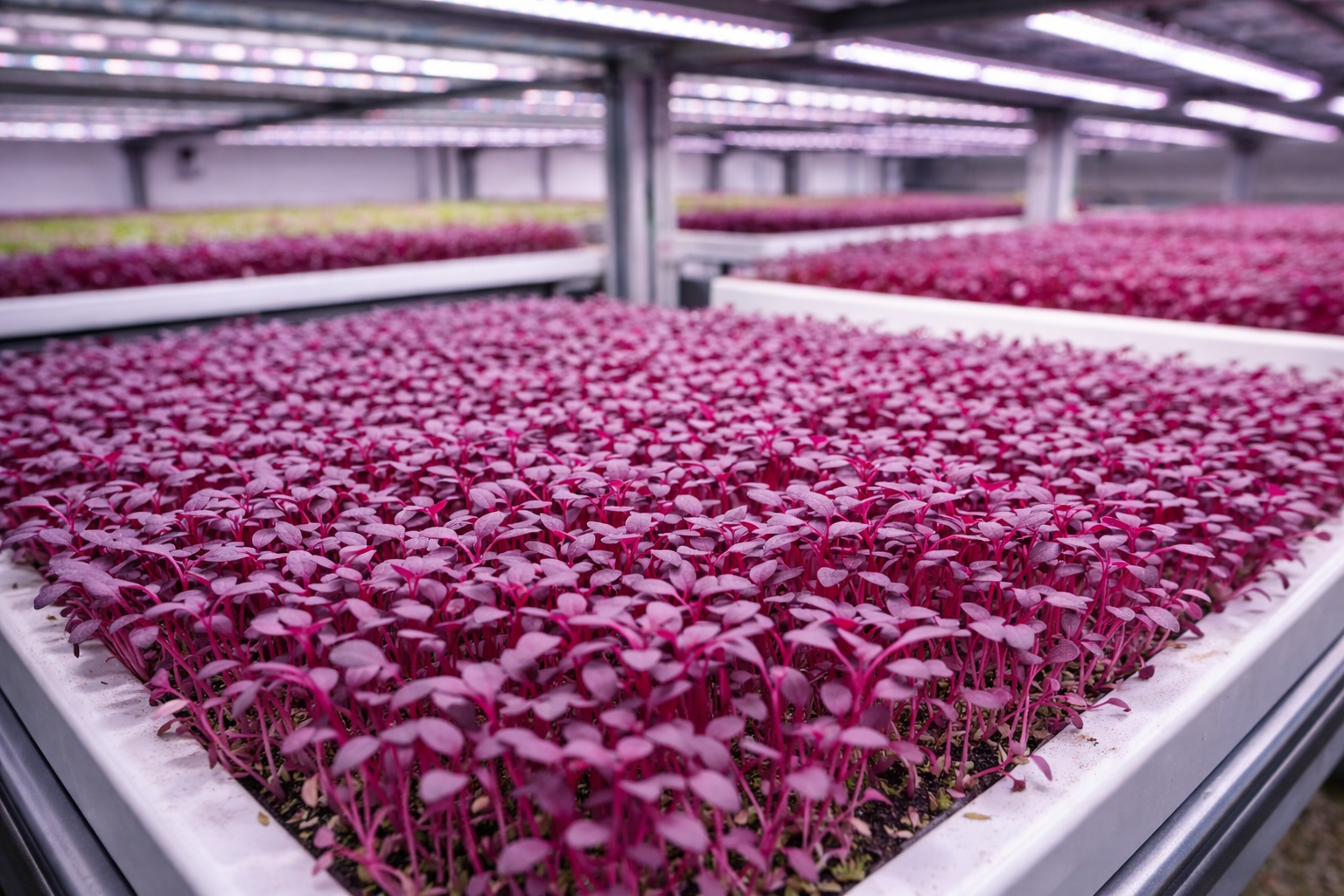
Amaranth (Amaranthus spp) is a resilient and versatile plant that has been cultivated for thousands of years, prized for both its nutrient-rich leaves and its highly proteinaceous seeds. Its adaptability to different climates and soils has made it a staple in many traditional farming systems, and its suitability for controlled environments and hydroponic cultivation has attracted attention.
Here we introduce the biology, growth requirements, and potential applications of amaranth in CEA systems, how it can be integrated into multi-layer farming operations, and what implications it has for both commercial production and food security.
Why Amaranth?
Amaranth belongs to the Amaranthaceae family, which includes species grown for leafy vegetables, ornamentals, and grains. Its nutritional profile is exceptional: the leaves are rich in vitamins A, C, and K, along with calcium and iron, while the seeds contain high levels of protein, including lysine, which is often limited in cereals. For growers, this dual-use potential makes amaranth particularly attractive in controlled environments where space is at a premium.
Another notable trait is its rapid growth cycle. Amaranth can be grown as a microgreen in 7-14 days or as a leafy green that can be harvested within 25–35 days of sowing, making them comparable to lettuce in terms of turnover time. Grain amaranth requires a longer growth cycle, often extending beyond 90 days, but offers a high-value harvest of pseudo-cereal grains. The crop's flexibility means it can be slotted into different production models, whether as a fast-growing microgreen, a leafy green for restaurants and retail, or as an experimental high-protein grain in research-focused vertical farms.
Environmental Requirements in CEA
Like most CEA crops, amaranth thrives under precise management of light, temperature, and nutrient supply. Optimal growth has been recorded at day temperatures of 22–28°C with moderate humidity levels. Amaranth tolerates higher temperatures better than many leafy crops, which could make it an important option in warm-climate regions where energy efficiency in cooling is a priority.
From a lighting perspective, amaranth responds well to high photosynthetic photon flux density (PPFD) values. Studies have shown that red-dominant spectra encourage leaf expansion, while the inclusion of blue wavelengths improves nutrient density and pigment development. This responsiveness suggests that LED light recipes can be tailored to produce leaves with higher antioxidant properties or seeds with improved nutrient quality, depending on the grower’s goals.
Nutrient management is another key factor. Amaranth requires relatively high nitrogen levels for leaf production, but when grown for grain the balance of phosphorus and potassium becomes more critical.
Suitability for Vertical Farming
Amaranth, particularly when grown for leaves, suits vertical farming well. The plants remain relatively short if harvested young, and their ability to regrow after cutting allows for multiple harvest cycles. In high-density plantings, amaranth leaves can rival lettuces and other high productivity leafy greens in output per unit area.
However, when considering grain amaranth, vertical systems face challenges. The plants can reach heights of over 1.5 metres, requiring more space and structural support. This makes seed production less efficient in multi-tiered farms, although research is ongoing into dwarf varieties that may be more compatible with vertical systems. In the meantime, most commercial indoor farms are focusing on leafy amaranth, microgreens, or baby leaves, which are better suited to confined growth environments.
Economic and Market Potential – Amaranth Microgreens vs. Leafy Greens
Consumer interest in alternative grains and nutrient-dense greens is steadily increasing. Amaranth leaves have a long culinary history in Africa, Asia, and South America, and their integration into global urban diets represents an opportunity for vertical farms to diversify beyond conventional lettuce and basil. For restaurants and niche retailers, offering a less common but highly nutritious green can be a market differentiator.
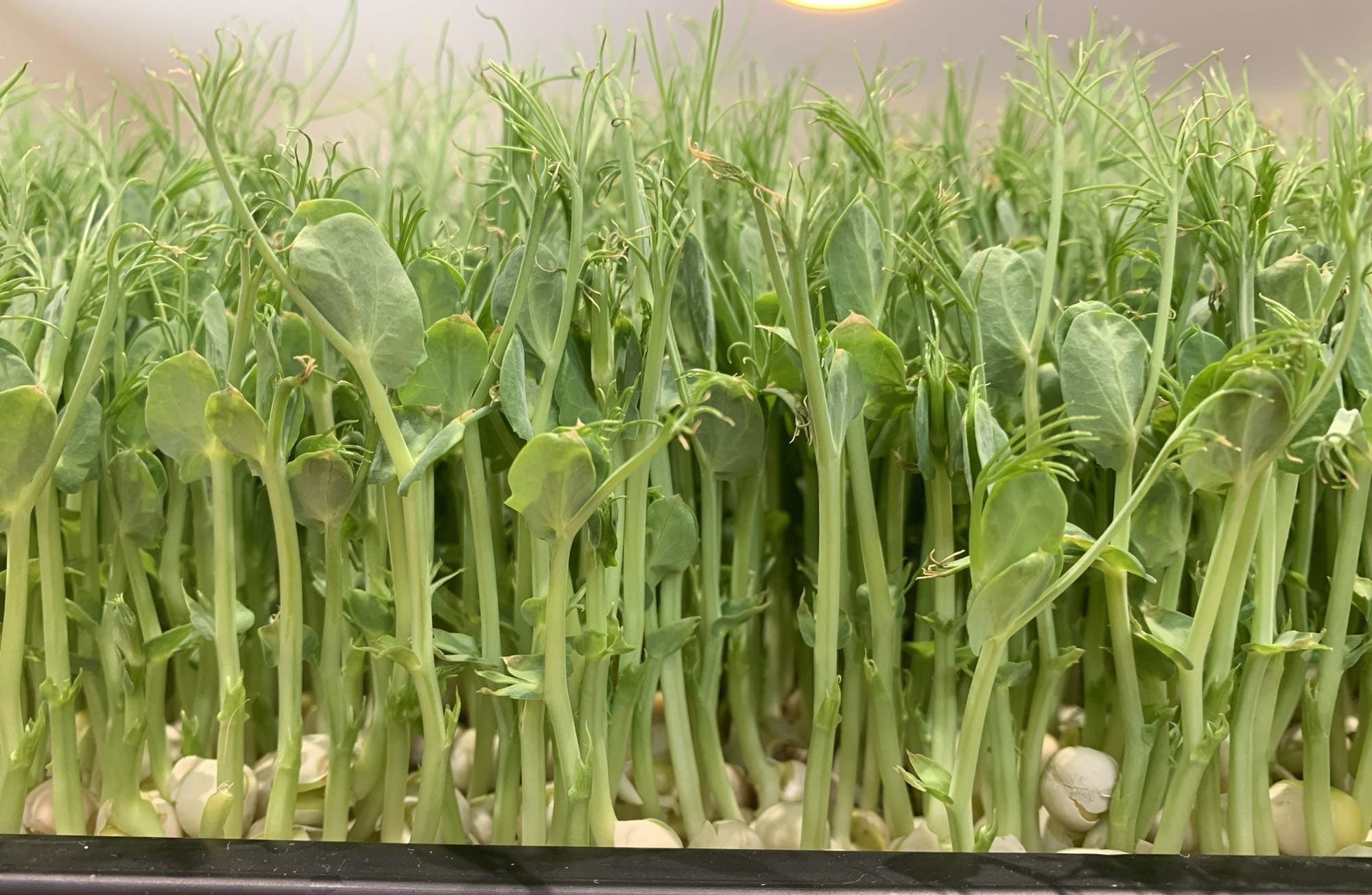
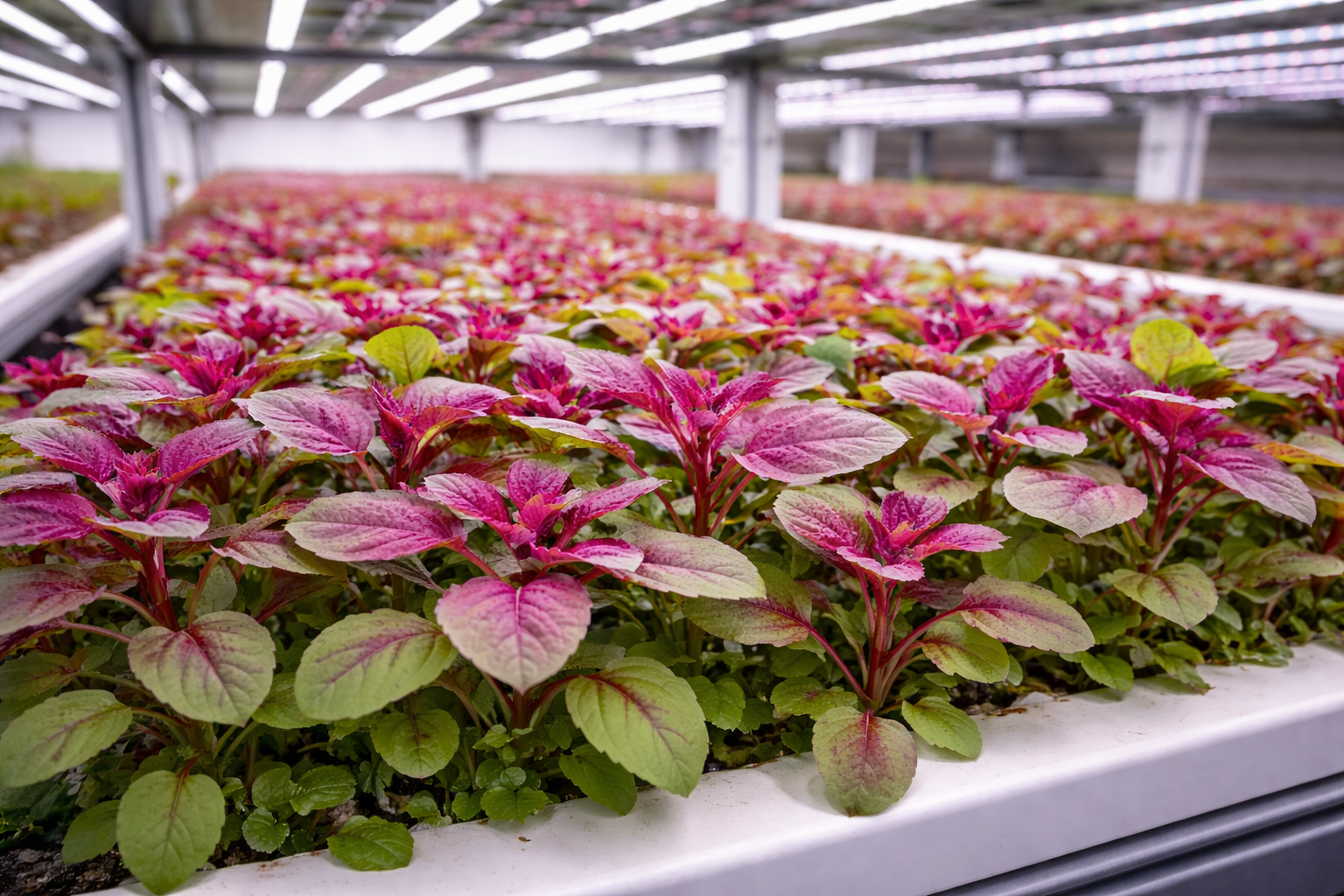
As a microgreen, amaranth offers rapid turnover, often ready for harvest within 10–14 days, producing vibrant red or green cotyledons that are highly sought after by chefs for their visual appeal and concentrated flavour. This short cycle makes it particularly efficient for high-frequency harvest models, maximising output per square metre. By contrast, growing amaranth to a larger leafy stage requires 25–35 days, but the yield per plant is significantly greater, and the leaves are rich in vitamins and minerals with a more established market in traditional cuisines.
From a value perspective, microgreens command a higher price per kilogram due to their culinary niche, yet larger leafy amaranth has broader potential as a staple vegetable, especially if vertical farming enterprises seek to appeal to mainstream markets and diversify beyond luxury products. Ultimately, the decision between microgreen and leafy production depends on the grower’s target market: microgreens suit premium, short-cycle models, while full-leaf production supports volume-based, nutrition-focused strategies.
Role in Food Security and Sustainability
Amaranth is not merely a commercial curiosity. Its resilience and nutritional profile mean it could play a role in strengthening food security under conditions of climate change. In CEA systems, where water use efficiency is high and external climate variability is minimised, amaranth offers a dependable source of leafy greens that can be produced year-round close to urban populations.
There are also wider sustainability considerations. Leafy amaranth can be produced rapidly with relatively low inputs compared to many other crops. Its tolerance for heat may reduce the cooling energy costs associated with other temperate crops in vertical farming facilities. Moreover, if breeding programmes succeed in developing dwarf seed-producing varieties, amaranth could contribute to urban protein production in addition to leafy greens.
Research and Breeding Opportunities
One of the current limitations of growing amaranth in CEA is the lack of targeted breeding. Most available varieties were developed for open-field agriculture and are not optimised for high-density or low-height indoor systems. This creates an opportunity for plant scientists to develop cultivars with traits specifically suited to vertical farming: compact growth, rapid regrowth after harvesting, optimised nutrient-use efficiency, and enhanced nutritional profiles.
Further research into light spectrum manipulation could also help maximise amaranth’s nutritional value. For example, controlled studies have indicated that certain red:blue light ratios increase leaf concentrations of betalains and carotenoids. Such findings highlight the potential of CEA not just to produce more food, but to produce food of higher nutritional quality.
Conclusion
Growing amaranth in CEA combines the ancient resilience of a traditional staple with the technological innovation of vertical farming. Its short crop cycle, nutritional richness, and adaptability make it a promising addition to controlled environment crop portfolios. While challenges remain in scaling grain production indoors, leafy amaranth and microgreens are already emerging as commercially viable options.
As the vertical farming sector seeks to diversify beyond its reliance on a narrow set of crops, amaranth illustrates how underutilised plants can find renewed relevance in urban agriculture. With targeted research and careful system design, amaranth may yet move from niche trials to mainstream production, contributing to both local food diversity and global food security.