
Understanding the Link: CEA and Food Security
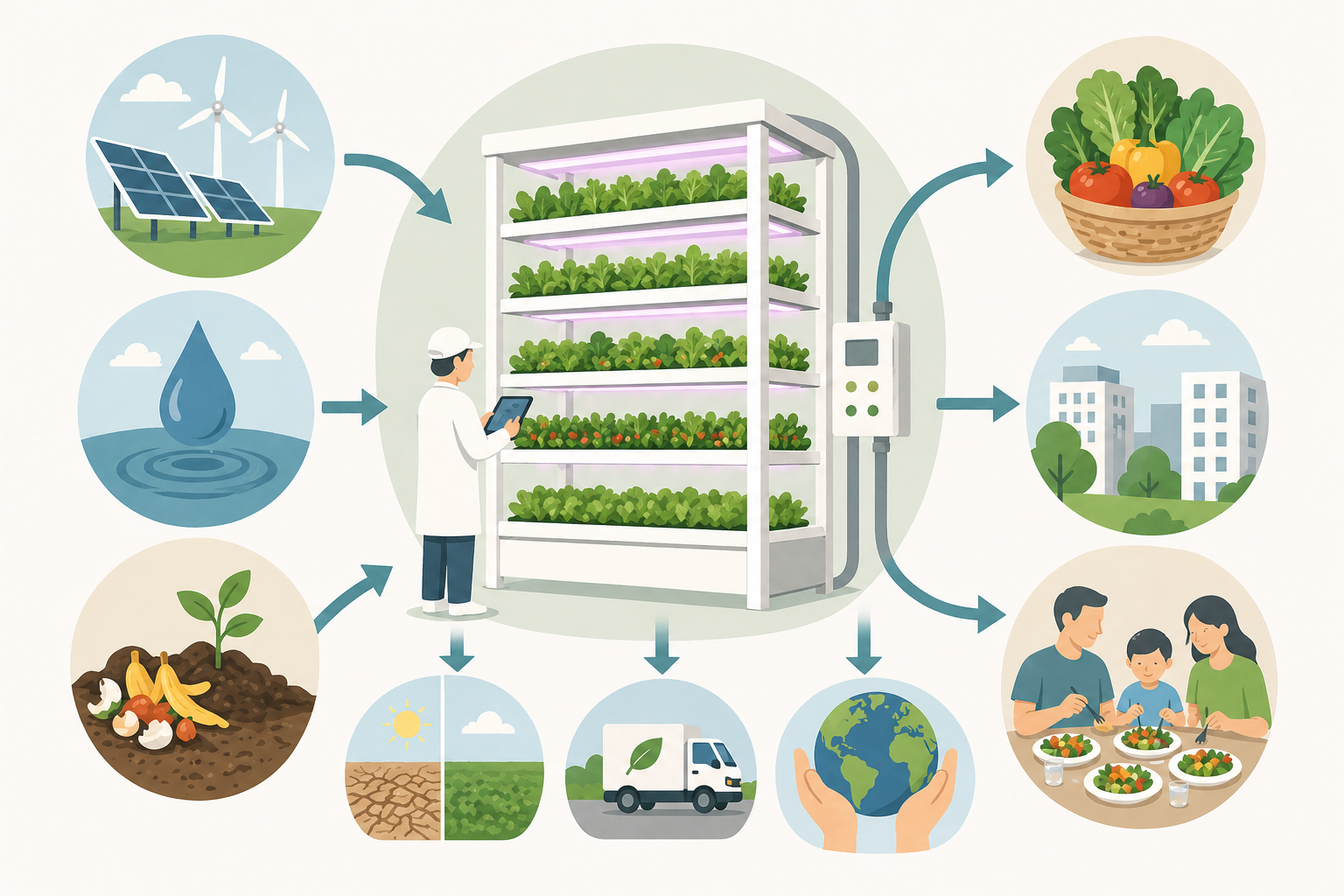
Controlled Environment Agriculture (CEA) and food security are increasingly linked in global efforts to address the vulnerabilities of modern food systems. As the world’s population approaches 10 billion by mid-century, the strain on traditional agriculture is intensifying: climate variability, soil degradation, water scarcity, and geopolitical instability are all contributing factors. In this context, indoor plant production, ranging from vertical farms to greenhouse systems, offers a controlled, predictable method of crop cultivation that can reinforce food availability, reliability, and resilience.
Unlike conventional agriculture, which is susceptible to seasonal shifts and environmental shocks, CEA leverages technology to regulate growing conditions: temperature, humidity, light, and nutrient delivery can all be managed with precision. This makes year-round production not only possible but also highly efficient. For regions facing food import dependence or volatile supply chains, CEA has the potential to localise production, reduce logistical risks, and improve access to fresh produce regardless of external circumstances.
Rising Pressures on the Global Food System
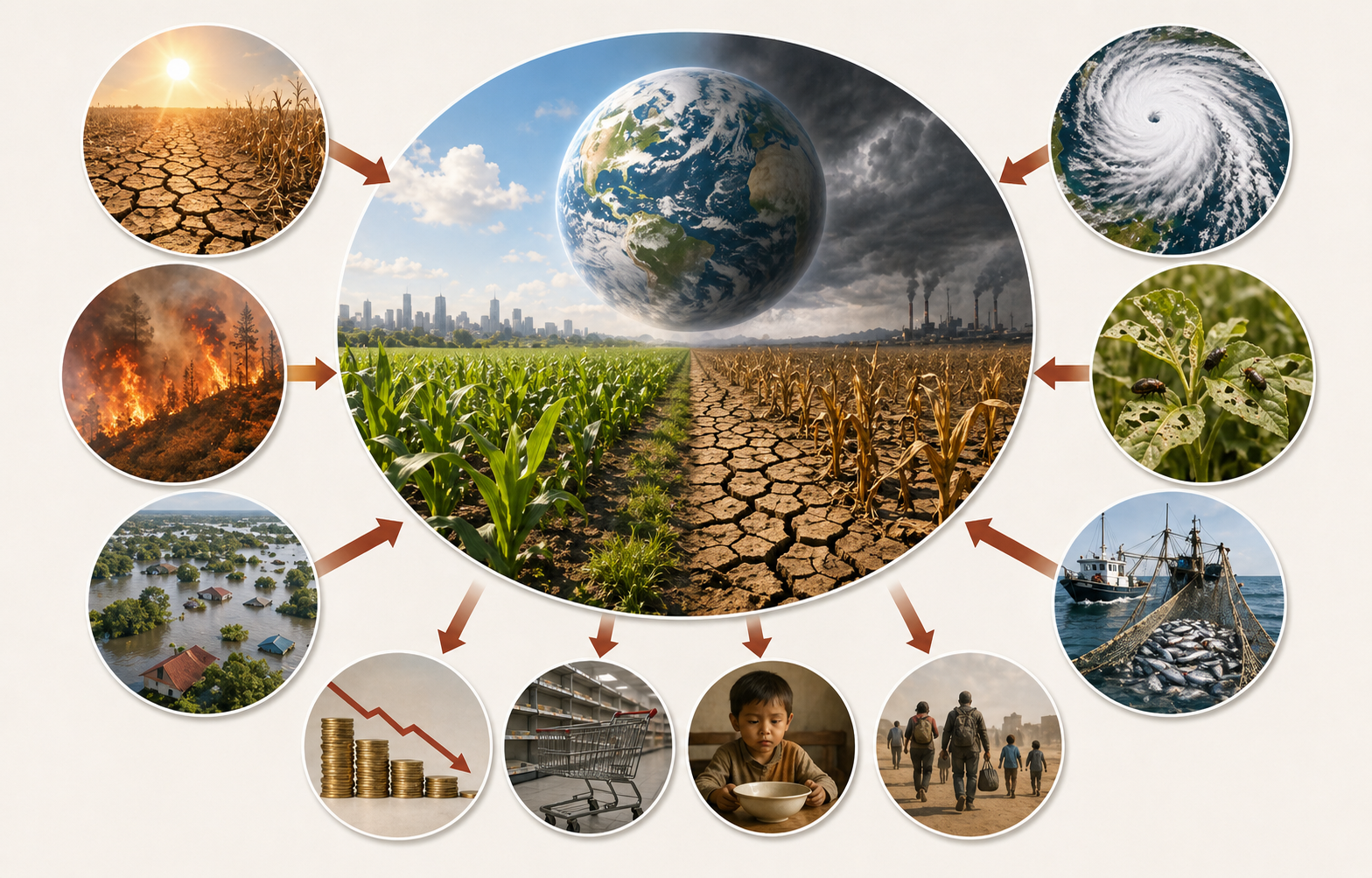
Food security, as defined by the Food and Agriculture Organization (FAO), encompasses four key dimensions: availability, access, utilisation, and stability. Traditional agricultural systems, while productive, are increasingly unable to ensure all four across different geographies. Climate change has intensified this challenge: extreme weather events are becoming more frequent, and shifting climate zones are reducing the reliability of crop yields in regions previously considered agriculturally stable.
Moreover, the increasing urbanisation of global populations means that a growing number of people live far from traditional farmland. This separation often leads to longer, more complex food supply chains that are prone to disruption. In recent years, events such as the COVID-19 pandemic, geopolitical conflicts, and global inflationary pressures have demonstrated just how fragile these systems can be. CEA offers an alternative model: decentralised, modular food production located closer to consumption centres, including in urban and peri-urban environments.
Indoor Cultivation: A Controlled and Resilient Alternative
Indoor plant production systems such as hydroponics, aeroponics, aquaponics, and soil-based greenhouses can grow a wide variety of crops, particularly leafy greens, herbs, and certain fruiting vegetables, with minimal land use and significantly reduced water requirements. These systems eliminate the need for chemical pesticides and can dramatically reduce post-harvest losses, which often occur during transport and storage in conventional supply chains.
In arid or resource-scarce environments, such as parts of the Middle East, Sub-Saharan Africa, or island nations, indoor farming provides a means to produce fresh food locally without relying on increasingly expensive and vulnerable imports. Likewise, in northern latitudes with short growing seasons, CEA extends or even eliminates seasonal limitations, allowing communities to achieve a higher degree of food sovereignty.
Energy, Inputs, and Trade-Offs
Despite its advantages, CEA is not without limitations. Indoor agriculture tends to be energy-intensive, particularly in systems that rely on artificial lighting and environmental controls. However, ongoing advances in LED technology, renewable energy integration, and building-integrated agriculture are rapidly improving the sustainability of these operations. In some cases, surplus heat from industrial buildings or data centres can be used to regulate greenhouse temperatures; in others, closed-loop systems recirculate water and nutrients with high levels of efficiency.
Furthermore, while CEA systems are typically more capital-intensive than open-field agriculture, the return on investment can be justified in regions where land, water, or climatic conditions make conventional farming economically or ecologically untenable. Economic resilience, particularly in urban areas, may ultimately depend not on replacing field agriculture, but on integrating it with indoor systems to create more adaptive, diversified food networks.
Policy, Innovation, and the Path Ahead
Governments, research institutions, and private sector stakeholders are increasingly exploring the role of CEA in national and regional food strategies. In the Netherlands, for example, high-tech greenhouses already contribute substantially to the country's status as a leading food exporter. In Singapore, where arable land is virtually non-existent, CEA is central to the government's “30 by 30” goal: producing 30 percent of nutritional needs locally by 2030. Similar initiatives are being trialled across North America, Europe, and parts of Asia and Africa, often with support from climate adaptation funding or urban development programmes.
At the research level, academic institutions and private labs are investigating crop breeding for indoor environments, microbial management in closed systems, and the automation of planting and harvesting through robotics and machine learning. These innovations are expected to further improve the viability and productivity of CEA operations, particularly in environments where energy or technical capacity may currently be a barrier.
Conclusion: CEA as a Strategic Component of Food Security
Controlled Environment Agriculture is not a universal solution, but it offers a powerful complement to traditional farming in the broader context of food security. Its greatest potential lies in its flexibility: the ability to produce fresh food in places previously considered unsuitable for agriculture; the capacity to mitigate the risks posed by climate change and geopolitical instability; and the promise of building more self-reliant urban food systems.
As global challenges mount, the integration of CEA into food policy, urban planning, and agricultural innovation represents a strategic investment in long-term resilience. For those seeking to contribute to a more secure, sustainable food future, whether through research, cultivation, investment, or policy, indoor plant production offers a field of growing relevance and opportunity.