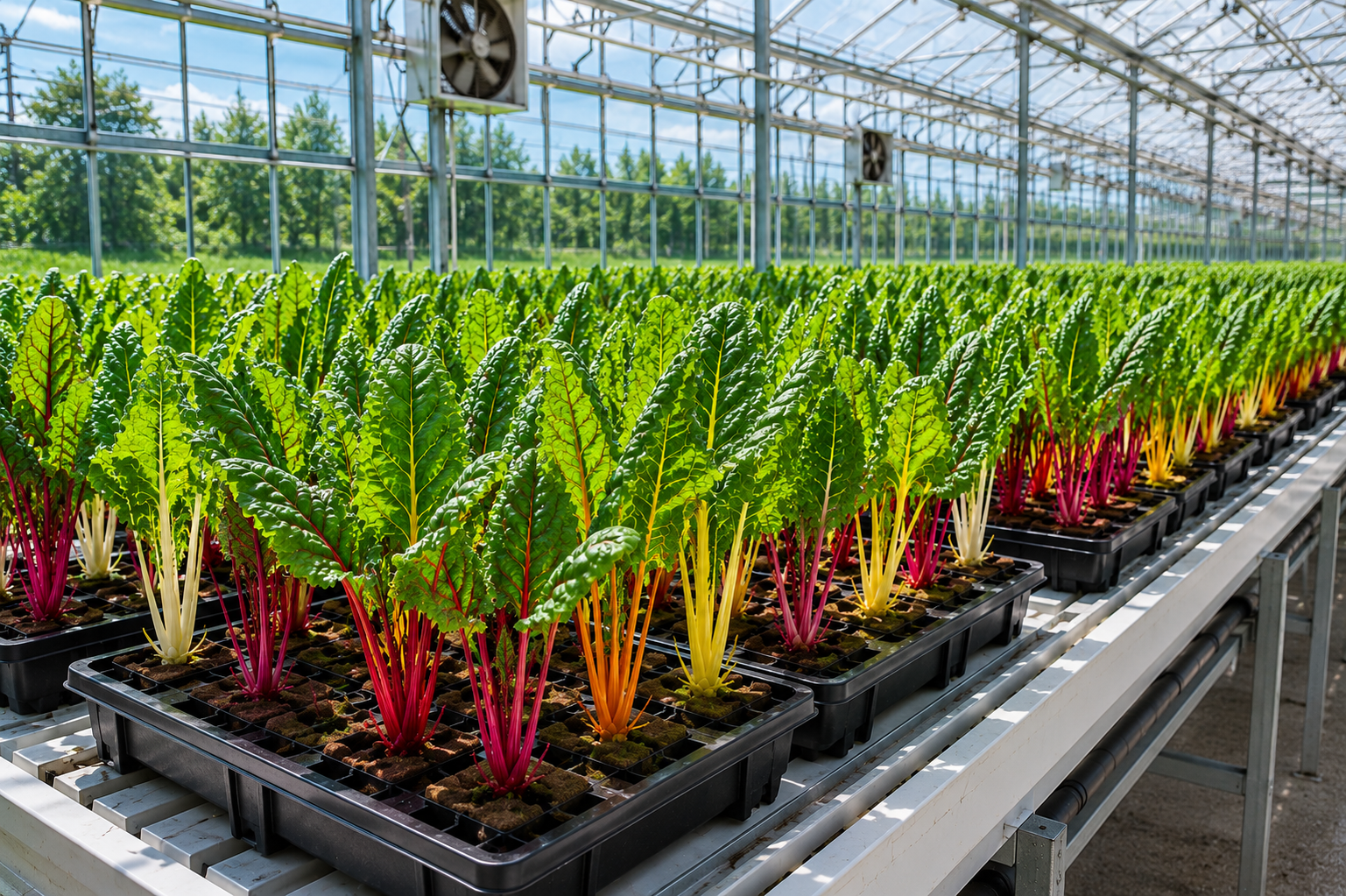
Chard, also known as Swiss Chard, is the name given to the leafy vegetables of the plant Beta vulgaris, specifically of the subspecies vulgaris. Beta vulgaris has three subspecies, including adanensis and maritima, which are both wild types. The latter of these, Sea Beet, is the ancestor of all cultivated varieties of this plant, the third subspecies, vulgaris.
As it is the same species and subspecies as beetroot, chard has many common names and the terminology used between the two crops can be confusing. Though from the same subspecies, the crops are from two different groups of cultivars (Conditiva group for beetroot, Cicla Group and Flavescens Groups for chard).
The leaf stalks of chard can be quite large when the plants are fully grown, and depending on the cultivar can be bright red, yellow or white. These stalks can also be prepared separately from the leaves. When eaten raw, the stalks tend to have a bitter taste, but this fades with cooking.
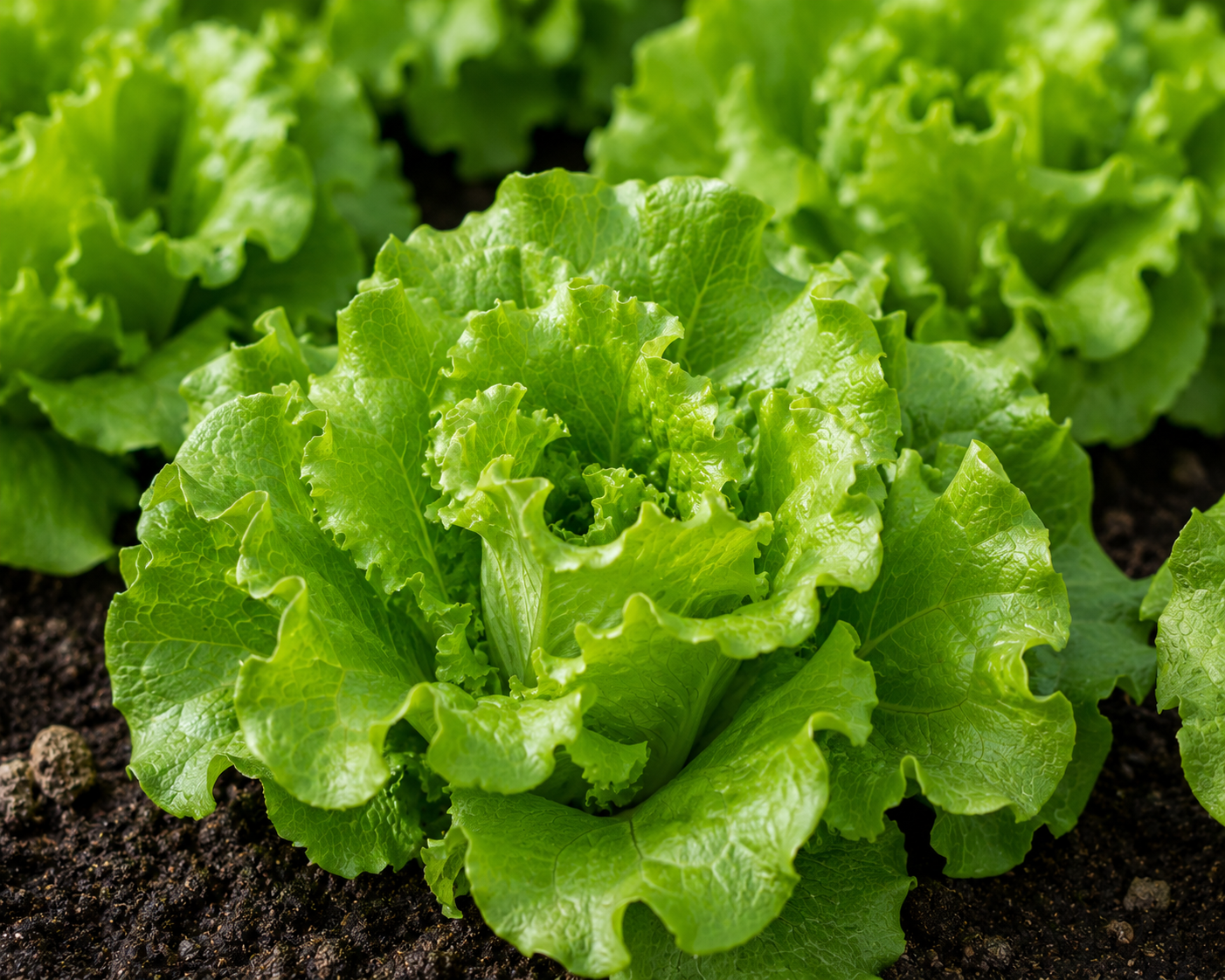
The leaves are blade shaped and can be green or have a reddish tint. They can be eaten raw, and even used in a similar manner to a tortilla wrap, but can also be used in a variety of dishes such as omelettes, salads or stirfries. Chard is very prominent in the cuisine of the Dalmatian region of Croatian, and is used in dishes such as Soparnik, a savoury pie filled with chard, onions and parsley.

Chard production in controlled environments (brief literature review)
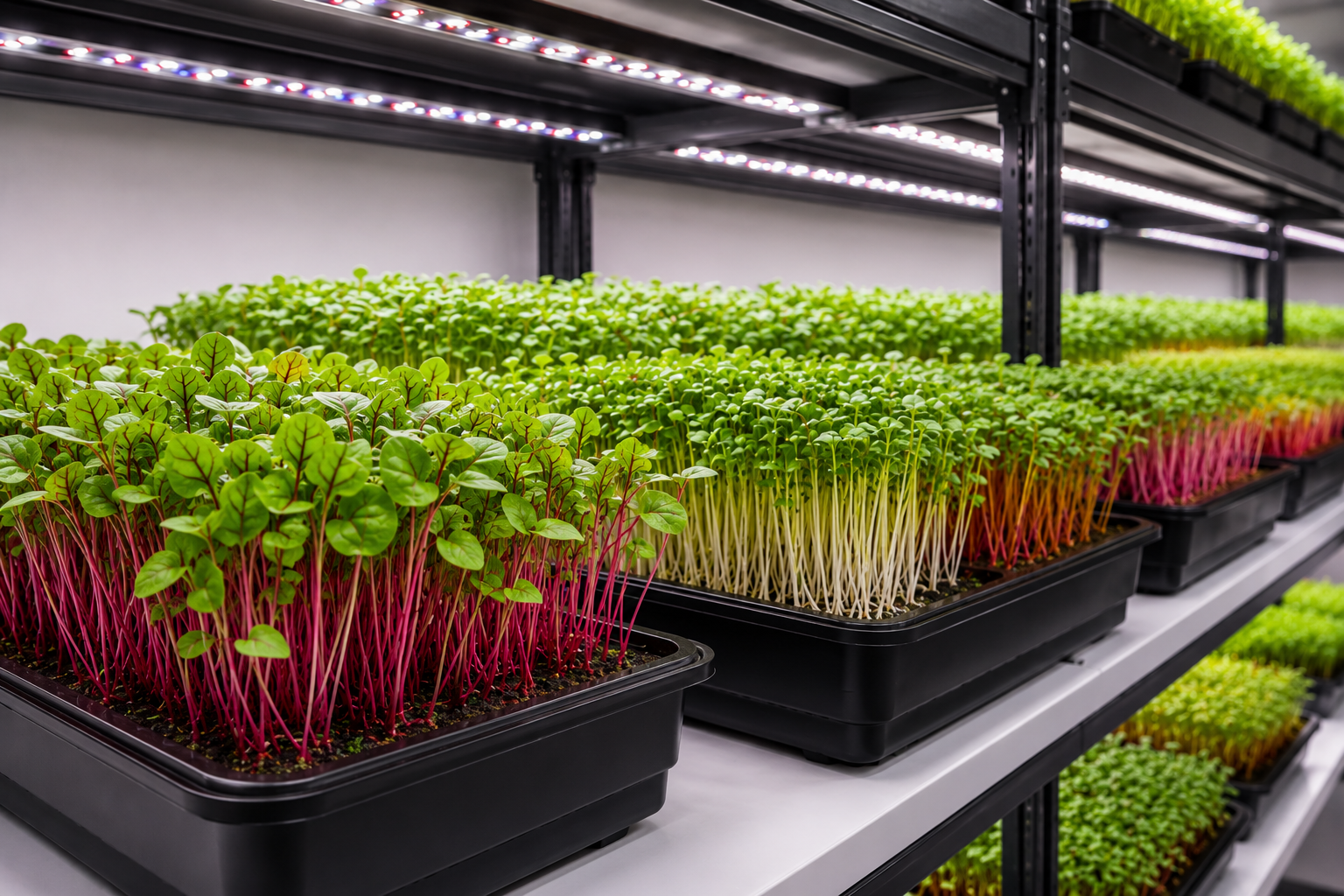
Chard microgreens have been shown to have a higher nutritional content than some other microgreens grown under the same conditions. Specifically, one study found that chard microgreens had higher levels of Ca, K, Mg, Fe, and Zn when compared with chicory and black cabbage [1]. Furthermore, the same study simulated the digestion of these different plants, and found that the levels of B, Mg, Fe, Cu, and K that were bioaccesible (able to be absorbed by the body) were also higher in chard. The bioacessible mineral content of 30g chard represented between 3.6 and 26% of the recommended daily doses for an adult (depending on sex and the mineral in question).
When grown hydroponically, chard microgreens have been shown to have around half the yield (measured in g/m3) of hydroponically grown adult chard plants. They also have lower concentrations of chlorophylls, carotenoids, phenols, and anthocyanins compared to baby leaf and adult plants, and slightly lower concentrations of calcium. However, this same study showed that the microgreens were richer in phosphorus, potassium, and especially iron [2]. The lower yield compared to full grown plants means that maximising the growth of microgreens within CEA environments is essential.
One study investigated the impact of different photoperiods (6 to 24 hours) on chard and other microgreens. The researchers found leaf area, leaf number, fresh mass, dry mass and antioxidant activity peaked at 12 hours before declining at 18 to 24 hours [3]. However, another study revealed that plant growth in Chard increased with increased Daily Light Integral (the amount of photons that activate photosynthesis that a plant is exposed to over 24 hours) from 2 to 22 mol∙m–2∙d–1 [4]. LED lights should be used as the growlight of choice, as evidence shows that chard grown under LED lighting for three weeks (after being grown for two weeks using rockwool) had significantly higher average individual weights, production per unit of area and production per unit of energy than under other artificial lighting conditions [5].
Regarding salinity, it has been found that an electrical conductivity of 2.5 dSm-1 resulted in the highest growth for chard microgreens, while higher EC values were not found to promote growth [4]. For the growth media, one study investigated different mixtures of vermicast, sawdust, perlite and either pittmoss or mushroom compost [6]. The researchers found that the following ratios resulted in the highest content of chlorophyll, carotenoids, total phenolics and flavonoids: 30% vermicast + 30% sawdust + 10% perlite + 30% pitt moss, or,
30% vermicast + 20% sawdust + 20% perlite + 30% mushroom compost.
Grower Insights:
There is no clear origin as to why chard is sometimes called swiss chard. It is used in Swiss cuisine, such as the dish capuns (spätzle dough and dried meat, wrapped in chard leaf and boiled in gravy). Some hypothesise the name originated from a Swiss botanist, though it is unclear who. The term chard comes from the medieval French word carde, which originated from the latin word cardus, meaning artichoke thistle.
References
- D'Imperio, M., Parente, A. and Serio, F., 2024. Exploring mineral profiles and their bioaccessibility of chicory, Swiss chard, and black cabbage microgreens. Future Foods, 10, p.100519.
- Bulgari, R., Baldi, A., Ferrante, A. and Lenzi, A., 2017. Yield and quality of basil, Swiss chard, and rocket microgreens grown in a hydroponic system. New Zealand Journal of Crop and Horticultural Science, 45(2), pp.119-129.
- Ali, M.B., Khandaker, L. and Oba, S., 2009. Comparative study on functional components, antioxidant activity and color parameters of selected colored leafy vegetables as affected by photoperiods. J. Food Agric. Environ, 7(3-4), pp.392-398.
- Yost, J.O.H., 2021. Determining effects of nutrient solution electrical conductivity and daily light integral on the growth of specialty leafy greens (Master's thesis, Iowa State University).
- Oliver, L.P., Coyle, S.D., Bright, L.A., Shultz, R.C., Hager, J.V. and Tidwell, J.H., 2018. Comparison of four artificial light technologies for indoor aquaponic production of swiss chard, Beta vulgaris, and kale, Brassica oleracea. Journal of the World Aquaculture Society, 49(5), pp.837-844.
- Saleh, R., Gunupuru, L.R., Lada, R., Nams, V., Thomas, R.H. and Abbey, L., 2022. Growth and biochemical composition of microgreens grown in different formulated soilless media. Plants, 11(24), p.3546.