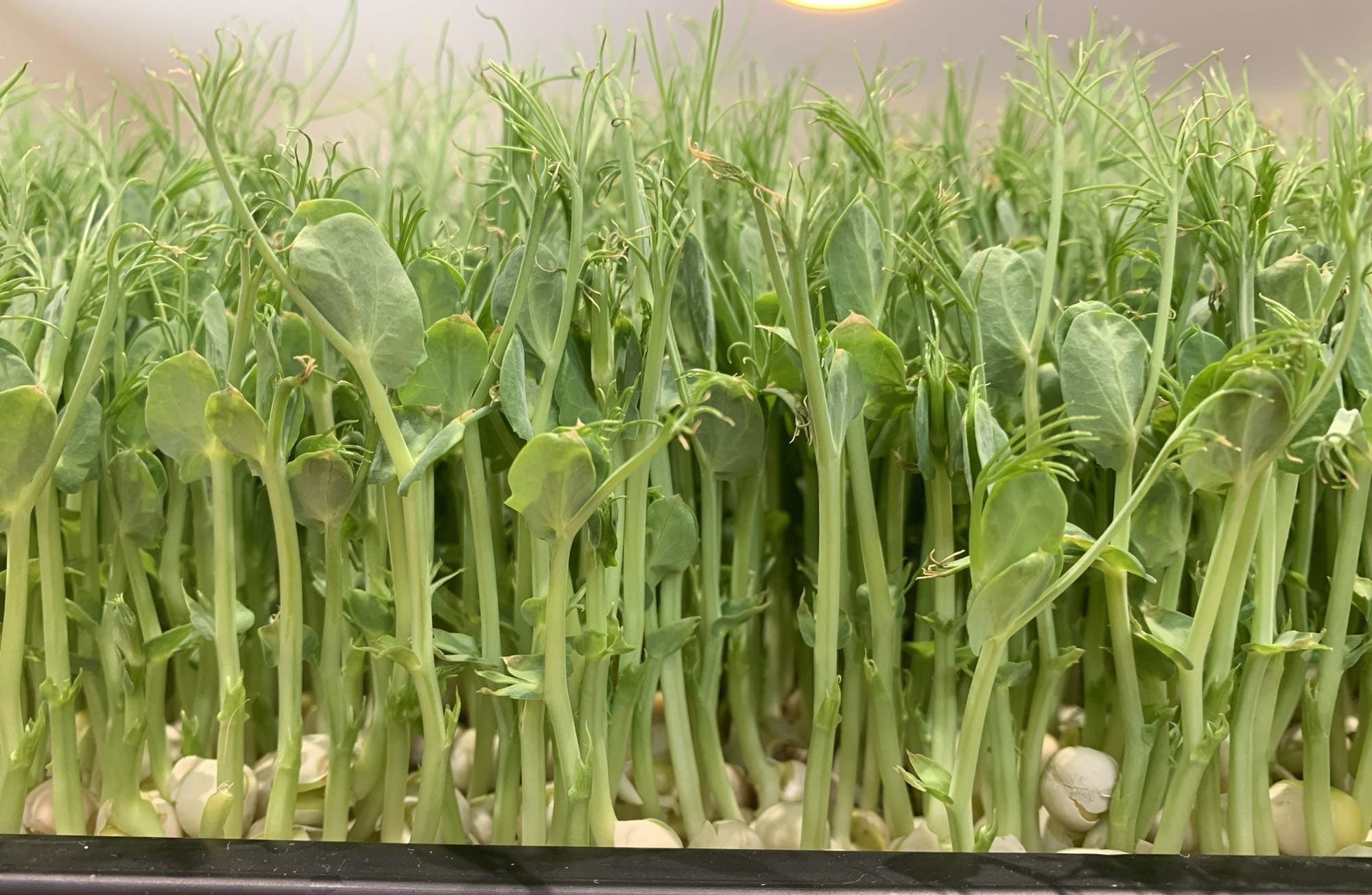
Peas (Pisum sativum) are an annual plant, meaning they complete their entire life cycle within one year, within the family Fabaceae. This family is also known as the legumes, or the pea or bean family, and is one of the largest families of plants with nearly 20,000 known species. Within this family, the pea is found within the subdivision Fabeae, which also contains the lentils. There is also some debate over which genus the garden pea belongs to, as some scientists believe it should be placed in the genus Lathyrus instead of Pisum. Members of both genera are referred to as different types of “peas”.
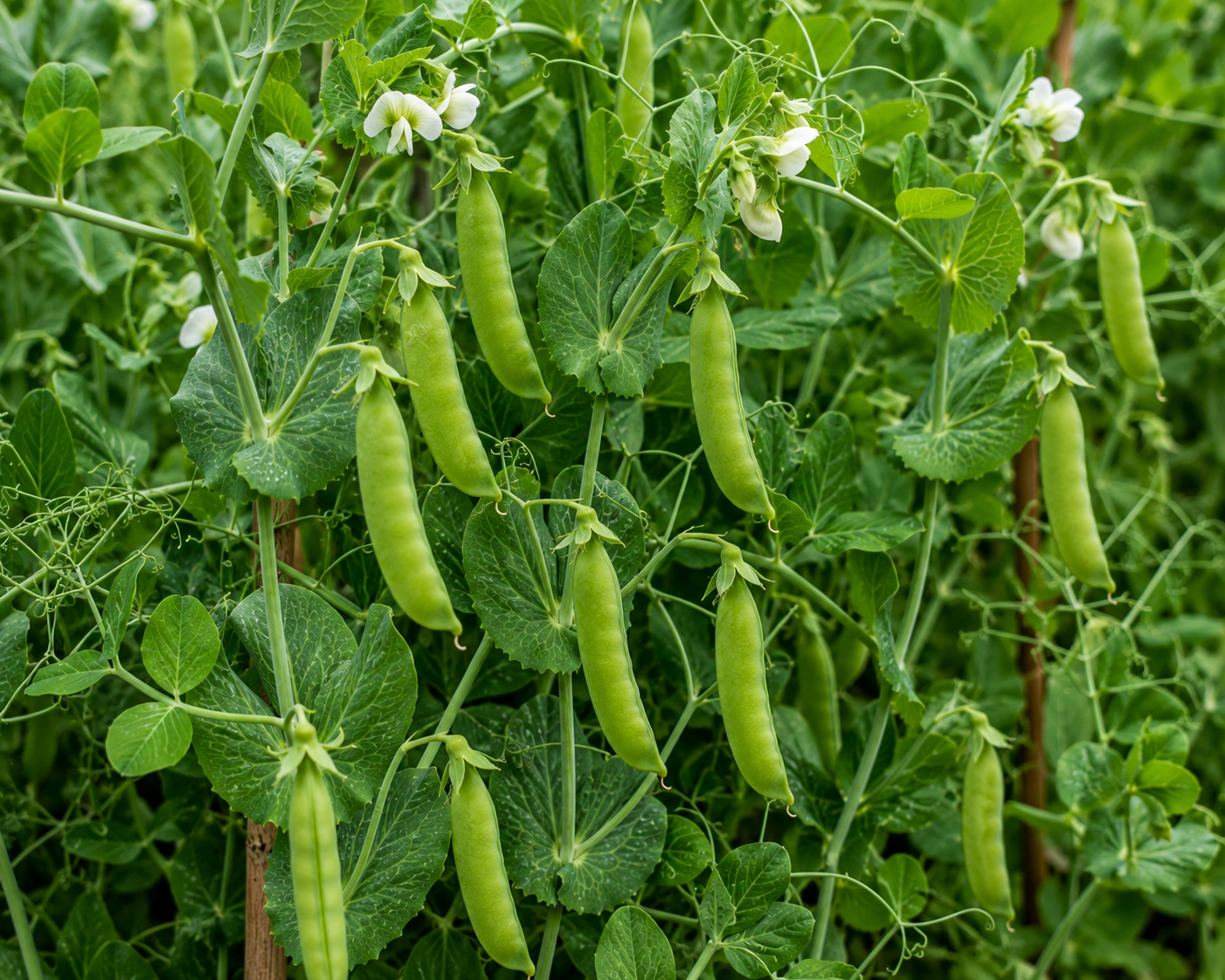
Peas can be grown in two main cultivars, either low-growing or with vine tendrils that can wrap around surfaces and reach up to 2 metres in height. Both plant tissue and fruit are edible and desirable, and are selected depending on growth stage. Pea shoots, plant tissue harvested at an the early growth stage, are highly nutritious and rich in protein. Pea plants also form pod shaped fruit which develop from the ovaries found in the flowers of the plant. These pods are usually green but can also be yellow or even purple. The peas contained within, which are most commonly associate with this food plant, are the seeds of the plant.
There are many different cultivars of peas, but there are also a few general varieties that these cultivars can be grouped under, depending on their purpose. The first and most well known are garden peas, which are grown for the peas themselves. Other varieties are grown to use the pea pods as the crops rather than the peas. Typically these come in two main types: Snow peas, which are flat pods with thin walls eaten when the pods are young; and Snap peas or Sugar peas with more rounded pods with thicker walls. The latter of these are also known as mangetout.
Field peas are another variety which are commonly grown for both human and livestock consumption. However, instead of being consumed fresh, frozen or canned like garden peas, field peas are consumed as a dried, shelled product. They have been an important grain crop for millennia, as domesticated seeds have been found in archaeological sites in Turkey that are 7,000 years old.
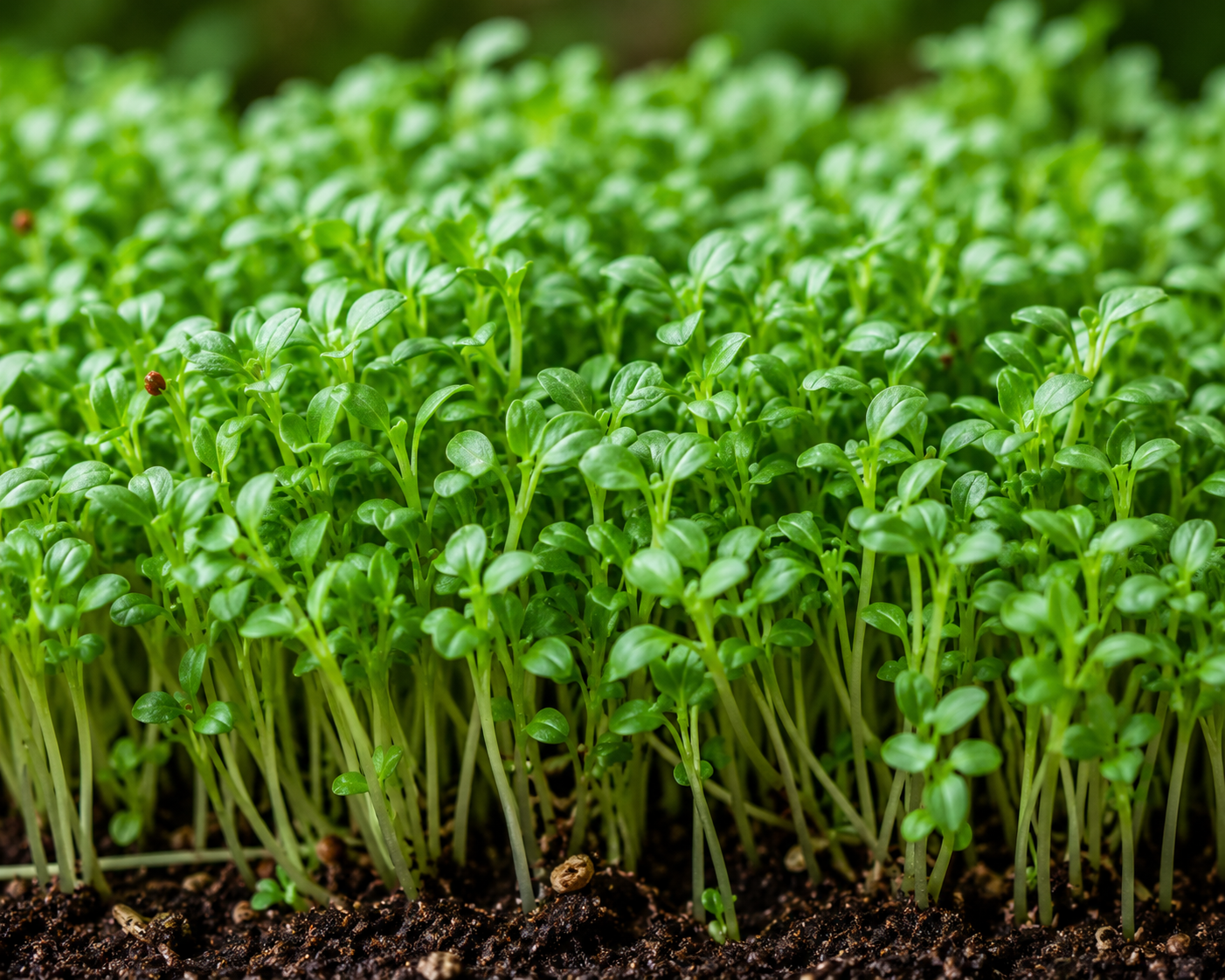
Garden peas are one of the most commonly consumed vegetables across the world and are used in a variety of dishes. As a stand-alone side dish, they are often served with butter, but are also mixed in with other vegetables in stews, pastas and so on. Dried peas can also be used to make pea soup, a dish which dates back to at least the 400s BC. In the UK, dried peas are commonly rehydrated and mashed to produce “Mushy peas”, often served with fish and chips. Alongside the peas and pea pods, pea shoots can also be consumed as a microgreen vegetable and are highly suited to growth in indoor production systems.
Pea production in controlled environments (brief literature review)
Concerning the growth medium for peat, one study [1] investigated the impact of using three different substrates for pea microgreens, specifically coco coir, peat, and cannabis mat. Generally speaking, peat was found to result in the highest physical growth and photosynthetic compounds (carotenoids and chlorophyll), while cannabis mat resulted in higher phenolic compounds and antioxidant content. Overall, however, peat was assessed to be the superior substrate.
The study also investigated the impact of different concentrations of nutrient solution (0, 50, and 100%) and found that while higher concentrations resulted in enhanced pea growth, they were detrimental impacts to the concentration of phytochemical compounds [1]. As such, moderate concentration of nutrient solution was recommended to keep a balance of both large and high quality pea shoot crops. That said, another study found that adding 5 to 20% vermicompost tea to nutrient solutions can also increase the growth of pea plants, though the impact on the nutritional content was more variable [2].
Concerning salinity, generally speaking higher salinity values have been shown to be detrimental to pea plants. A study investigated the impact of using both fresh water and solutions with 750, 1500, and 3750 ppm of salt (which resulted in electrical conductivity of 2.61, 4.07, and 8.01 mS/cm respectively) [3]. The survival rates of the plants, area of fresh leaves, dry leaf weight, length of roots, fresh root weight, whole fresh weight, whole dry weight and copper content all decreased as the salinity increased. Furthermore, the plants did not produce any pods at the highest salinity level. The presence of heavy metals was also shown to be detrimental to the plants, though given that they were found in high amounts the researchers hypothesized that pea plants could be used to help remove heavy metals from environments.
Some research has indicated that using red light can help mitigate the effects of high salinity environments. One study used three levels of salinity (0, 50, and 100 mmol/L of NaCl) and found that as salt stress increased, the plant height, aboveground fresh/dry mass, root growth indices, and chlorophyll content decreased [4]. However, this decrease was lessened when purely red light was used compared to a 4:1 ratio of red:blue light.
This finding is somewhat supported by additional research which investigated the impacts of different light spectra, light intensity and photoperiod on pea plants [5]. Blue light was found to be detrimental to plant growth, while the highest total weight and fresh weight occurred using a 4:1 ratio of red:blue light, and the plant health index was highest under darkness, red light or the 4:1 red:blue ratio. However, total phenolic content was highest under a 2:1 ratio of red:blue and total flavonoid content was highest under 1:2.
Light intensity and photoperiod had similar impacts [5], as plant growth and health were highest under the lowest light intensity (9 μmol/m2/s) and shortest photoperiod (4 hours per day). Meanwhile, phenolic compounds, flavonoid compounds and antioxidant activity tended to increase with light intensity and photoperiod. Overall, this suggests that the optimal conditions for pea plant growth require a compromise between which conditions produce the highest growth and those that produce more phytochemical compounds.
Overall, then, the best optimal conditions for growing pea plants (at least for maximum growth as opposed to nutritional content) based on this research are using peat substrate with moderate nutrient solution concentration, a salinity lower than 2.0 mS/cm (and potentially as low as possible), a ratio of red to blue of 4:1 using a short photoperiod and low light intensity.
Grower Insights:
Peas have the ability to fix atmospheric nitrogen, reducing the need for fertilisation (depending on the cultivation approach). Peas and other legumes are extremely important within the nitrogen cycle. The nitrogen cycle is the passage of nitrogen through various different chemical compounds as it circulates through the planet's atmosphere, water, soil and life forms. Nitrogen is an extremely important element because it allows organisms to produce amino acids, the building blocks of proteins which are used for an extremely large variety of biological processes. However, the nitrogen has to be in a form that plants can use. In the atmosphere, nitrogen comes in the form N2, which is two Nitrogen atoms bonded to each other. This form is very hard to break apart, so plants cannot use it. However, legumes like peas have nodules in their roots which are home to a type of bacteria called Rhizobia which can perform a reaction called 'nitrogen fixation'. This converts the nitrogen into ammonia, NH3, which can then be used by the pea plant and other plants. As such, legumes are often used in agriculture during crop rotation to help add usable nitrogen back into the soil.
References
- Bantis, F. and Koukounaras, A., 2024. Microgreen vegetables’ production can be optimized by combining the substrate and nutrient solution in a PFAL. Scientia Horticulturae, 333, p.113277.
- Jiang, X., Lu, C., Hu, R., Shi, W., Zhou, L., Wen, P., Jiang, Y. and Lo, Y.M., 2023. Nutritional and microbiological effects of vermicompost tea in hydroponic cultivation of maple peas (Pisum sativum var. arvense L.). Food Science & Nutrition, 11(6), pp.3184-3202.
- Haddad, M.N. and Al-Jada, M.A., 2021. Accumulation and combined effect of salinity and heavy metals on growth, yield and uptake of green pea grown in piped hydroponics. European Journal of Agriculture and Food Sciences, 3(6), pp.110-116.
- Xu, K., Sun, X., Sun, C., Wang, Y., Zhu, H., Xu, W. and Feng, D., 2025. Enhanced Salt Tolerance of Pea (Pisum sativum L.) Seedlings Illuminated by LED Red Light. Horticulturae, 11(2), p.150.
- Zhao, T., Nie, J., Yan, X. and Xue, W., 2024. Identifying the critical LED light condition for optimum yield and flavonoid of pea sprouts. Scientia Horticulturae, 327, p.112801.