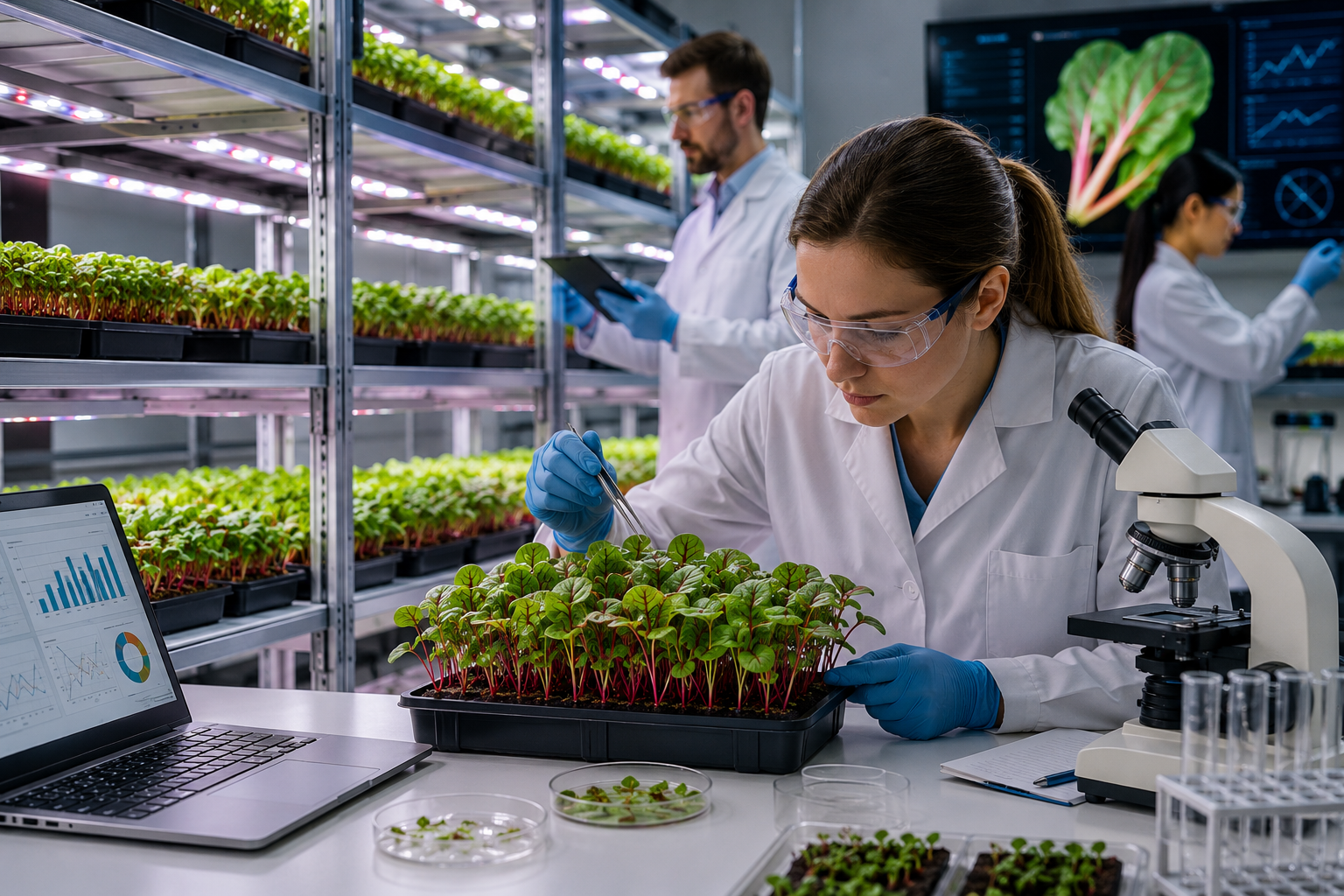
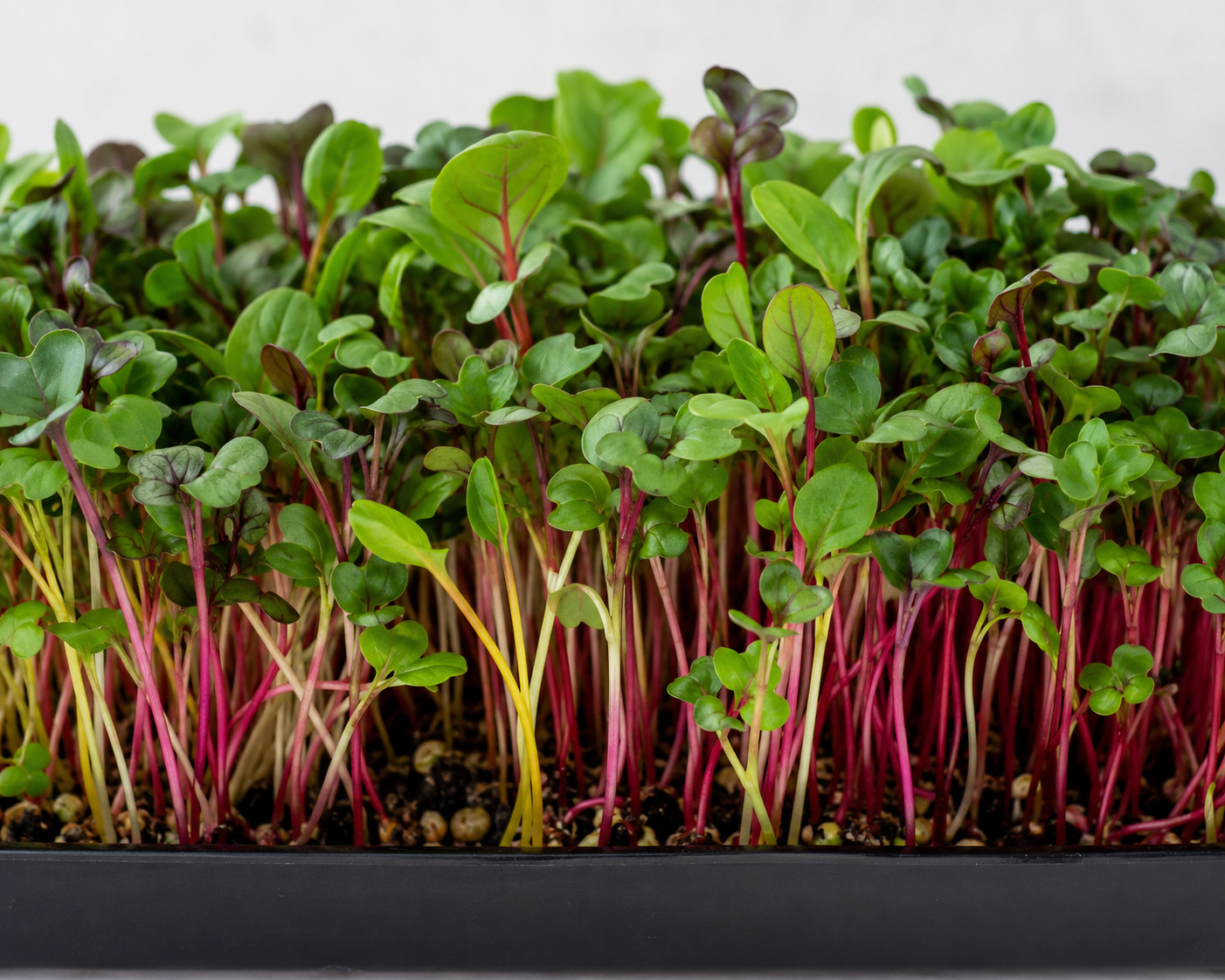
Choosing chard as an indoor farming crop is increasingly common, as growers look for leafy crops alternatives to lettuce. Chard, also known as Swiss chard, offers several characteristics that make it well suited to indoor production: rapid vegetative growth, tolerance to repeated harvesting, strong visual appeal, and adaptability to hydroponic systems. For growers exploring crop diversification in vertical farming and controlled environment agriculture, chard represents an interesting balance between productivity, resilience, and market value.
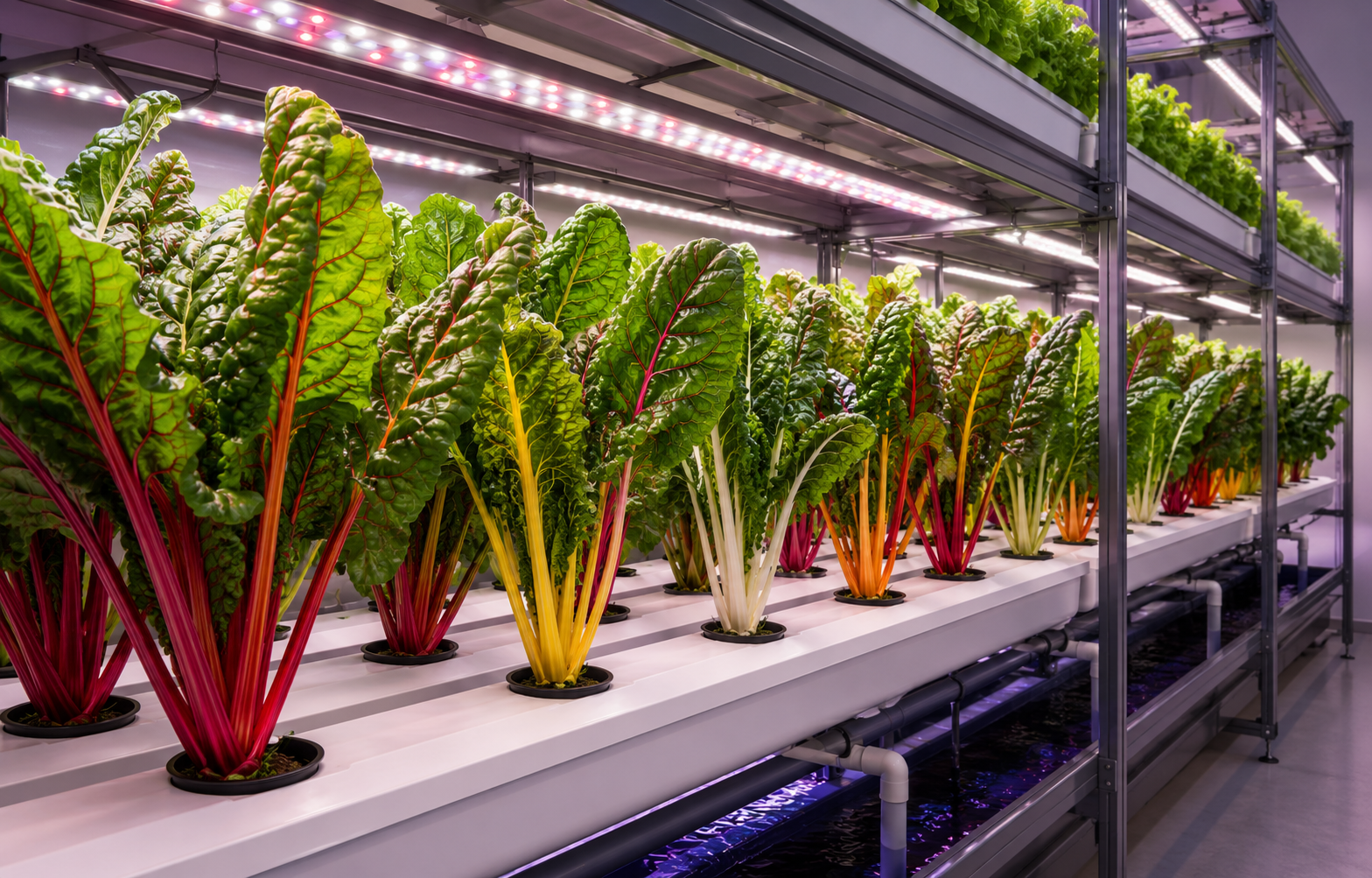
Chard belongs to the species Beta vulgaris, the same species group as beetroot and sugar beet. Unlike beetroot, however, chard is cultivated primarily for its leaves and stems rather than its swollen root. The crop produces large, textured leaves and colourful petioles that may be white, yellow, orange, pink, or red depending on the cultivar. These visual characteristics have helped increase its popularity in retail salad mixes, premium vegetable boxes, restaurants, and local food markets.
Chard in Indoor Farming
Many traits associated with successful indoor farming crops are present in chard. The plant performs well under artificial lighting, tolerates moderate environmental fluctuations, and can be harvested multiple times through cut-and-come-again management strategies. Compared with some delicate leafy greens, chard is relatively robust and forgiving, which can make it useful for growers developing operational experience with hydroponic systems.
One of the most interesting advantages of chard is its productivity over time. Rather than requiring complete crop replacement after a single harvest, mature plants can continue producing leaves for weeks or months when managed correctly. This repeated harvest potential offers some interesting possibilities, for systems that can support plants over longer growing timeframes (i.e. without pest/pathogen contamination)
The crop also demonstrates relatively broad environmental tolerance. Chard can continue growing under temperatures and nutrient conditions that might stress more sensitive species. In commercial controlled environment systems, this resilience can provide greater operational flexibility and reduce the risk of sudden crop failure caused by environmental instability.
Environmental Requirements for Chard Production
As with most leafy crops, environmental control strongly influences crop quality, growth rate, and nutrient composition. Chard generally performs well at moderate temperatures. Air temperatures between approximately 18 - 24 oC are commonly considered suitable for vegetative growth, but some studies have reported success at grow room temperatures at 27-28 oC. But, excessively high temperatures may encourage leaf stretching, reduce leaf quality, or increase stress responses. Conversely, lower temperatures may slow development and delay harvest timing.
Relative humidity management is also important. Excessive humidity can increase the risk of fungal disease and reduce transpiration efficiency. Equally, very dry conditions may contribute to leaf edge burn or reduced stomatal function Chard will tolerate up to 80% and as low as 30%, but a mid range (~60%) is recommended. Additionally, maintaining balanced vapour pressure deficit conditions (between 0.7 – 1.0) is also essential and will support healthy transpiration and nutrient movement within the plant.
Airflow is frequently underestimated in indoor farming systems. Chard develops relatively broad leaves that can trap humidity around the canopy if ventilation is poor. Consistent air circulation helps maintain environmental uniformity, strengthens plant tissues, and reduces disease risk. In densely planted vertical farms, airflow design becomes especially important because stacked layers may create microclimatic variation between production shelves.
Lighting Considerations in Controlled Environment Agriculture
Artificial lighting is central to indoor crop production. Chard responds well to LED lighting systems commonly used in vertical farms and growth chambers. The crop does not necessarily require the extremely high light intensities associated with fruiting crops such as tomatoes or strawberries; however, sufficient photosynthetic photon flux density remains important for achieving compact morphology and strong leaf development.
Light quality also influences crop appearance and physiology. Blue wavelengths tend to support compact growth and stomatal regulation, while red wavelengths drive photosynthetic activity. Many commercial systems therefore utilise balanced red-blue dominant LED spectra with some additional white or broad-spectrum light to support visual crop quality and operational visibility.
Photoperiod management affects daily light integral and therefore total energy capture by the crop. Chard can tolerate relatively long lighting periods; however there is also evidence that short cycles (~12 hours) are equally effective for production, which, if accurate, would be beneficial for reducing energy consumption during production. The evidence is more patchy on this, so further research is needed (please do contact us if you determine an answer!)
Lastly, an additional consideration is leaf pigmentation. Some rainbow chard cultivars exhibit stronger stem coloration under specific spectral conditions. Although this area requires further research, controlled lighting environments may eventually allow growers to manipulate visual crop characteristics for premium markets.
Hydroponic Systems for Chard Cultivation
Chard has been successfully grown using all the main types of controlled irrigation. NFT, floating raft systems, deep water culture, flood and drain, aeroponics, and substrate-based drip irrigation approaches can all support successful production, depending on scale and management objectives.
There are few critical considerations for this versatile plant, but applying substrate-based systems, using materials such as rockwool, coco coir, or peat-free growing media, may offer greater buffering capacity and flexibility for growers transitioning from greenhouse horticulture. These systems can sometimes simplify transplant handling and reduce stress during establishment.
Nutrient management is of course critical in all hydroponic approaches. Chard requires balanced macronutrient and micronutrient availability to sustain rapid leaf growth. Most broad spectrum fertilisers that support vegetative growth, will work well; calcium content is particularly important as chard is rapidly growing leafy crop. Insufficient availability may contribute to leaf disorders and reduced product quality.
Crop Management and Harvesting
Chard may be harvested as baby leaf, juvenile leaf, or mature product depending on market demand. Additionally, as noted above, cut-and-come-again style harvesting is also an option. In this context, harvest strategy will influence crop architecture. Repeated selective harvesting encourages continued vegetative growth while maintaining productive canopies. However, poor harvesting technique can damage growing points or increase vulnerability to disease.
Sanitation remains particularly important for production systems that aim to support elongated growth timeframes (such as for cut-and-come-again). Pathogens introduced into recirculating hydroponic systems may spread rapidly if biosecurity measures are inadequate. Equipment cleaning, water treatment, worker hygiene, and environmental monitoring therefore form essential components of professional indoor crop management. See our articles for pest and disease management for further advice.
Economic and Market Considerations
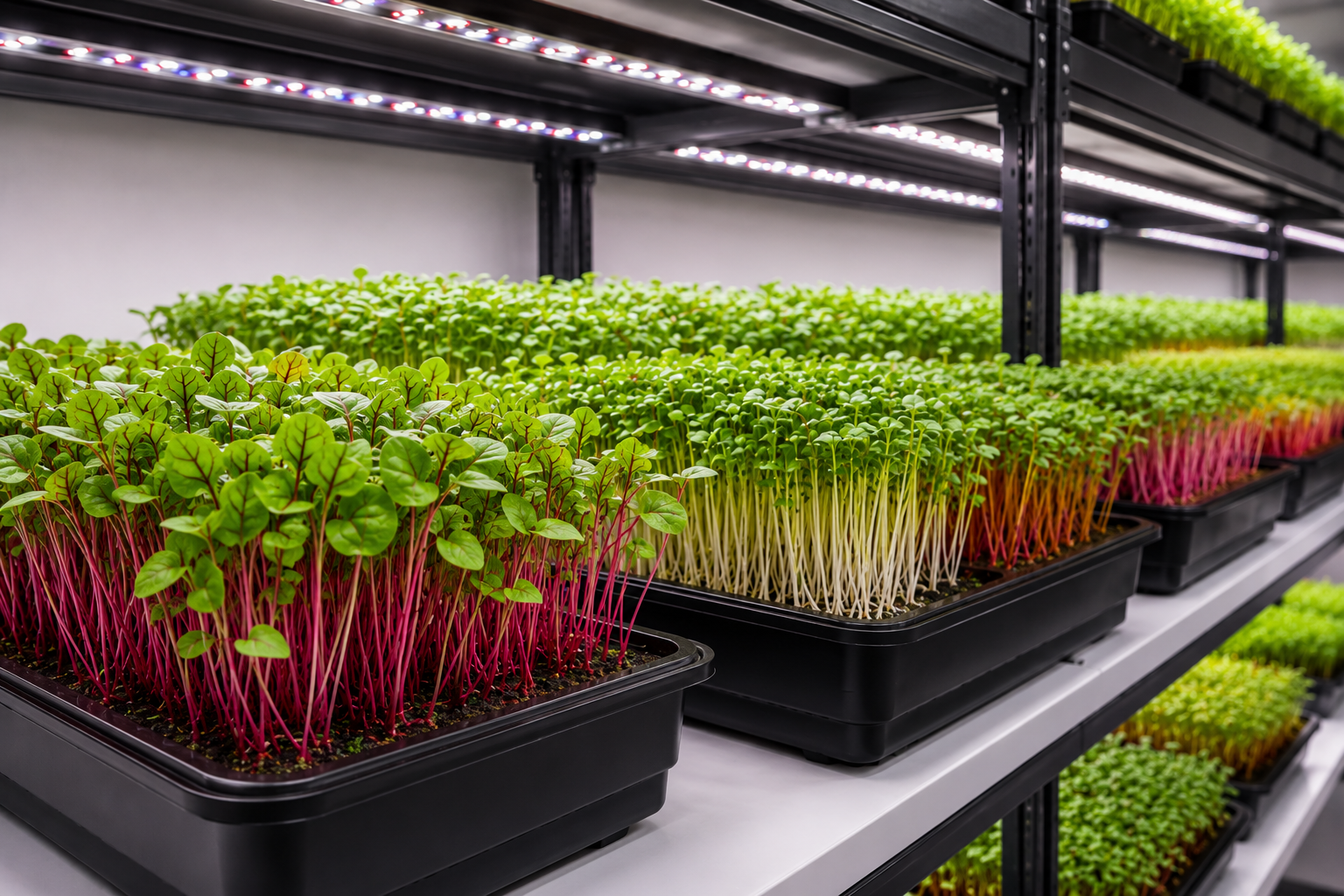
From a business perspective, chard occupies an interesting position within indoor farming. It is generally less mainstream than lettuce yet more familiar to consumers than some specialist leafy greens. This creates opportunities for market differentiation while maintaining recognisable consumer appeal.
The colourful appearance of rainbow chard can increase retail attractiveness, particularly in premium grocery sectors and food service markets. Restaurants often value visually distinctive produce with consistent year-round quality; indoor farming systems may help achieve this consistency regardless of seasonal weather conditions.
However, the economics of growing chard in indoor farming systems depend heavily on operational efficiency. Energy costs, labour requirements, seed selection, harvest methods, and post-harvest handling all influence profitability. Like many indoor crops, success depends not only on biological productivity but also on efficient systems engineering and market alignment.
Shelf life is another important consideration. Chard leaves can lose turgidity after harvest if storage conditions are poorly managed. Rapid cooling and appropriate humidity control are therefore important components of post-harvest logistics.
Future Potential of Chard in Vertical Farming
As controlled environment agriculture evolves, crop diversification is likely to become increasingly important. Many early vertical farming systems focused heavily on lettuce production, however long-term commercial resilience may require a broader crop portfolio. Chard offers useful characteristics within this diversification strategy because it combines visual appeal, nutritional value, repeated harvest potential, and adaptability to hydroponic production.
There is also growing interest in breeding crops specifically for indoor farming systems. Future chard cultivars may be selected for compact growth habit, improved shelf life, optimised light-use efficiency, enhanced pigmentation, or suitability for automated harvesting systems.
Ultimately, growing chard in indoor farming systems illustrates many of the wider opportunities and challenges associated with controlled environment agriculture. The crop demonstrates how indoor farming can extend beyond basic leafy greens into more diverse, visually attractive, and nutritionally valuable produce categories. At the same time, successful production still depends upon careful environmental management, sound horticultural knowledge, and realistic economic planning.