Understanding Life Cycle Assessment in Indoor Farming
Determining the carbon footprint of indoor farming systems, via approaches such as life cycle assessment (LCA) has become key in evaluating the true environmental performance of Controlled Environment Agriculture (CEA) and vertical farming. LCA is a systematic method used to quantify the environmental impacts of a product or process throughout its entire life span. In the context of indoor plant production, this includes every stage from the manufacture of building materials and cultivation equipment, through energy and water use during operation, to waste management and end-of-life decommissioning. LCA is a critical tool for comparing different production methods on a fair and transparent basis, enabling decision-makers to understand the trade-offs involved and identify opportunities for improvement.
Why Carbon Footprint Measurement Matters
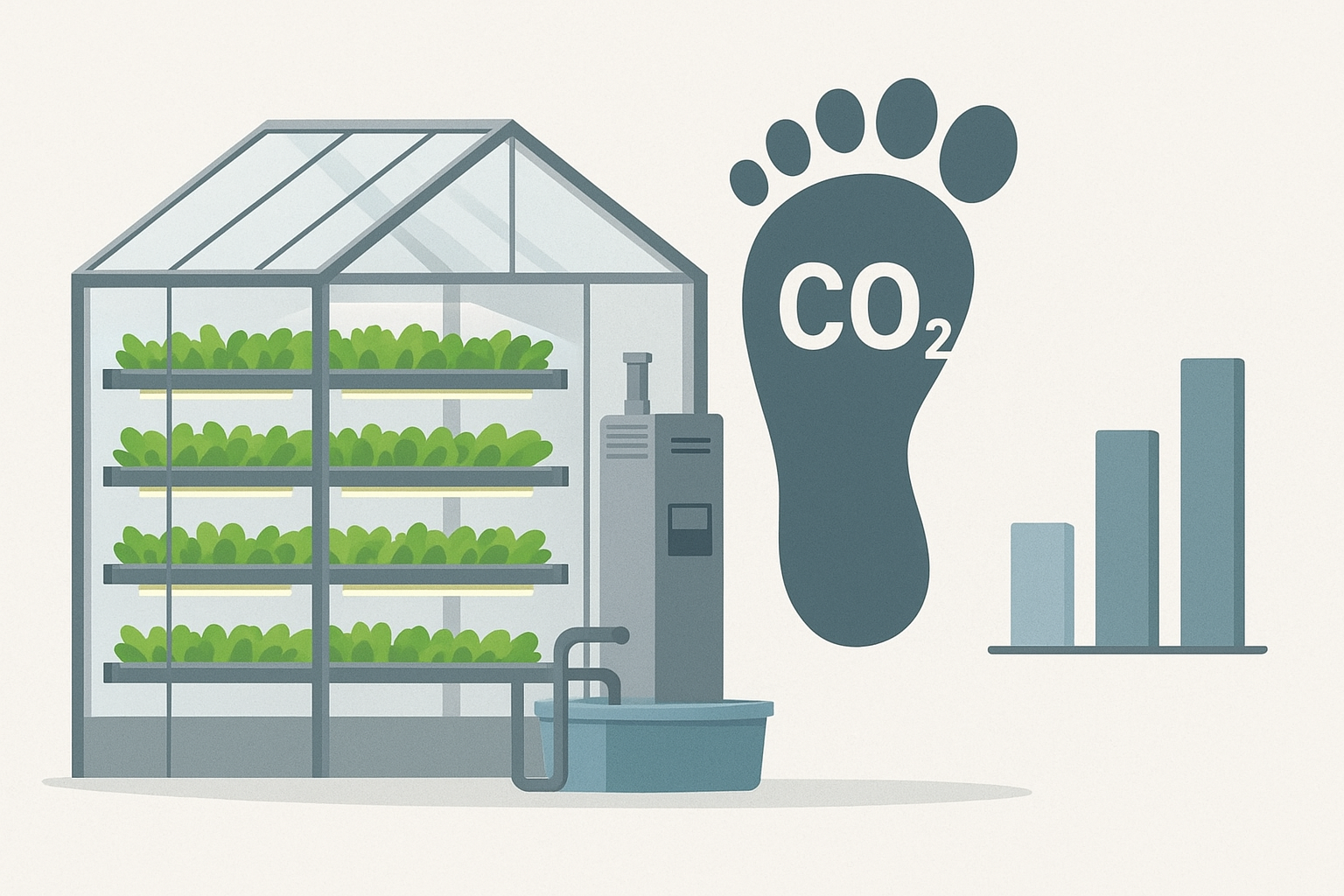
While CEA and vertical farms often promise reduced land use and localised production, their environmental profile is heavily influenced by operational energy demand. Lighting, climate control, water treatment, and automated systems all require substantial electricity, which can vary greatly in carbon intensity depending on the local energy mix. A carbon footprint expresses these impacts in terms of greenhouse gas emissions, typically measured in kilograms or tonnes of CO₂ equivalent. By quantifying these emissions, stakeholders can determine whether indoor farming offers a net reduction in climate impact compared to conventional agriculture, or whether efficiency measures and renewable energy integration are needed to achieve meaningful benefits.
Stages and Boundaries in LCA for Indoor Farming
An accurate LCA for indoor plant production must clearly define system boundaries: the specific processes and stages included in the analysis. These may be limited to the operational phase (known as a gate-to-gate assessment) or may extend from raw material extraction to end-of-life disposal (a cradle-to-grave approach). In indoor farming, the boundaries typically cover building construction, infrastructure installation, energy and water use during crop production, nutrient supply chains, packaging, transport, and waste streams. Selecting the right boundary conditions is essential, as excluding upstream or downstream impacts can lead to misleading conclusions about sustainability.
Factors Influencing the Carbon Footprint of CEA Systems
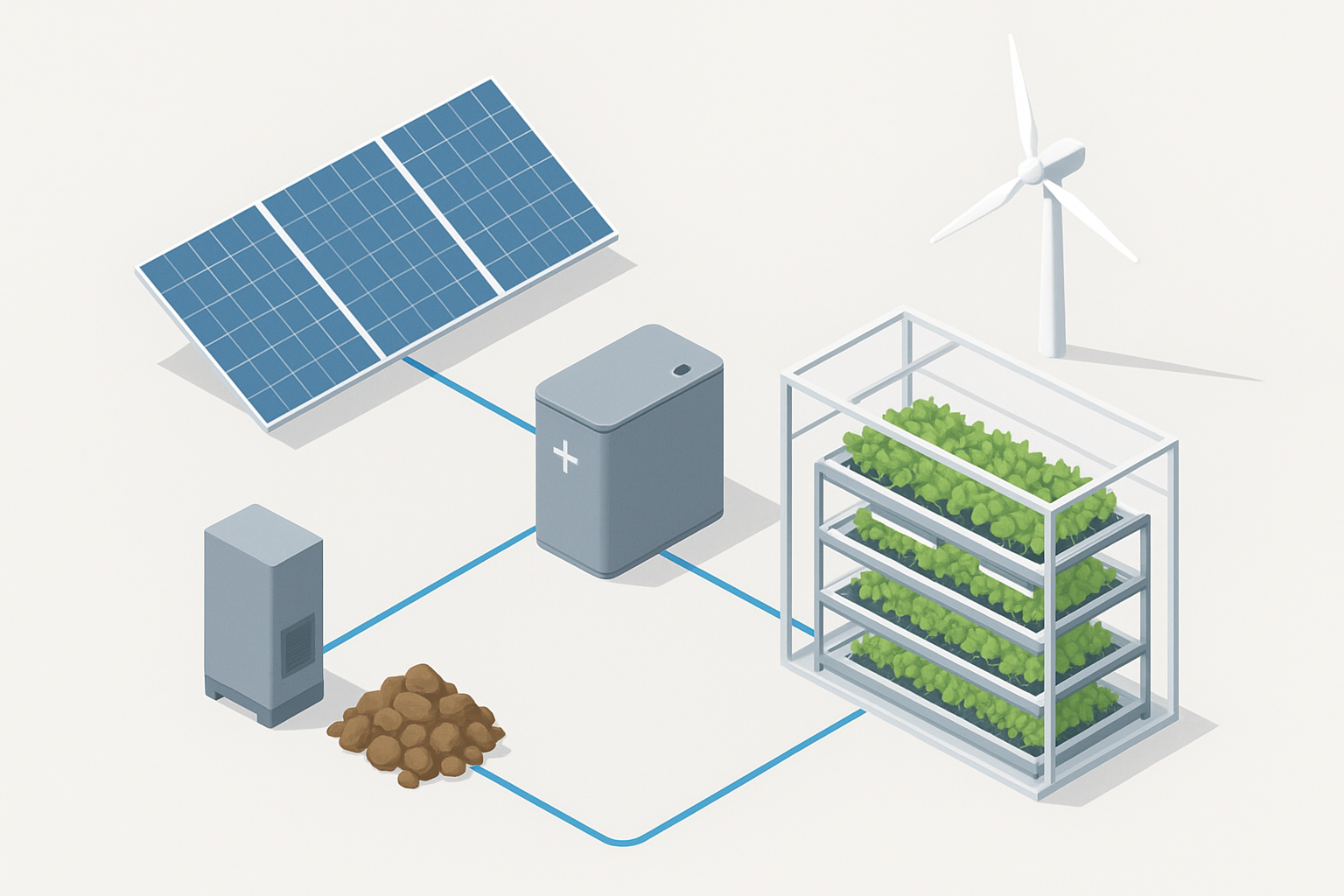
The carbon footprint of indoor farming is shaped by a complex interaction of design choices, technology selection, and operational practices. Lighting systems are one of the largest contributors: high-efficiency LED fixtures can significantly reduce electricity use compared to older high-pressure sodium lamps. Climate control technologies, such as heat pumps or passive thermal regulation, can also influence energy consumption. The choice between hydroponic, aeroponic, or aquaponic systems affects water treatment and nutrient delivery energy use. Furthermore, sourcing electricity from renewable energy rather than fossil fuels can transform a high-carbon operation into a low-carbon one. Even seemingly minor factors, such as the distance to market or the type of growing substrate, can accumulate into substantial differences when viewed over an entire life cycle.
The Role of Comparative Analysis
LCA allows for direct comparisons between indoor farming systems and traditional open-field or greenhouse production. For example, while vertical farms can eliminate the need for pesticides, reduce transport distances, and save water, they may still have higher energy-related emissions if powered by carbon-intensive grids. Conversely, in regions with abundant renewable electricity, their carbon footprint can be competitive or even lower than conventional methods. Comparative LCAs can guide investment decisions, shape regulatory frameworks, and inform consumer perceptions by providing evidence-based assessments rather than relying on generalised claims.
Improving Accuracy and Transparency
One of the challenges in applying LCA to CEA is the lack of standardised methodologies tailored to indoor agriculture. Variations in reporting metrics, inconsistent assumptions about yields or energy mixes, and limited peer-reviewed data can hinder comparability. To improve accuracy, researchers and operators are increasingly adopting international LCA standards such as ISO 14040 and 14044, and publishing detailed inventories of energy, water, and material inputs. Transparent reporting allows findings to be scrutinised, replicated, and built upon, strengthening the reliability of conclusions and enabling continuous improvement.
Strategies for Reducing the Carbon Footprint
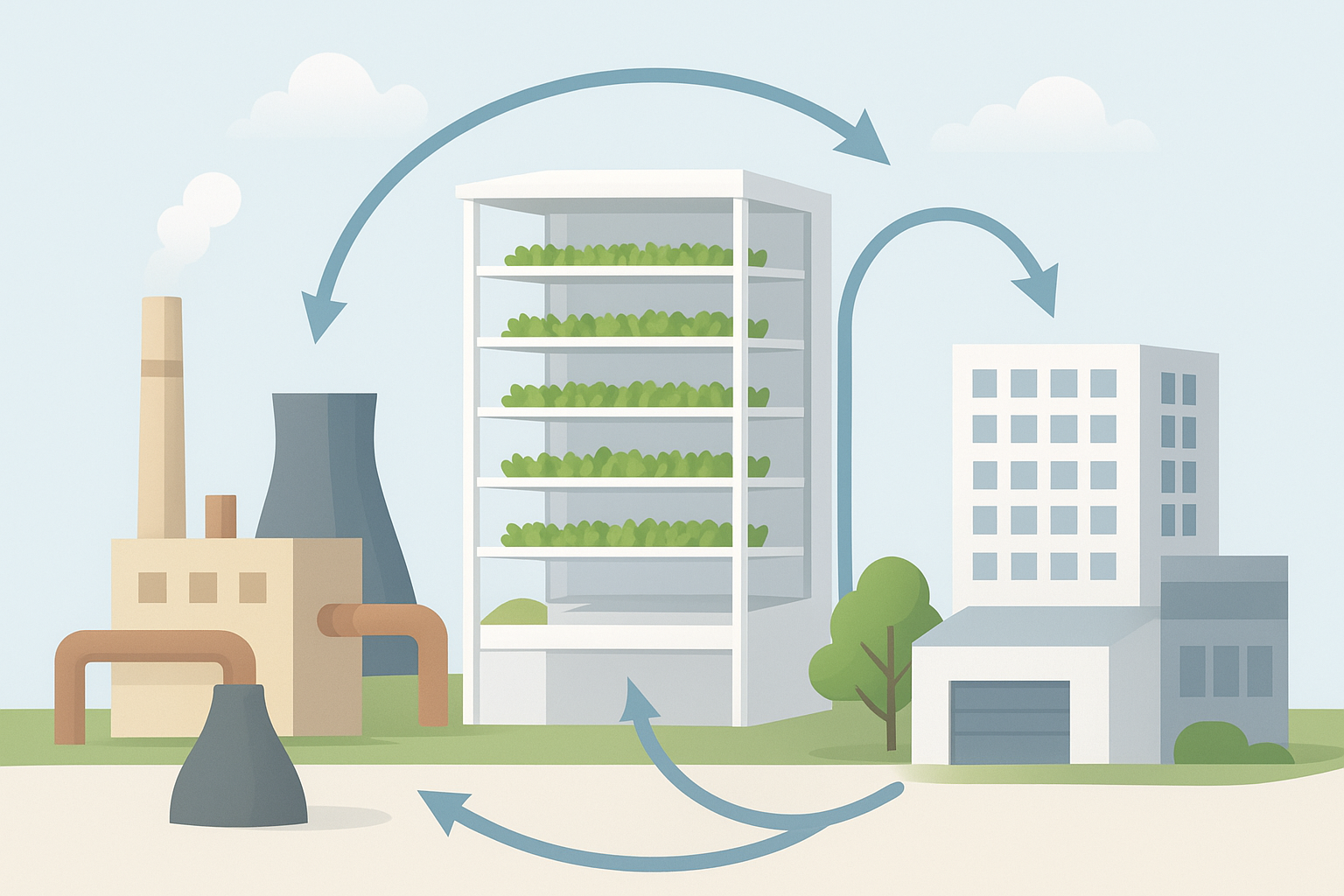
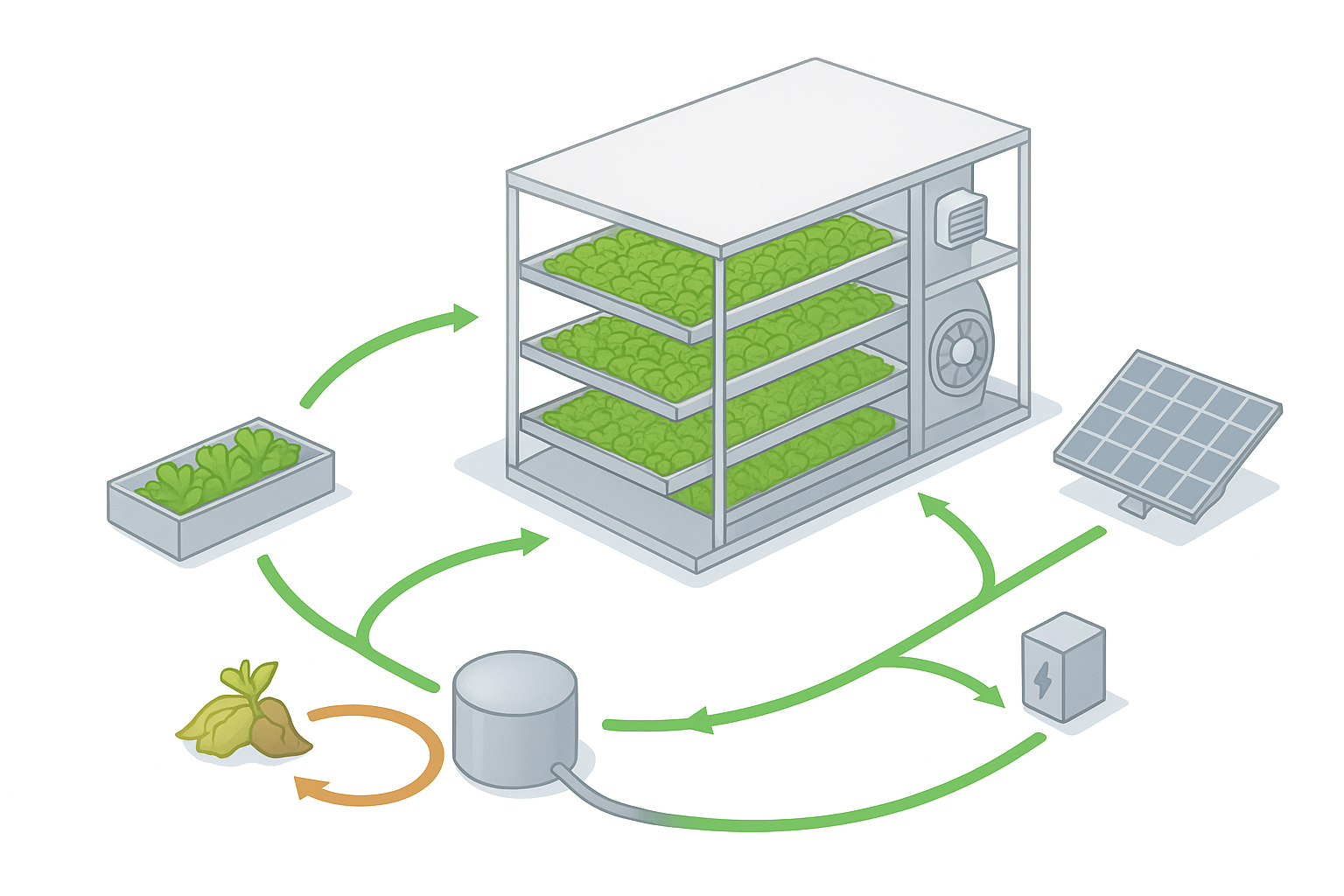
Once an LCA identifies the key contributors to emissions, targeted strategies can be implemented. This may include transitioning to renewable electricity sources, investing in high-efficiency HVAC and LED technologies, optimising crop selection for energy intensity, and recovering waste heat or nutrients for reuse. Incorporating circular economy principles, such as reusing substrates or integrating waste streams into other local industries, can also reduce upstream and downstream impacts. Over time, iterative LCAs can measure the effectiveness of these interventions, providing a feedback loop for sustainable design and operation.
Implications for Policy and Market Development
The results of life cycle assessment studies do not only benefit individual operators; they also have wider implications for policy and industry development. Policymakers can use LCA data to set performance benchmarks, create incentives for low-carbon practices, and align urban food production with broader climate targets. Investors and supply chain partners can incorporate LCA metrics into due diligence and sustainability reporting, helping to drive capital towards operations with demonstrably lower environmental impacts. Public awareness of carbon footprints can influence consumer demand, creating market advantages for producers who prioritise sustainable practices.
Looking Ahead: Data, Technology, and Collaboration
As CEA and vertical farming continue to expand, the scope and precision of LCAs will grow. Advances in sensor technology, data analytics, and real-time energy monitoring will enable more granular assessments, allowing farms to adjust operations dynamically to reduce emissions. Collaboration between industry, academia, and government will be essential to create comprehensive datasets and agreed methodologies that reflect the diversity of indoor farming systems. With a shared commitment to robust and transparent assessment, the sector can demonstrate its potential to contribute to sustainable, low-carbon food systems while avoiding unverified claims.
Conclusion
Life cycle assessment provides a rigorous framework for understanding the true environmental performance of indoor farming systems, moving beyond assumptions to quantifiable evidence. By identifying the most significant sources of greenhouse gas emissions and assessing them in context, LCA enables growers, policymakers, and investors to make informed decisions that balance productivity with climate responsibility. In a rapidly evolving sector, grounding discussions in verifiable data will be critical for ensuring that CEA and vertical farming fulfil their promise as resilient and environmentally conscious solutions for future food production.
Technical Annex: LCA Data, Emission Factors, and System Boundaries for CEA and Vertical Farming
1. Example Life Cycle Assessment Dataset
The following table presents a simplified dataset for an example vertical farm producing leafy greens. The data reflects typical inputs and outputs over one year of operation and is expressed per kilogram of edible product.
2. Emission Factors for Common Inputs in CEA
The table below lists indicative emission factors (in kg CO₂e per unit) relevant to vertical farming. Factors are adapted from UK Government GHG Conversion Factors, Ecoinvent, and peer-reviewed LCA studies. This is for example purposes only - actual values should be confirmed for the specific location and supply chain.
3. Boundary Diagram for LCA in Indoor Farming
Cradle-to-Gate Example: This boundary includes all processes from raw material extraction through to the product leaving the farm gate, excluding downstream transport to retailers and end-user impacts.
- Included:
- Building construction and materials production
- Manufacturing of cultivation equipment (racks, lights, pumps, HVAC)
- Electricity and water supply for production phase
- Nutrient manufacturing and delivery to site
- Waste management within the facility
- Excluded:
- Retail distribution and packaging disposal by consumers
- Consumer refrigeration or cooking
Cradle-to-Grave Example: This extended boundary incorporates the above plus:
- Transport to retailers or consumers
- Retail energy use for refrigeration
- End-of-life disposal of packaging and equipment
- Potential recycling or reuse streams
4. Applying These Data in Practice
To use these example datasets:
- Determine yield: Express all inputs and outputs per kilogram of marketable product to standardise comparisons.
- Multiply by emission factors: Apply the appropriate factor from the table above, ensuring regional accuracy.
- Sum emissions by stage: Identify which life cycle stages dominate the footprint.
- Scenario analysis: Compare grid electricity with renewable supply, alternative packaging materials, or different lighting efficiencies.
- Iterate: Update datasets regularly to reflect improvements in efficiency, technology changes, and energy grid decarbonisation.