Introduction: Defining Co-location Opportunities for Indoor Farming Systems
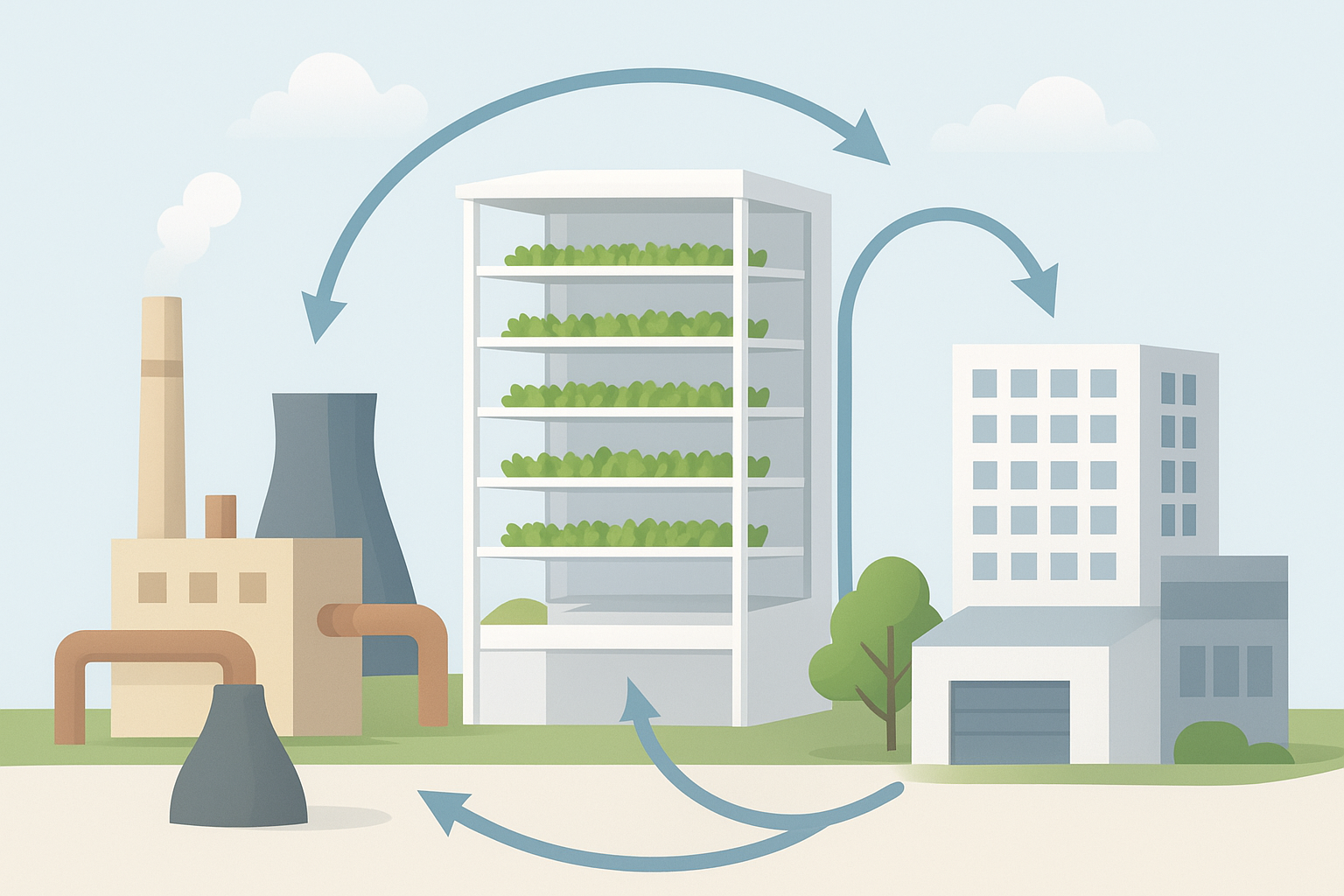
Co-location as an action refers to the strategic siting of controlled environment agriculture (CEA) and vertical farming facilities alongside other industrial, commercial, or infrastructural operations in order to share resources, reduce costs, and improve environmental performance. Rather than operating in isolation, indoor farms can be integrated into larger systems that already generate or require resources such as heat, carbon dioxide, renewable energy, water, or waste processing capacity. This approach reflects a shift in thinking about agricultural infrastructure: from stand-alone production units to interconnected nodes within a broader circular economy framework.
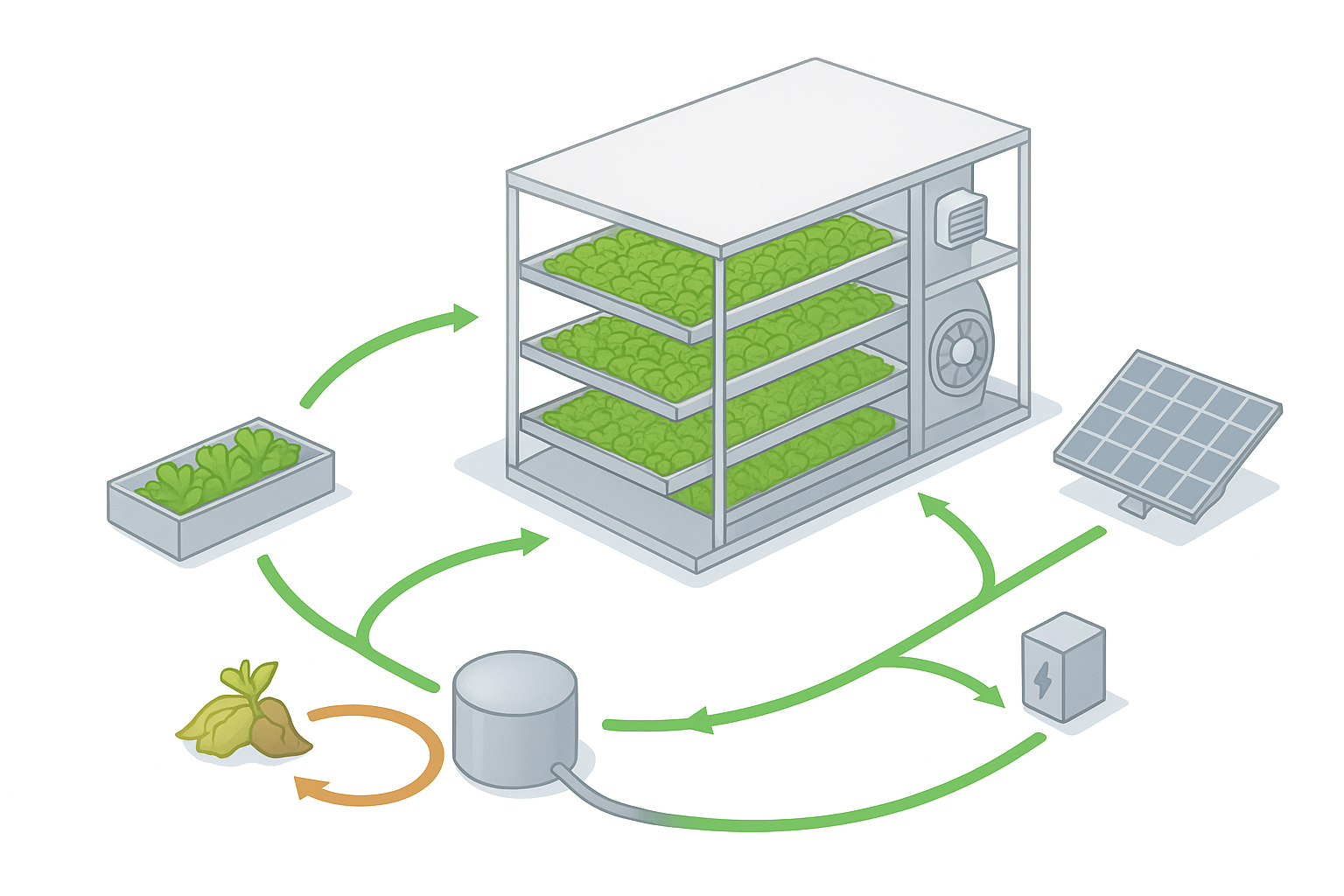
In practice, co-location can involve placing a vertical farm next to a data centre to capture excess heat, integrating with an anaerobic digestion plant to utilise biogas-generated electricity, or embedding production within retail or logistics hubs to shorten supply chains. While the concept is not new in industrial ecology, its application to CEA is still emerging, and its potential benefits for sustainability, economics, and resilience are only beginning to be fully quantified.
Why Co-location Matters in CEA
CEA systems, including vertical farms, are resource-intensive, with high demands for electricity, climate control, water purification, and nutrient supply. They also produce by-products, such as low-grade waste heat, humid exhaust air, and nutrient-rich effluent, which in isolation may be difficult to reuse efficiently. Co-location provides a means of matching these outputs with complementary demands or capturing external outputs that would otherwise be wasted.
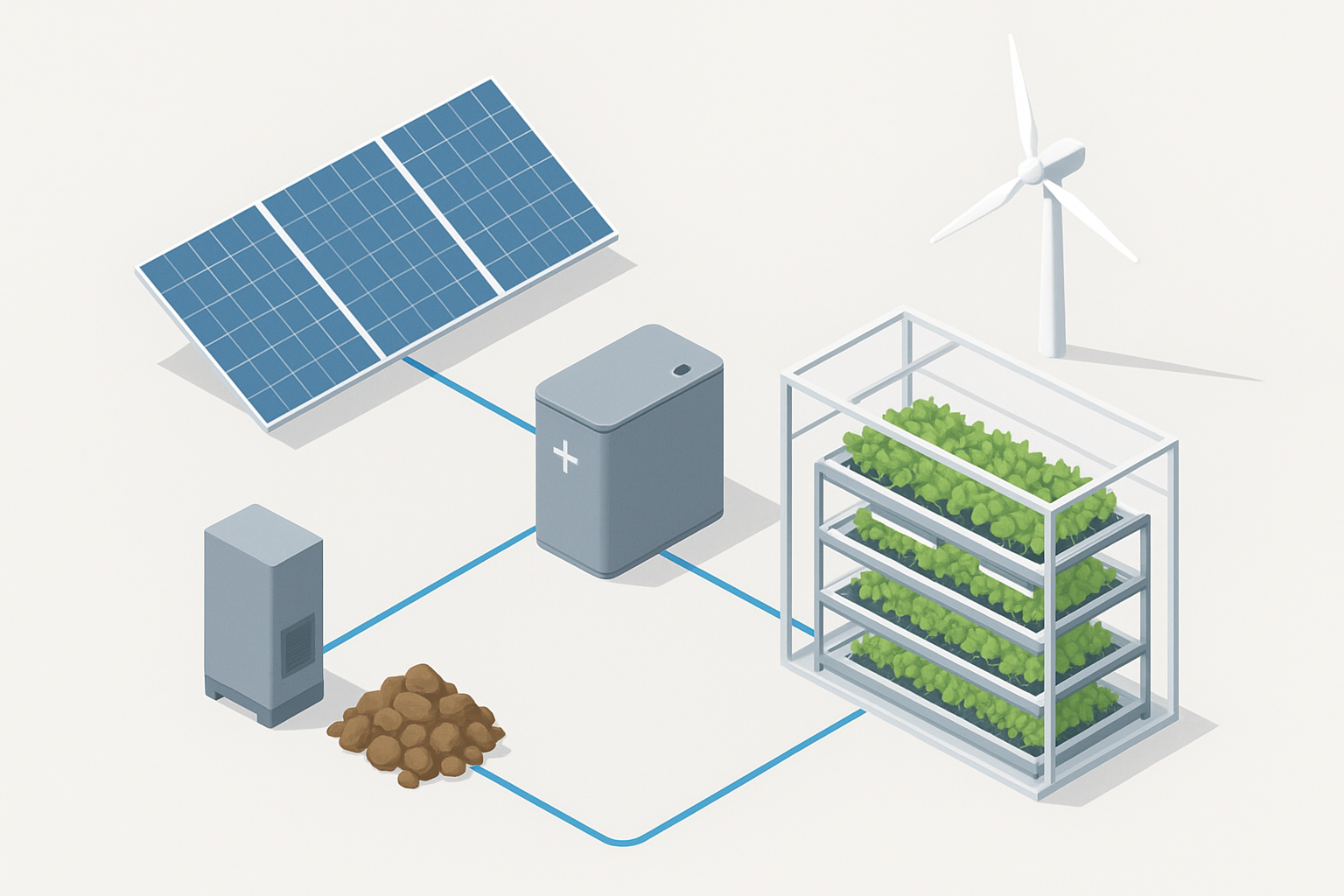
This alignment has several implications. First, it can lower operational costs by reducing the need to generate all inputs independently. Second, it can improve the environmental profile of indoor farming through the recovery and reuse of resources that would otherwise be lost. Third, it can increase resilience by diversifying supply pathways for key inputs, reducing vulnerability to market fluctuations or energy price spikes. For example, locating an indoor farm within an industrial park that produces surplus renewable electricity allows the farm to benefit from stable, low-carbon energy, while the park gains a consistent off-taker for excess generation.
Resource Synergies and Efficiency Gains
At the core of co-location strategies is the principle of resource symbiosis. Many industrial and commercial facilities have waste streams that are valuable to plant production. Waste heat from manufacturing or data processing can reduce heating costs in a vertical farm, particularly in temperate climates. Carbon dioxide from fermentation plants or combined heat and power (CHP) units can enhance crop growth when captured and delivered in controlled doses.
Similarly, water recovered from industrial cooling systems or rainwater captured from large roof surfaces can be treated and reused in hydroponic or aeroponic systems. In return, farms can provide a market for locally generated renewable energy or feed nutrient-rich water into nearby biogas plants. These exchanges require careful engineering to meet safety and quality standards, but they can substantially reduce both the farm’s footprint and the environmental load of the host facility.
Economic and Spatial Considerations
From an economic perspective, co-location can lower capital expenditure by sharing infrastructure such as buildings, distribution networks, or utilities. This is particularly relevant in urban or peri-urban areas where land costs are high. For instance, a vertical farm integrated into an existing warehouse can use the host’s loading bays, refrigeration units, and logistics connections, avoiding the need to duplicate these systems.
Spatially, co-location strategies can help address the challenge of placing CEA systems close to markets without bearing the full cost of urban real estate. Embedding farms into existing commercial premises, such as shopping centres or food distribution hubs, reduces both delivery distances and the energy used for cold-chain storage. Moreover, placing farms alongside their end-users, such as restaurants or hospitals, creates direct supply channels that shorten lead times and improve freshness.
Examples of Co-location in Practice
Although still a developing trend, several examples illustrate the feasibility and diversity of co-location models. In the Netherlands, some greenhouse operations integrate with power plants to use waste heat and carbon dioxide emissions, reducing the need for fossil-fuel heating. In the UK, research projects are exploring the integration of vertical farms with wastewater treatment plants, where nutrient recovery can be coupled with renewable electricity from on-site anaerobic digestion. In Japan, indoor farms have been embedded within supermarkets to produce and sell crops on the same premises, minimising transport entirely.
These examples demonstrate that co-location is not a one-size-fits-all strategy; it depends on matching the specific needs and outputs of each facility. Factors such as local climate, energy mix, regulatory environment, and the nature of the co-located partner’s processes all influence the viability of such arrangements.
Challenges and Risk Factors
While the benefits of co-location can be significant, the approach is not without challenges. Technical compatibility between systems must be ensured, particularly when dealing with shared heat or water streams. Contamination risks must be managed through rigorous quality assurance protocols, especially in food production. Legal and contractual frameworks need to account for long-term resource agreements and the responsibilities of each party.
There are also logistical considerations. Co-location with industrial sites may place farms further from consumers if not carefully planned, potentially offsetting some transport-related gains. In urban contexts, retrofitting existing buildings for agricultural use may encounter structural, regulatory, or planning barriers. Therefore, feasibility assessments must consider not only resource flows but also spatial planning, permitting, and business continuity.
The Future of Co-location in CEA
As energy prices fluctuate and climate targets tighten, the efficiency gains from co-location are likely to become more attractive. The move towards net-zero economies will encourage greater integration between sectors, with agricultural production becoming a partner in resource sharing rather than a separate, isolated activity. Digital tools for resource mapping and industrial symbiosis are already making it easier to identify potential partners and assess the viability of co-location before investment decisions are made.
For policy-makers, encouraging co-location could form part of broader strategies to support sustainable food production. Planning frameworks that enable multi-use industrial zones, incentives for resource sharing, and targeted funding for pilot projects could accelerate adoption. For researchers, more data are needed on the long-term performance of co-located farms, particularly regarding energy savings, emissions reduction, and crop quality outcomes.
In the longer term, the most successful indoor farming systems may be those that are conceived not as isolated facilities but as integral components of a larger urban, industrial, or rural ecosystem. By aligning production with existing resource flows, co-location strategies have the potential to reduce environmental impacts, enhance economic viability, and strengthen the resilience of food systems.