Introduction: Linking Circular Economies and Indoor Farming
Circular economies in indoor farming represent a systematic shift from the traditional linear model of resource use towards closed-loop, regenerative systems. Rather than extracting resources, using them, and discarding waste, a circular approach prioritises continual resource cycling, efficiency gains, and the minimisation of environmental impact. Controlled Environment Agriculture (CEA) and vertical farming are ideally positioned to integrate these principles because they are inherently contained, technologically managed systems where inputs, outputs, and waste streams can be precisely monitored and optimised.
Adopting circular economy strategies in indoor plant production is not simply a sustainability exercise; it is increasingly an operational and financial necessity. Rising energy costs, water scarcity, and pressure to reduce greenhouse gas emissions mean that growers, investors, and policymakers must look beyond incremental improvements and embrace systemic resource efficiency.
Why Circularity Matters in Controlled Environments
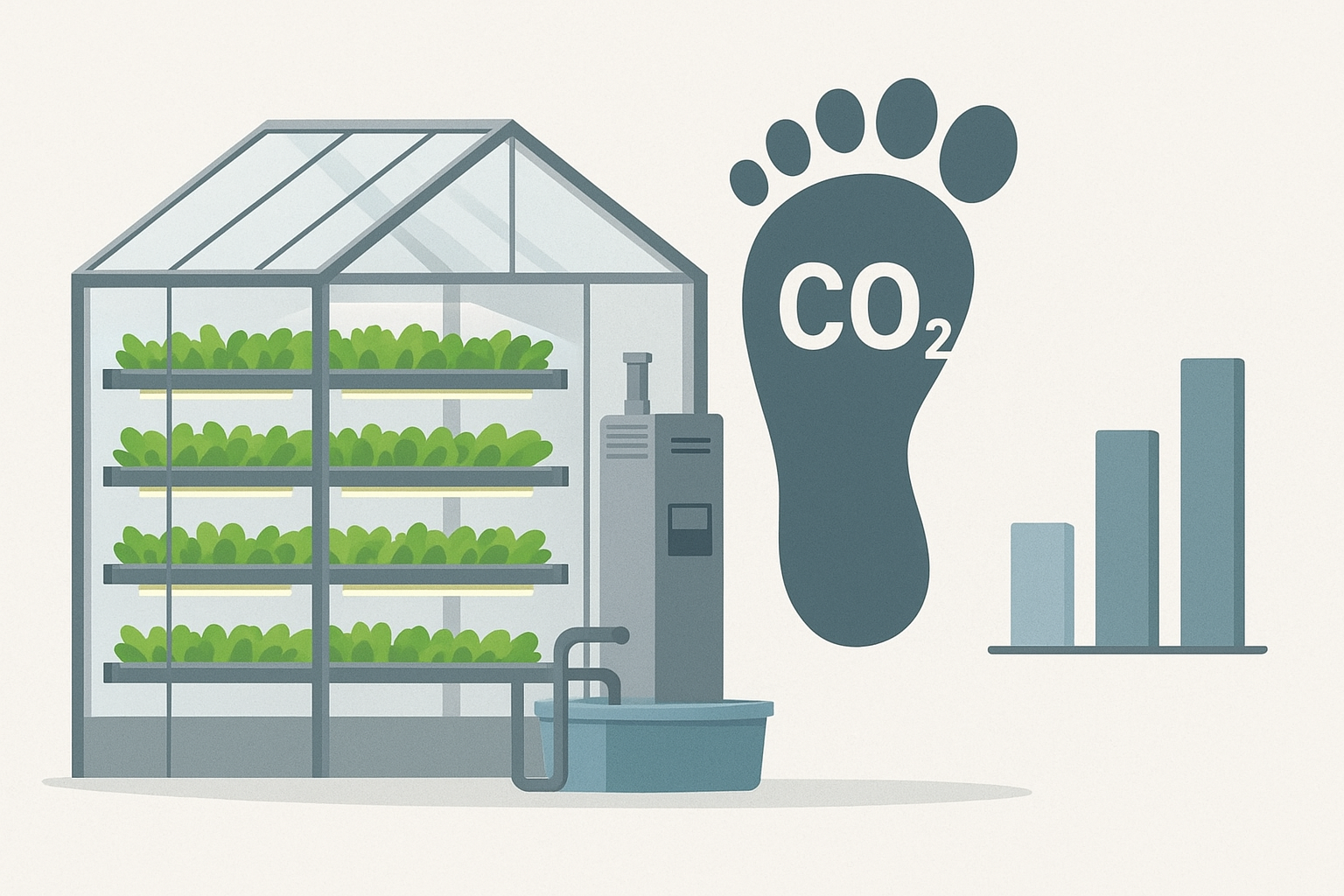
Indoor farming already offers certain advantages over conventional agriculture: reduced land use, controlled growing conditions, and proximity to urban markets. However, these systems can also be resource-intensive, particularly in terms of energy for lighting and climate control, and water for irrigation. Without circular economy strategies, the environmental footprint of some CEA operations can be significant.
Circularity addresses these challenges through the recovery and reuse of inputs. For example, hydroponic systems can be designed to recycle nutrient solutions, dramatically reducing water demand. Waste plant biomass can be converted into compost or bioenergy, feeding back into production cycles. Even heat generated by LED lighting or climate systems can be captured and repurposed, either within the farm or to serve adjacent buildings.
By treating every output as a potential input, CEA operators can reduce reliance on external resources, cut waste disposal costs, and strengthen resilience against supply chain disruptions.
Resource Loops and Input Recovery
A central principle of circular economies in indoor farming is the creation of resource loops: keeping materials and energy circulating within the system for as long as possible. In a vertical farm, this might involve capturing transpired water from plants through dehumidification systems, condensing it, and returning it to the irrigation loop. This approach can reduce total water consumption by over 90 per cent compared with open-field agriculture.
Nutrient recovery is another key area. Wastewater from hydroponic or aquaponic systems can be treated to remove impurities and restore optimal nutrient balances, allowing it to be recirculated. Technologies such as membrane filtration, ultraviolet sterilisation, and biofilters are now being integrated into farm designs to make nutrient cycling more reliable and cost-effective.
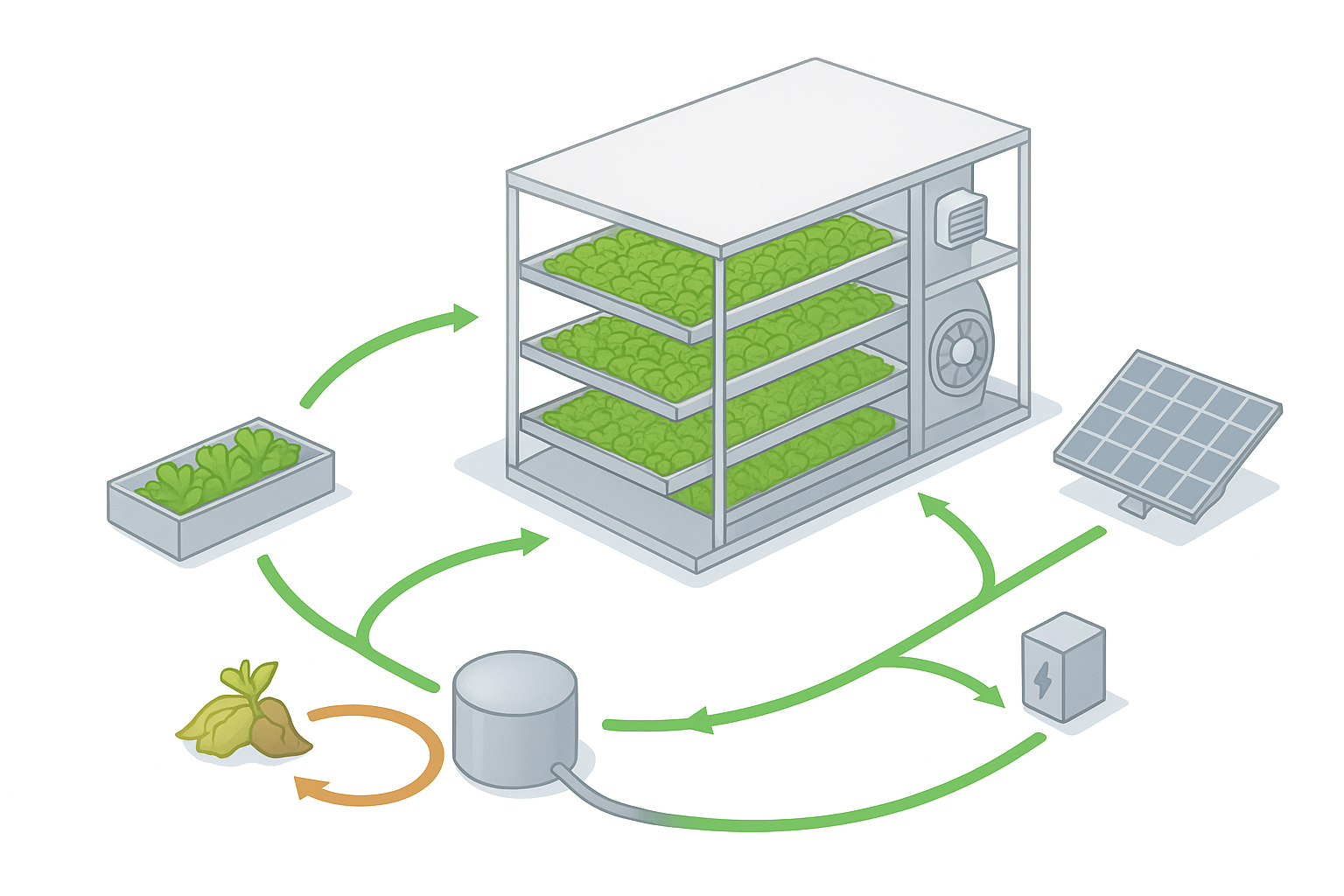
Organic waste streams, such as pruned leaves or non-commercial produce, can be processed on-site through anaerobic digestion. This yields biogas for energy generation and nutrient-rich digestate for use as an organic fertiliser, creating a closed nutrient-energy loop.
Energy Circularity and Integration with Local Systems
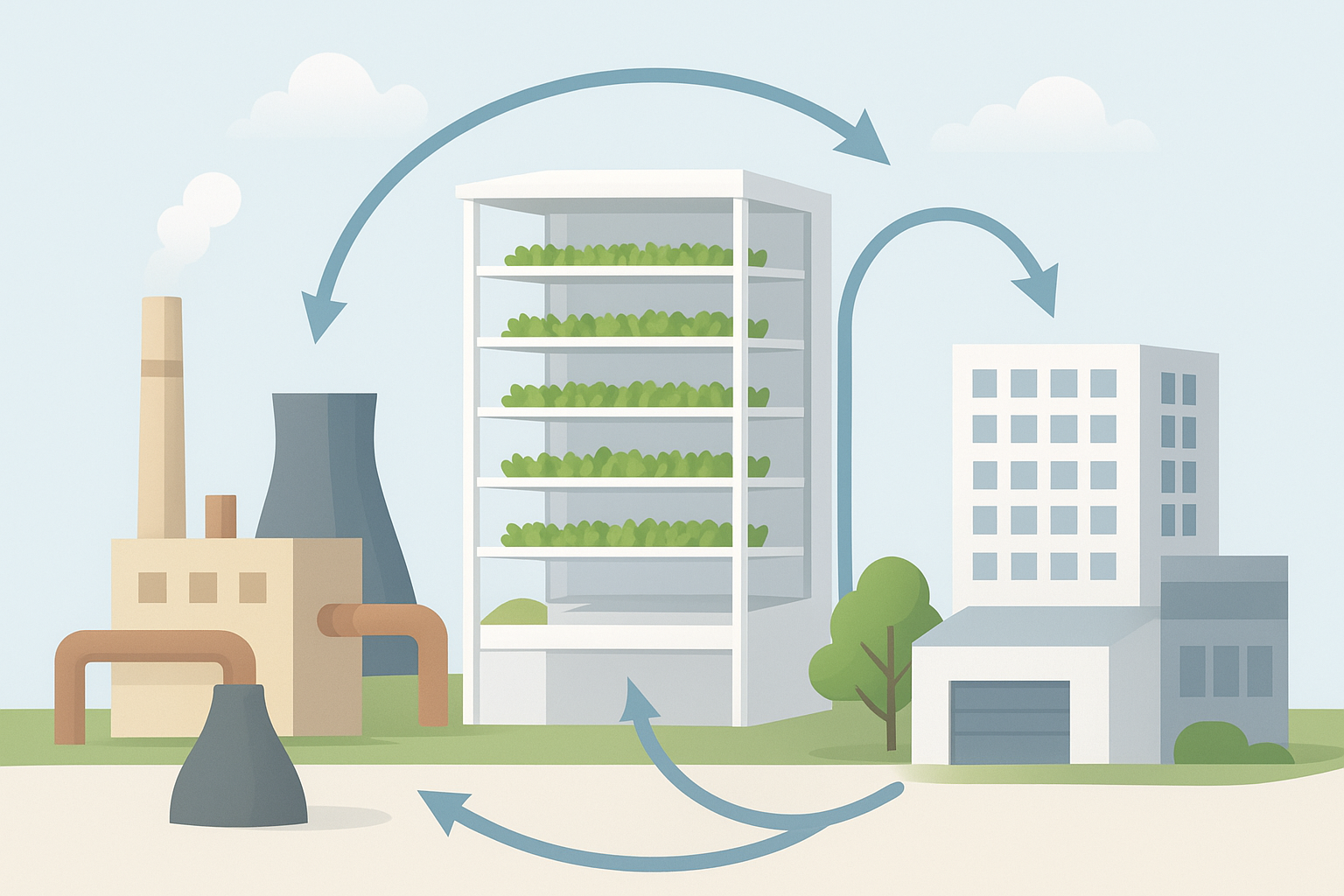
Energy efficiency is a well-recognised priority in CEA, but circularity extends beyond efficiency to active energy recovery and exchange. For instance, waste heat from grow lights can be channelled into thermal storage systems or redirected to heat other growing zones. Where farms are co-located with other facilities, such as data centres or manufacturing plants, industrial symbiosis can be established: excess heat from one facility powers climate control in the other, while organic waste from the farm may support energy production for both.
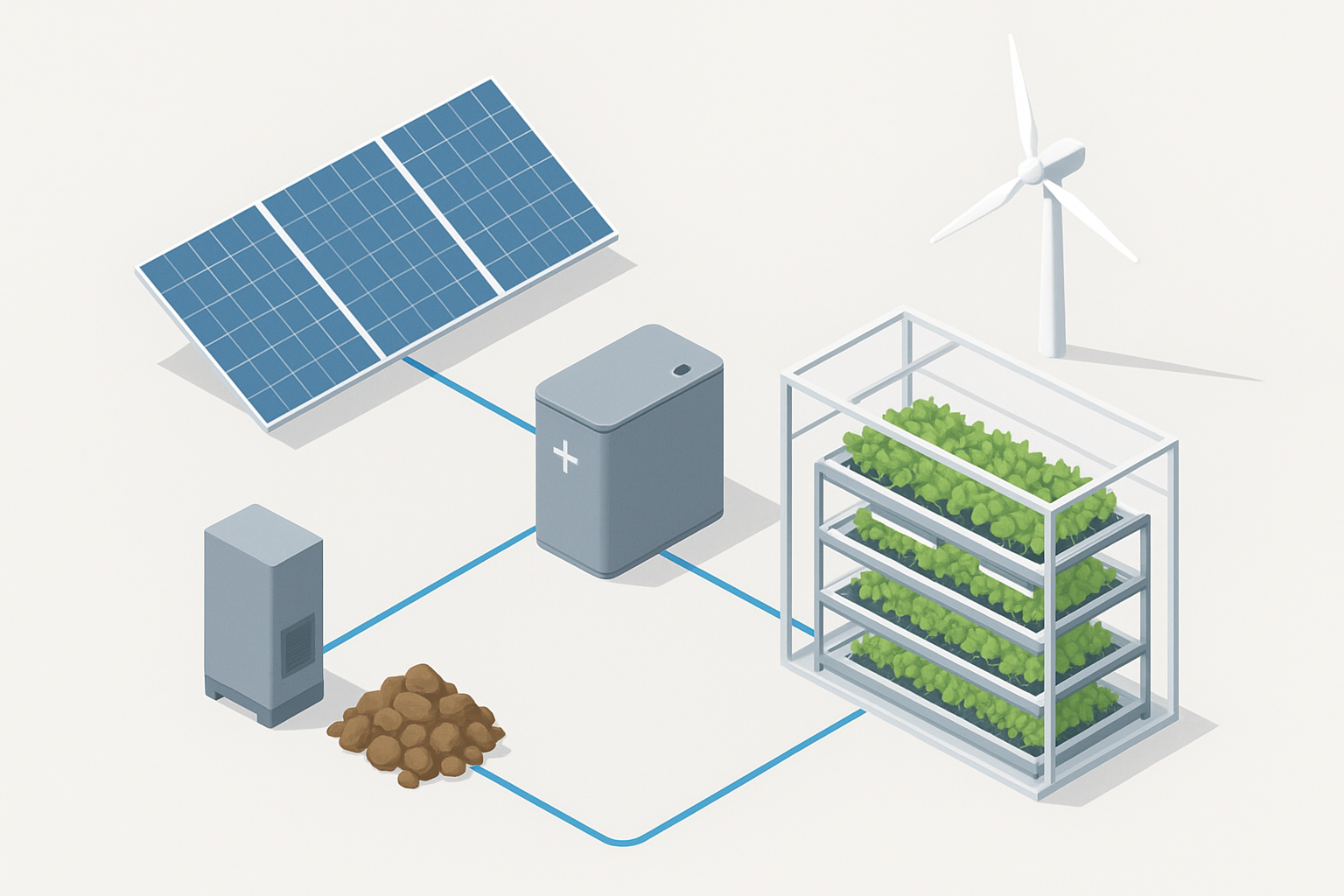
In some advanced examples, vertical farms are linked with renewable energy microgrids. Solar photovoltaic systems, combined with battery storage, enable farms to manage energy demand more sustainably. When generation exceeds farm needs, surplus energy can be exported to the grid or sold locally, providing an additional revenue stream. This interplay between CEA and decentralised energy systems is a growing area of innovation.
Water Management and the Virtuous Cycle
Water scarcity is an escalating global issue, and indoor farming offers unique opportunities for water circularity. Through precise environmental control, evaporative losses can be minimised, and condensate from the growing environment can be recovered. In fully optimised systems, water can be reused multiple times before eventual discharge.
Wastewater that must leave the system can be treated on-site to meet environmental standards or repurposed in other sectors, such as non-potable urban water use. This not only reduces the farm’s water footprint but also strengthens its role in urban resource networks.
Economic and Policy Dimensions of Circularity
While circular practices often require initial investment, they tend to deliver long-term cost savings and operational stability. Reducing dependency on external fertilisers, energy, and water insulates farms from price volatility. Moreover, waste-to-value processes, such as selling surplus renewable energy or processed biomass, can create additional income streams.
Policy incentives are emerging that encourage circularity in agriculture. Governments and municipalities are beginning to offer grants, tax incentives, or preferential contracts for food producers that demonstrate measurable waste reduction, nutrient recovery, and renewable integration. Vertical farms operating in urban areas may also find opportunities to partner with local authorities in shared infrastructure projects, such as district heating networks or integrated waste management schemes.
Research and Innovation in Circular Indoor Farming
The integration of circular economy principles into CEA is being advanced by research collaborations between universities, technology providers, and commercial farms. Areas of active innovation include bio-based growing media that can be composted and regenerated, microbial inoculants that enhance nutrient cycling, and AI-driven environmental controls that dynamically balance energy and water loops.
One promising direction is the coupling of vertical farms with aquaculture systems (aquaponics). Here, fish waste provides nutrients for plants, while plants and biofilters purify water for the fish. When carefully balanced, such systems can approach complete resource circularity.
Another area of progress is modular, containerised farm units designed for integration with renewable energy systems and localised waste processing, enabling circularity at multiple scales, from neighbourhood to regional food networks.
Moving Towards Systemic Integration
Circular economies in indoor farming work best when they extend beyond the farm boundaries. By collaborating with surrounding businesses, energy providers, and municipal infrastructure, CEA can become part of a wider circular urban ecosystem. For example, an urban vertical farm could receive organic waste from local markets, process it into fertiliser and energy, and supply fresh produce back into the same markets, completing a localised nutrient and food loop.
In this way, CEA can act as a hub for sustainable resource flows in cities, aligning food production with broader goals for climate resilience, waste reduction, and energy efficiency. The challenge lies in designing systems that are technically feasible, economically viable, and socially beneficial, while remaining adaptable to local conditions.
Conclusion: A Strategic Imperative for the Future
The transition to circular economy solutions in CEA and vertical farming is more than a trend; it is a structural shift towards a resilient and sustainable model of food production. By embedding closed-loop thinking into every aspect of indoor farming design and operation, growers can achieve both environmental and economic gains.
As the pressures of climate change, urbanisation, and resource scarcity intensify, those who embrace circularity will be better placed to thrive. Indoor farming has the technological capacity, spatial control, and systemic connectivity to make circular economies a practical reality, positioning it as a vital component of sustainable food systems for the decades ahead.