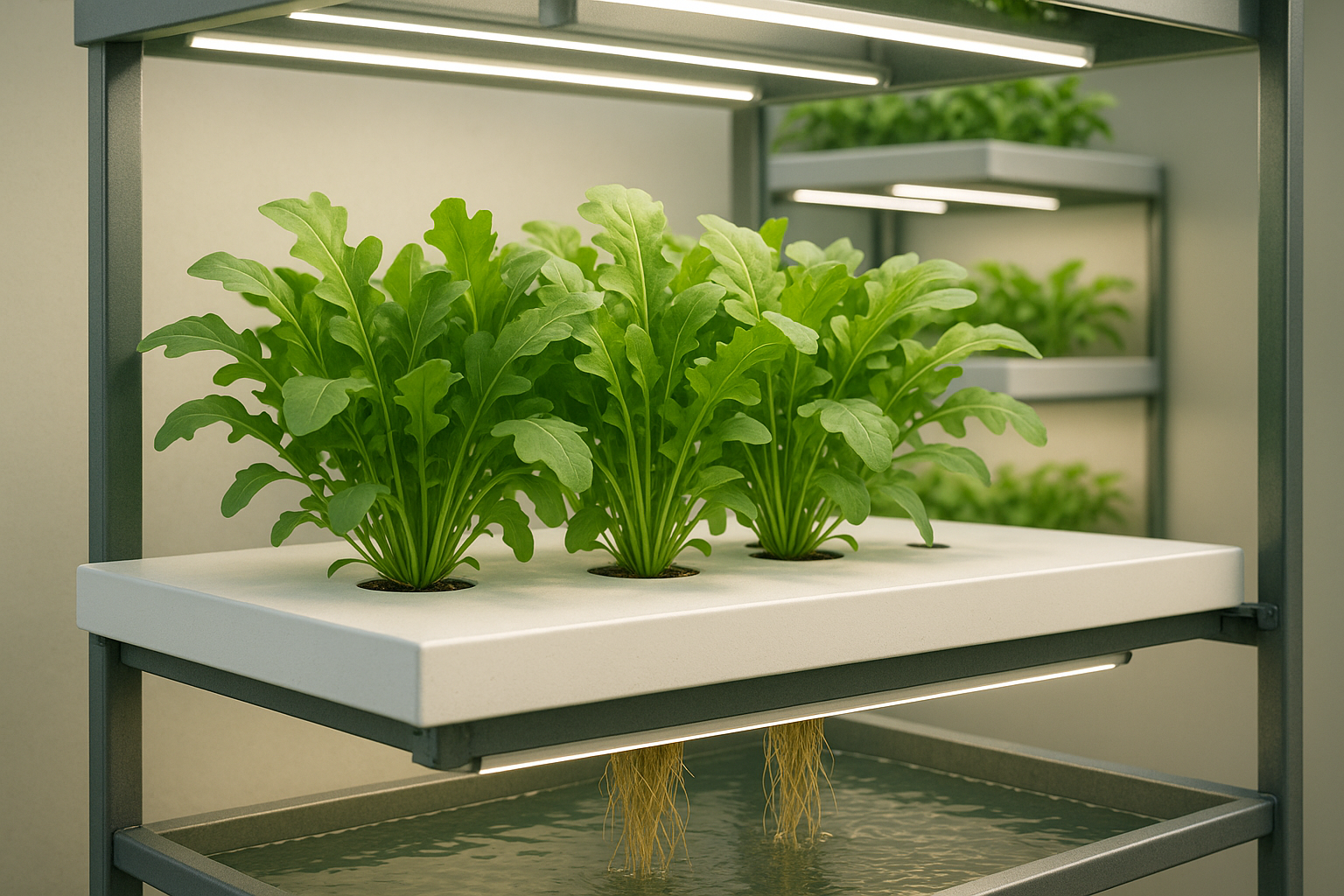
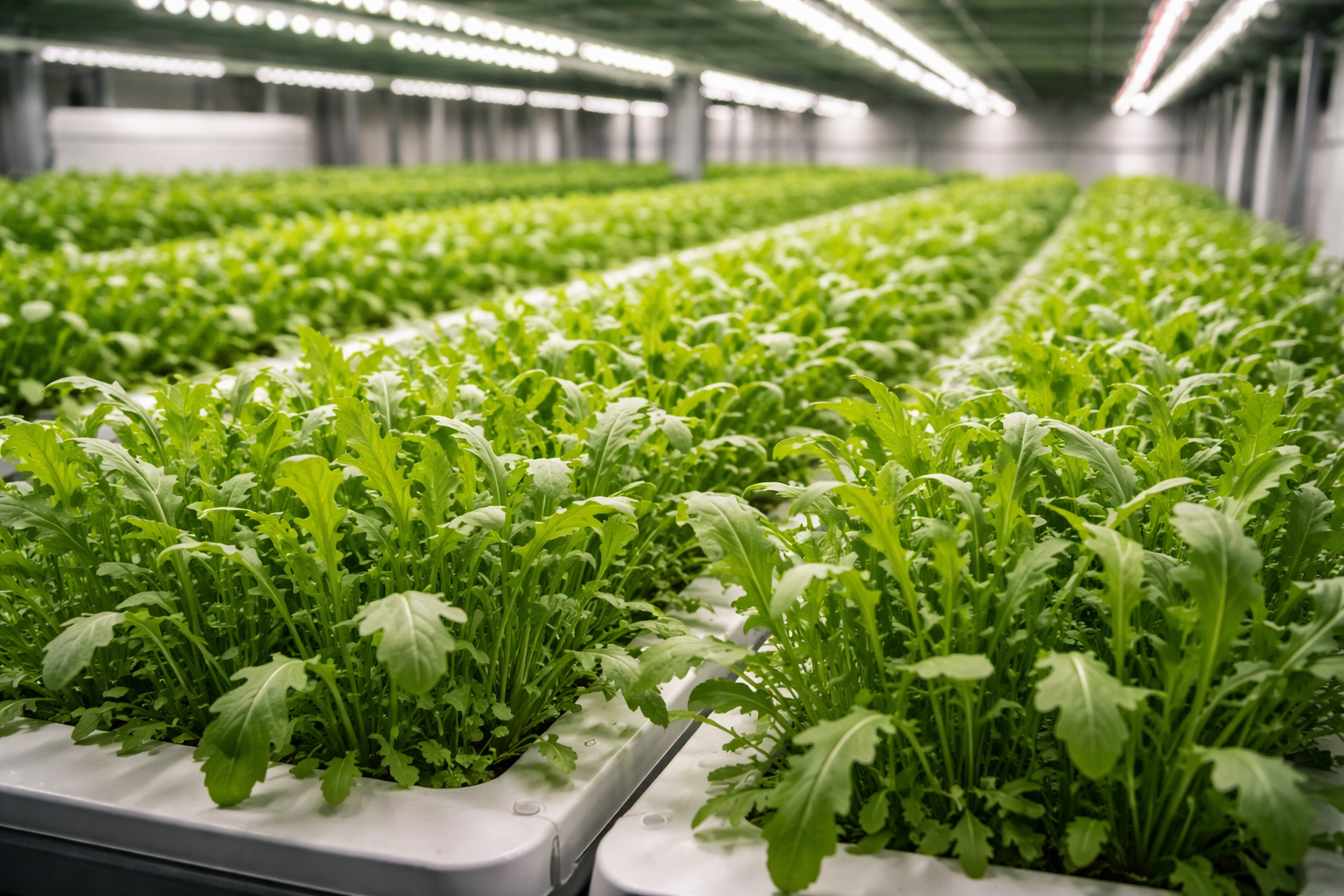
Rocket (Eruca sativa), also known as arugula, is a leafy green belonging to the Brassicaceae family. It is prized for its peppery flavour, nutritional value, and short growth cycle, making it particularly suitable for hydroponic and aeroponic systems within vertical farms. Rocket has been a target crop for many indoor farming system startups, as it represents a practical and profitable species for indoor growers seeking to optimise space, resources, and quality.
Why Rocket Performs Well in CEA Systems
Rocket’s physiological characteristics make it well adapted to controlled environments. It thrives under cool to moderate temperatures (typically between 18°C and 22°C) and responds efficiently to carefully regulated photoperiods and humidity levels. Unlike fruiting crops, rocket does not require pollination and has a relatively simple morphology, reducing mechanical and operational complexity. Its rapid growth rate means that crops can be harvested within three to four weeks from germination (or earlier if harvested as a microgreen), allowing for multiple production cycles per year.
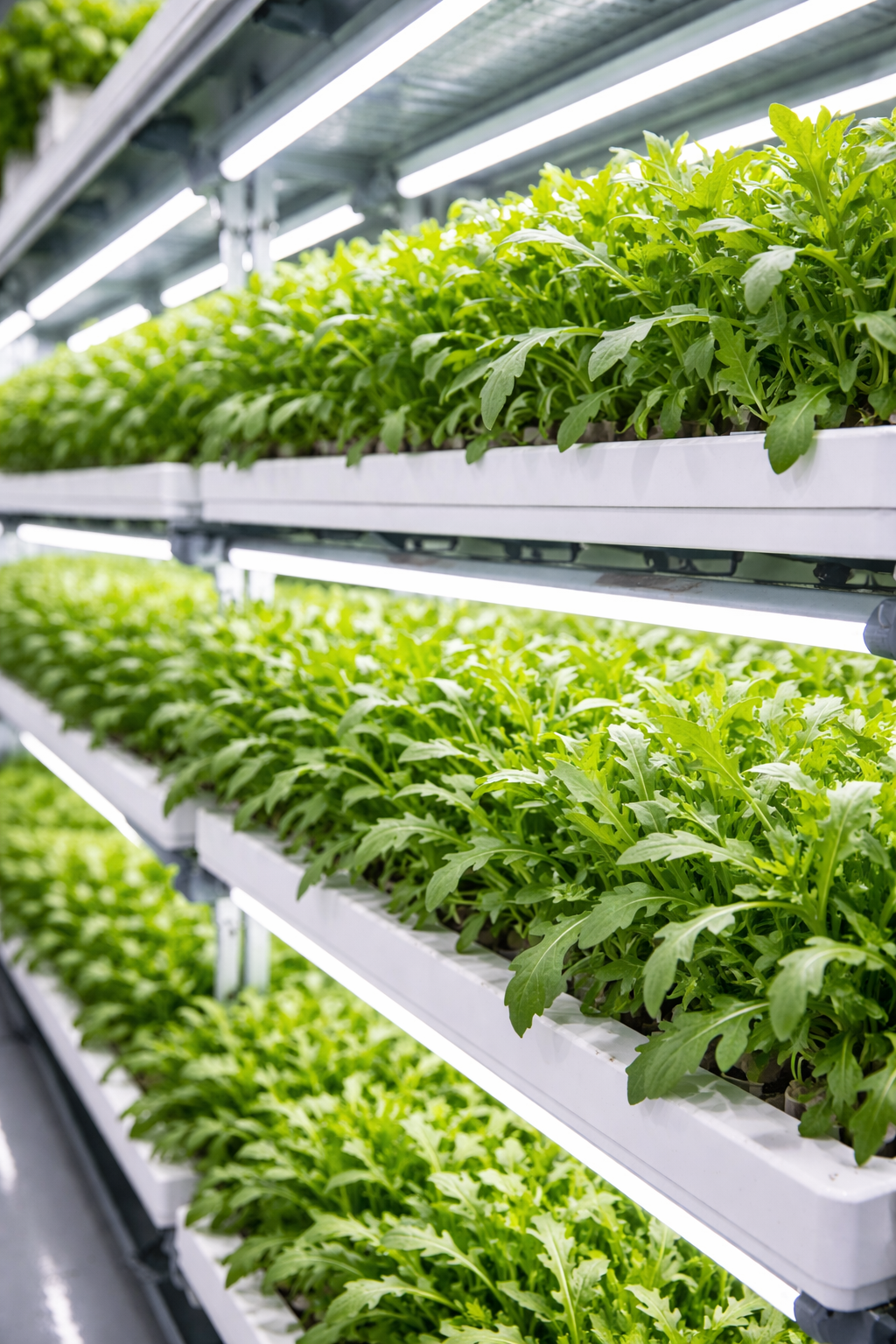
In vertical farming, where efficiency and uniformity are critical, rocket performs exceptionally well under LED lighting systems tuned to specific photosynthetically active radiation (PAR) ranges. Optimal spectra generally fall within the red and blue regions (400–700 nm), as this promotes biomass development, often complemented by white light to enhance chlorophyll synthesis and leaf pigmentation. Because rocket is a relatively low-canopy crop, it fits comfortably within stacked vertical systems, enabling growers to maximise yield per square metre.
Hydroponic and Aeroponic Techniques for Rocket
Rocket can be successfully cultivated using several hydroponic techniques (nutrient film technique (NFT), deep water culture (DWC), flood and drain), or aeroponics, but nutrient management is central to success. Rocket typically prefers a nutrient solution with an electrical conductivity (EC) of 1.4–1.8 mS/cm and a pH between 6.0 and 6.5, but strategies will vary depending on desired crop outcome. Nitrogen, calcium, and magnesium are critical macronutrients for vigorous leaf development; deficiencies can rapidly manifest as chlorosis or poor canopy density. Balanced fertilisation should also consider sulphur, as it contributes to the distinctive flavour compounds characteristic of Brassicaceae crops.
Environmental Parameters and Growth Optimisation
Maintaining a stable microclimate is essential for consistent production. Relative humidity should be controlled around 50 – 70% to prevent tip burn and fungal diseases, while airflow and air exchange must be sufficient to discourage condensation on foliage. Rocket’s photosynthetic efficiency benefits from CO₂ enrichment up to 800 – 1,000 ppm, provided that temperature and light intensity are well balanced.
Daily light integral (DLI) requirements for rocket are relatively modest compared to fruiting crops, typically ranging from 12 to 17 mol m⁻² day⁻¹. Photoperiods of 14 – 16 hours under LED lighting are often used to sustain steady growth without inducing premature bolting. When light intensity or temperature rises excessively, rocket may shift towards reproductive development, producing elongated stems and smaller, more bitter leaves. Temperature moderation and precise light scheduling therefore play a decisive role in maintaining desirable morphology and flavour.
Harvesting and Post-Harvest Handling
Rocket can be harvested either as a microgreen crop or at a mature stage, depending on the market and intended use. Microgreens or baby leaves are often preferred for salad mixes and retail packs, while mature leaves are suited to culinary applications where stronger flavour is desired. Harvesting typically occurs 21 – 28 days after sowing, for mature plants, when leaves reach approximately 8 – 12 cm in length.
Clean harvesting equipment and minimal handling are essential to preserve quality and reduce contamination risks. Leaves should be immediately cooled to 2 – 4°C to maintain texture and shelf life. In commercial indoor systems, automation of cutting, washing, and packaging can enhance consistency and reduce labour costs. Rocket’s shelf life can exceed ten days under proper cold-chain management, giving it a logistical advantage for urban distribution.
Rocket as a Microgreen versus a Mature Crop
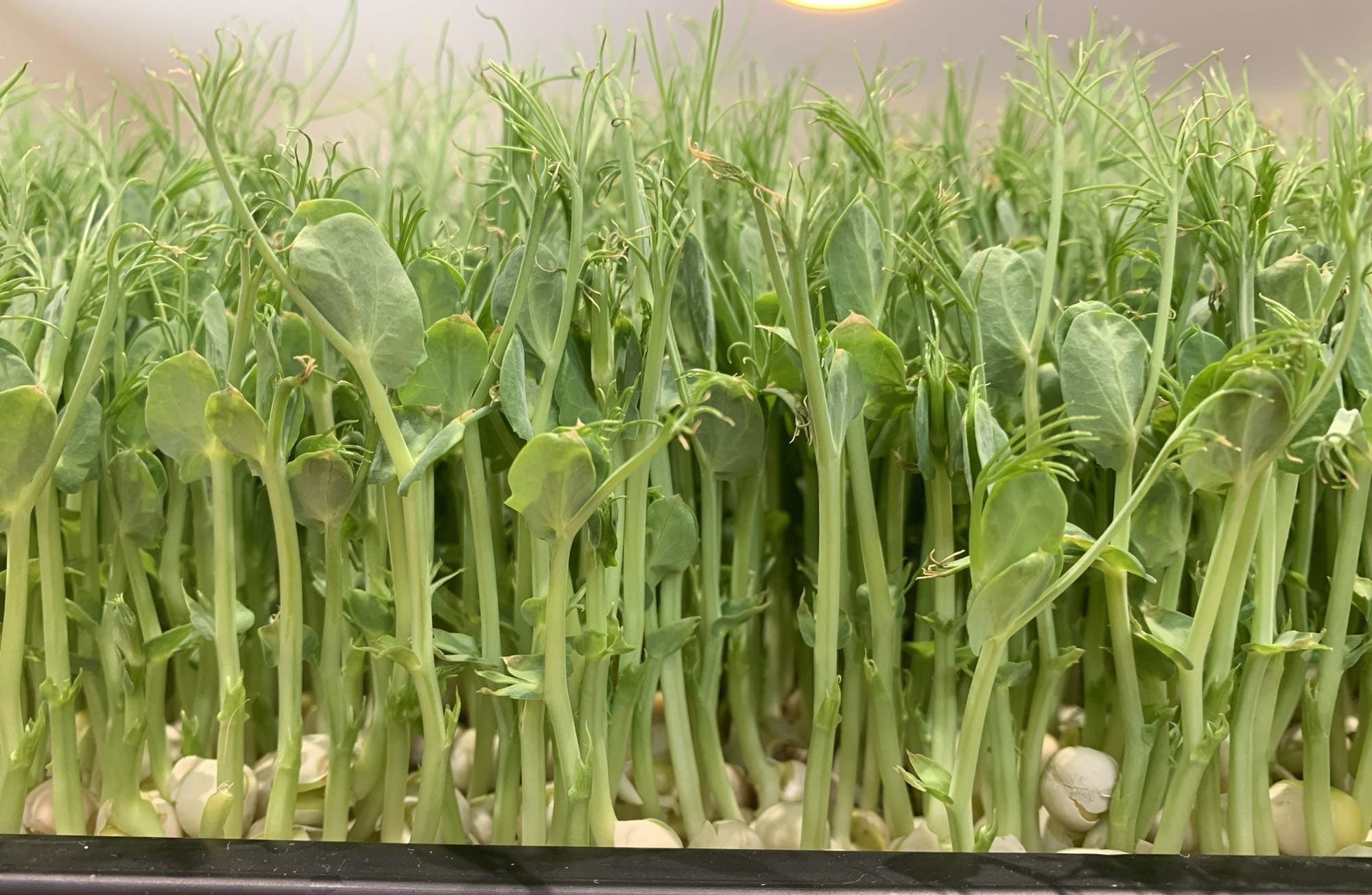
Rocket is also widely grown as a microgreen in CEA systems. At this stage, it is harvested 7–14 days after germination, usually when cotyledons are fully developed and the first true leaves appear. Microgreens offer an intense flavour profile and higher concentration of certain phytonutrients per gram of fresh weight compared with mature leaves. However, seed consumption for microgreen production is considerably higher, which can raise input costs and sustainability concerns if scaled excessively.
In contrast, mature rocket grown hydroponically or aeroponically is more resource-efficient in terms of seed use per kilogram of yield. It provides a continuous harvest option, especially when using cut-and-come-again methods. From a commercial standpoint, the choice between microgreen and mature production often depends on local demand, price margins, and available automation.
Nutritional and Market Significance
Rocket is valued for its nutritional profile, including high levels of vitamin C, vitamin K, folate, calcium, and glucosinolates. These compounds are linked with potential health benefits such as anti-inflammatory and antioxidant effects. Its distinctive taste and visual appeal make it a staple in fresh produce markets, especially within the ready-to-eat salad sector. In the UK, demand for rocket has increased consistently since the early 2000s, driven by consumer preferences for fresh, locally produced, and high-flavour greens.
Challenges and Future Prospects
While rocket is among the easier crops to cultivate with CEA, it is not without challenges. Bolting under excessive heat or light stress can reduce yield and marketability, while nutrient imbalances may alter flavour. In the future, breeding programmes specifically targeting indoor-adapted rocket cultivars could enhance uniformity, flavour stability, and disease resistance. Research into light spectrum manipulation and controlled nutrient stress may further optimise taste and nutritional quality.
Future CEA developments may also integrate robotics and sensor networks to streamline production and reduce labour dependency. Rocket, with its predictable growth cycle and compact morphology, remains an excellent model species for such innovations.
Conclusion
Rocket’s rapid growth, strong market demand, and adaptability to hydroponic and aeroponic systems make it one of the most reliable leafy greens for vertical farming. Growing rocket in CEA not only supports consistent, high-quality production but also demonstrates how precision agriculture can address urban food security and sustainability challenges. For both new entrants and established growers, it serves as an ideal crop to master the technical, economic, and environmental principles that underpin successful controlled environment agriculture.