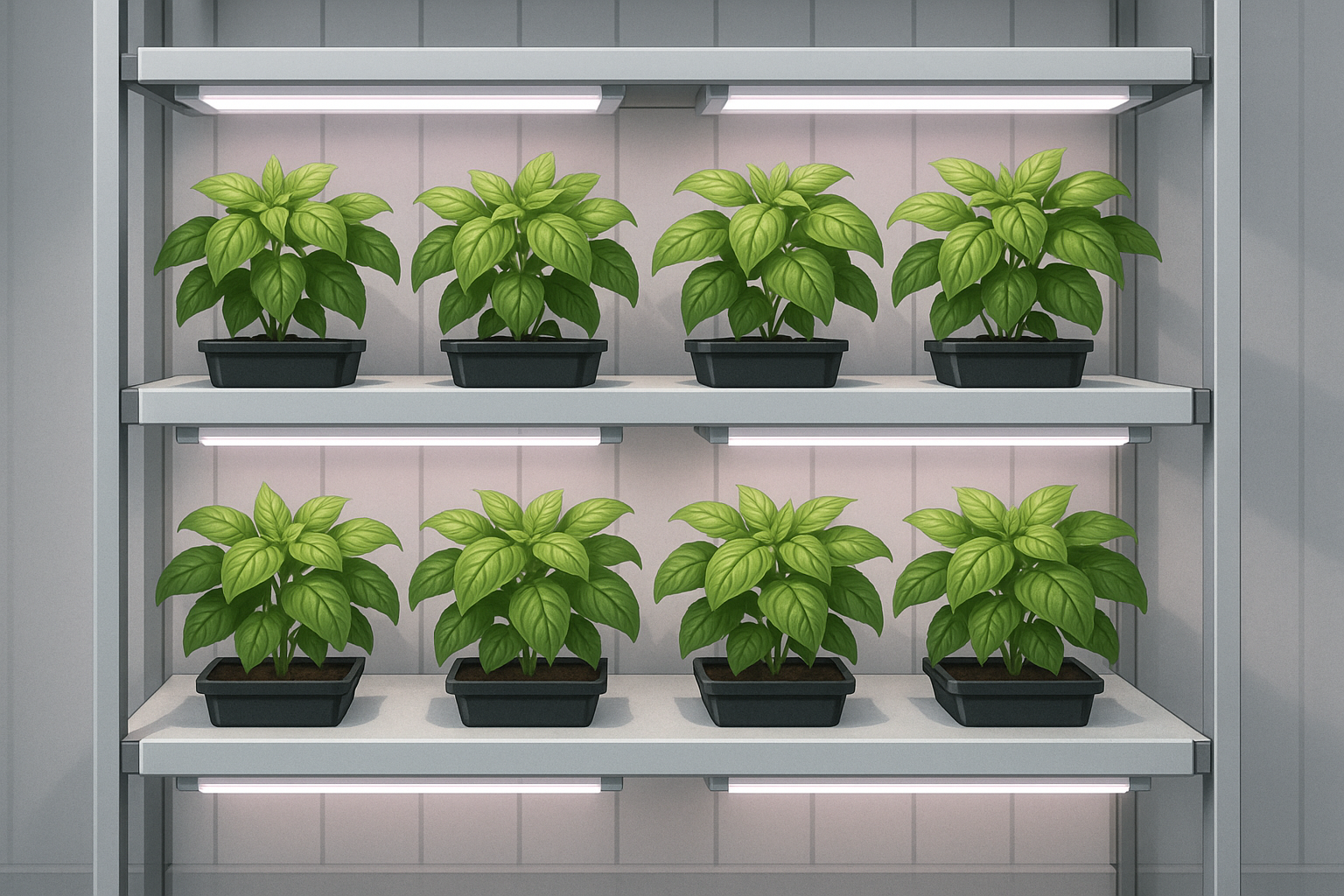
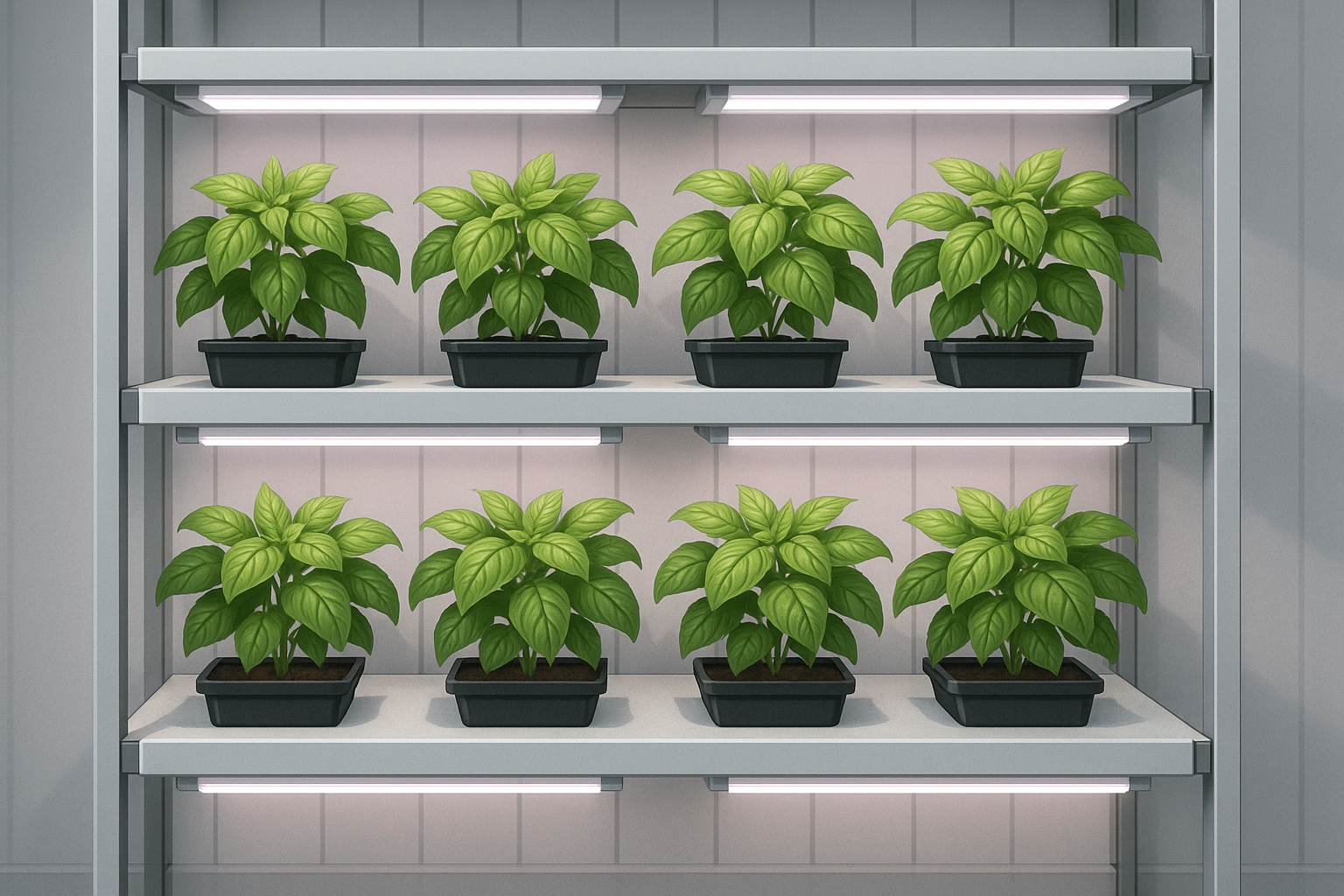
Basil (Ocimum basilicum) is one of the most widely cultivated herbs in the world, prized for its aromatic leaves, rapid growth, and diverse culinary and medicinal applications. Within Controlled Environment Agriculture (CEA), growing basil has become a leading example of how environmental precision can produce consistent, high-quality crops throughout the year. Basil has emerged as both a commercial cornerstone and a research model species. It is favoured in both scenarios as it responds predictably to light, temperature, and humidity, making it ideal for studying plant physiology and optimising indoor plant production systems.
Environmental Conditions and Growth Requirements
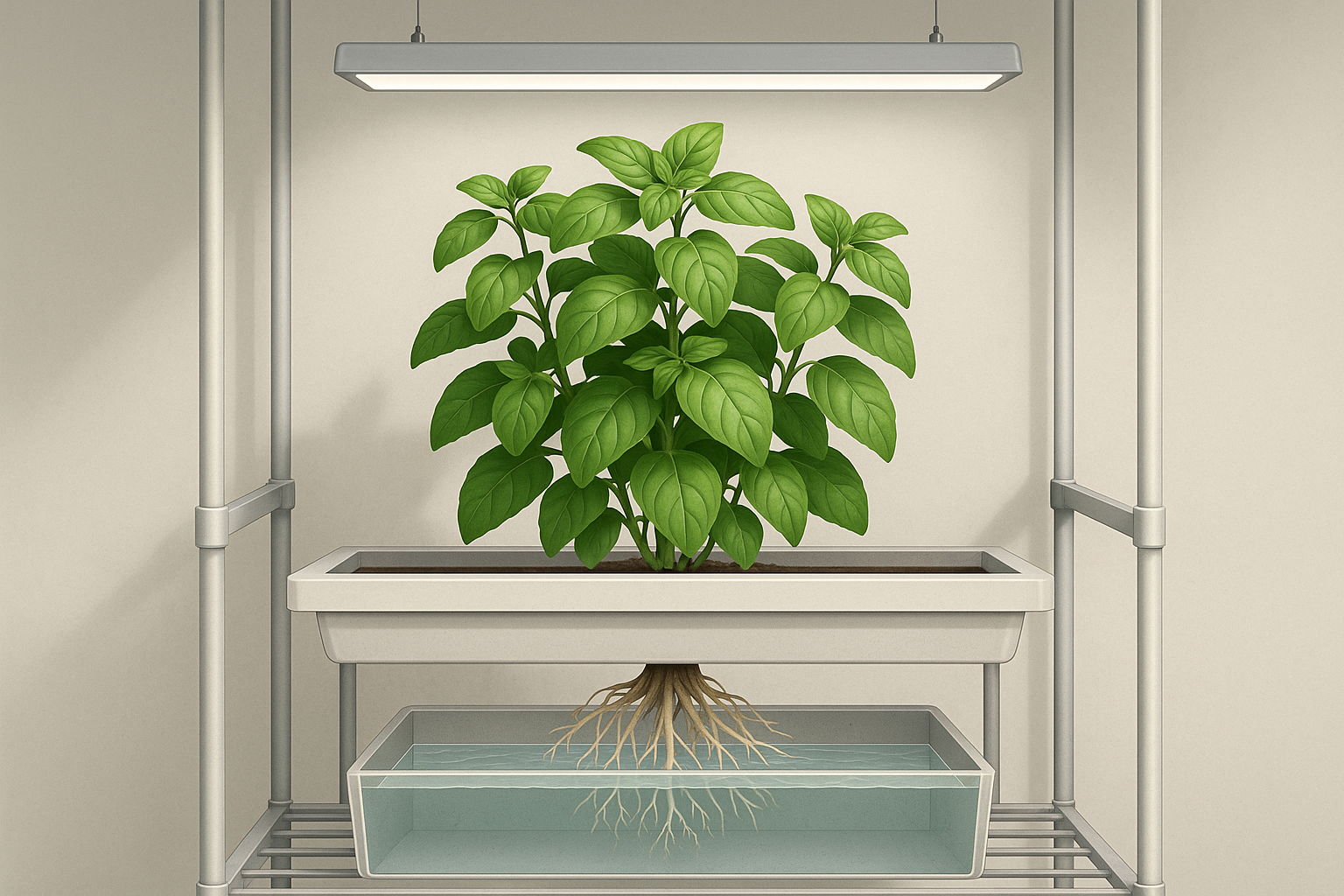
Basil thrives under warm, humid conditions with high light intensity. Optimal temperatures typically range between 15 – 28°C during the day and 18 – 22°C at night. Relative humidity around 60 – 70% supports vigorous vegetative growth, although this should be carefully balanced with VPD to prevent fungal diseases such as Botrytis cinerea or Fusarium wilt. In hydroponic and aeroponic systems, the nutrient solution is typically maintained at an electrical conductivity (EC) of 1.4 – 1.8 mS/cm and a pH between 6 and 8.
Light quality has a pronounced influence on basil morphology and phytochemical content. Research studies have indicated that blue light enhances essential oil biosynthesis and compactness of the canopy, while red light promotes leaf expansion and overall biomass accumulation. Studies have also shown that a balanced spectrum, with approximately 20 – 25% blue light within a total PPFD range of 200 – 350 µmol m⁻² s⁻¹, supports the best trade-off between growth rate and flavour concentration.
Propagation, Harvesting, and Crop Cycling
Basil propagation in CEA systems is generally carried out via seeds or vegetative cuttings. Seeds germinate readily under warm, moist conditions, with germination rates above 90% at 25°C (depending on seed quality and source). Germination typically occurs within two to three days, after which seedlings are transferred to the main hydroponic system once roots are sufficiently established.
Harvesting strategies vary depending on the production goal: single-harvest (cut-and-clear) systems maximise throughput, while multi-harvest (cut-and-come-again) approaches enhance resource efficiency. Plants can be pruned above the second node to encourage lateral branching, extending the cropping cycle to six to eight weeks. Consistent lighting and nutrient supply prevent the stress conditions that can induce premature flowering, which reduces leaf quality and flavour.
Post-harvest handling is also critical: basil is highly sensitive to chilling injury and should be stored above 12°C. In vertical farms integrated with post-harvest cooling and packaging systems, this sensitivity can be mitigated by maintaining temperature-controlled airflows between growing and processing zones.
Economic and Sustainability Considerations
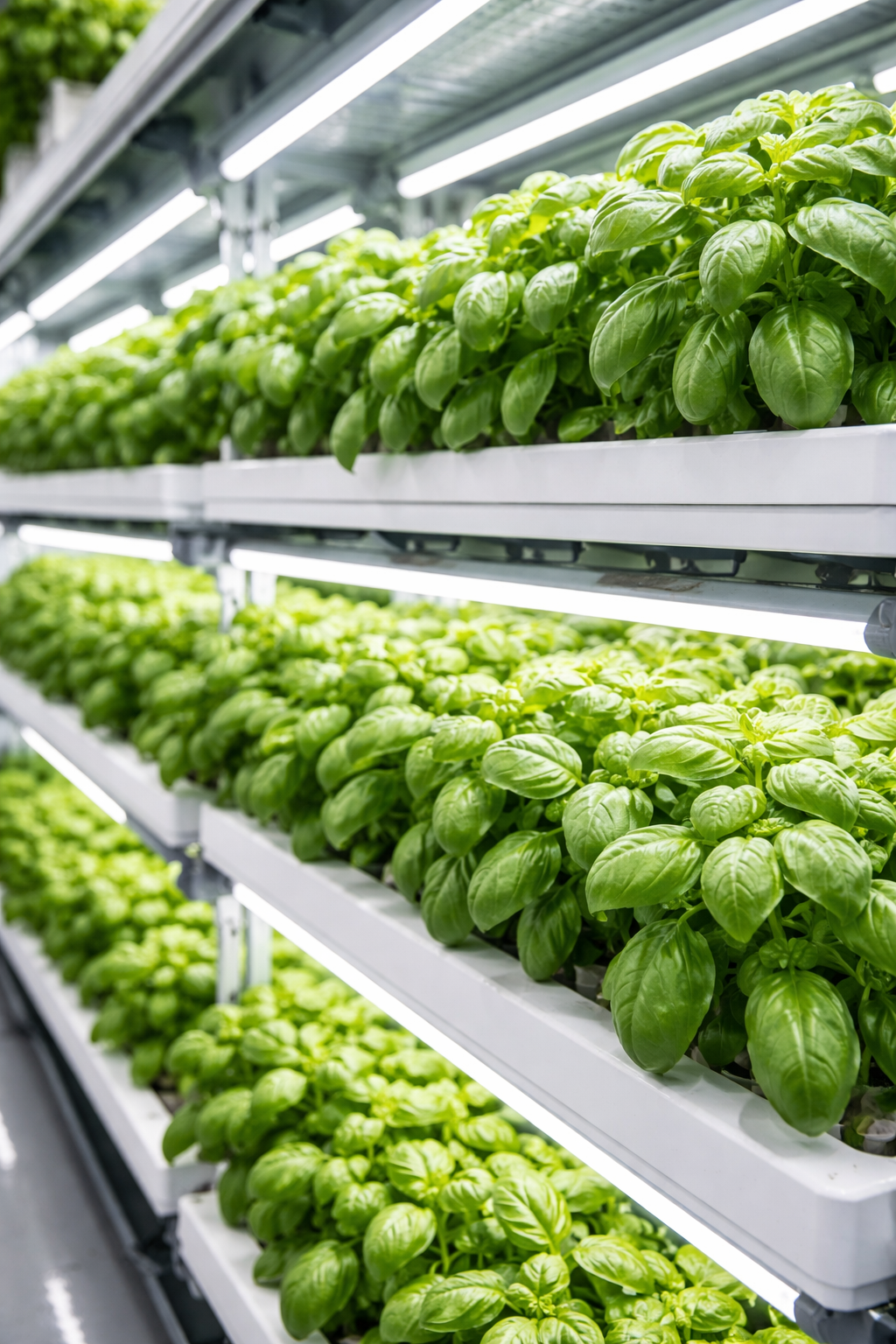
From an economic perspective, basil remains one of the most commercially viable CEA crops due to its short growth cycle, high unit value, and year-round demand. The herb’s shelf life can be significantly extended through localised, just-in-time production models, reducing the environmental costs of long-distance transport and refrigerated storage. Nonetheless, profitability depends on careful management of energy costs, particularly those associated with LED lighting and climate control.
Sustainability in basil production also extends to substrate choice and nutrient recycling. Many growers now employ biodegradable root supports such as coir or hemp mats in place of rockwool. Closed-loop nutrient systems, combined with ultraviolet sterilisation and filtration, reduce both water use and the risk of pathogen accumulation. Additionally, the economic value of basil derives not only from biomass but also from its volatile oil profile, which determines aroma and flavour intensity. Indoor plant production provides opportunities to manipulate light spectra, nutrient composition, and stress exposure to enhance these secondary metabolites.
The Broader Role of Basil in CEA Research and Education
Basil’s adaptability and responsiveness make it a staple of both commercial operations and research programmes exploring plant-environment interactions. Its rapid growth cycle allows researchers to model the effects of specific environmental variables within short experimental timeframes. Moreover, basil’s broad genetic diversity supports breeding initiatives aimed at improving aroma intensity, pest resistance, and morphological traits suited to vertical systems.
In educational contexts, basil serves as an excellent teaching species for hydroponic design, nutrient formulation, and digital farm management. Its visual and aromatic appeal also helps to bridge technical and public understanding of indoor agriculture, providing a relatable example of how CEA can produce sustainable, high-quality food without dependence on arable land.
Conclusion
Growing basil in CEA represents one of the most successful applications of vertical farming technology to date. The crop’s physiological resilience, rapid turnover, and high market value make it a strategic entry point for both new growers and researchers. More broadly, basil illustrates the principles of controlled-environment design: how light, air, water, and nutrients can be orchestrated to achieve consistent and measurable outcomes. As CEA continues to evolve towards greater automation and precision, basil will remain a benchmark species for understanding and advancing the science of indoor crop production.