Understanding the importance of vertical farming in addressing global food and environmental challenges
Controlled Environment Agriculture (CEA) and vertical farming are attracting growing attention across the agricultural, scientific, and investment communities. The importance of vertical farming lies not in novelty, but in its capacity to respond to critical, mounting pressures: food insecurity, resource scarcity, land degradation, urbanisation, and climate volatility. These challenges demand a rethinking of how, where, and at what scale food can be grown sustainably. CEA and vertical farming offer one such reimagining; allowing food production to become more precise, localised, and less vulnerable to external shocks.
A Response to Growing Pressures on Traditional Agriculture
Conventional open-field agriculture is increasingly strained by the cumulative impacts of climate change, declining arable land, water scarcity, and soil degradation. According to the Food and Agriculture Organization (FAO), over one-third of the world’s soils are already degraded, and the agricultural sector is responsible for approximately 70% of global freshwater withdrawals. At the same time, the global population is projected to reach nearly 10 billion by 2050, with the majority living in urban areas. This demographic shift presents a logistical and ecological dilemma: how can food be produced closer to where it is consumed, using fewer resources?
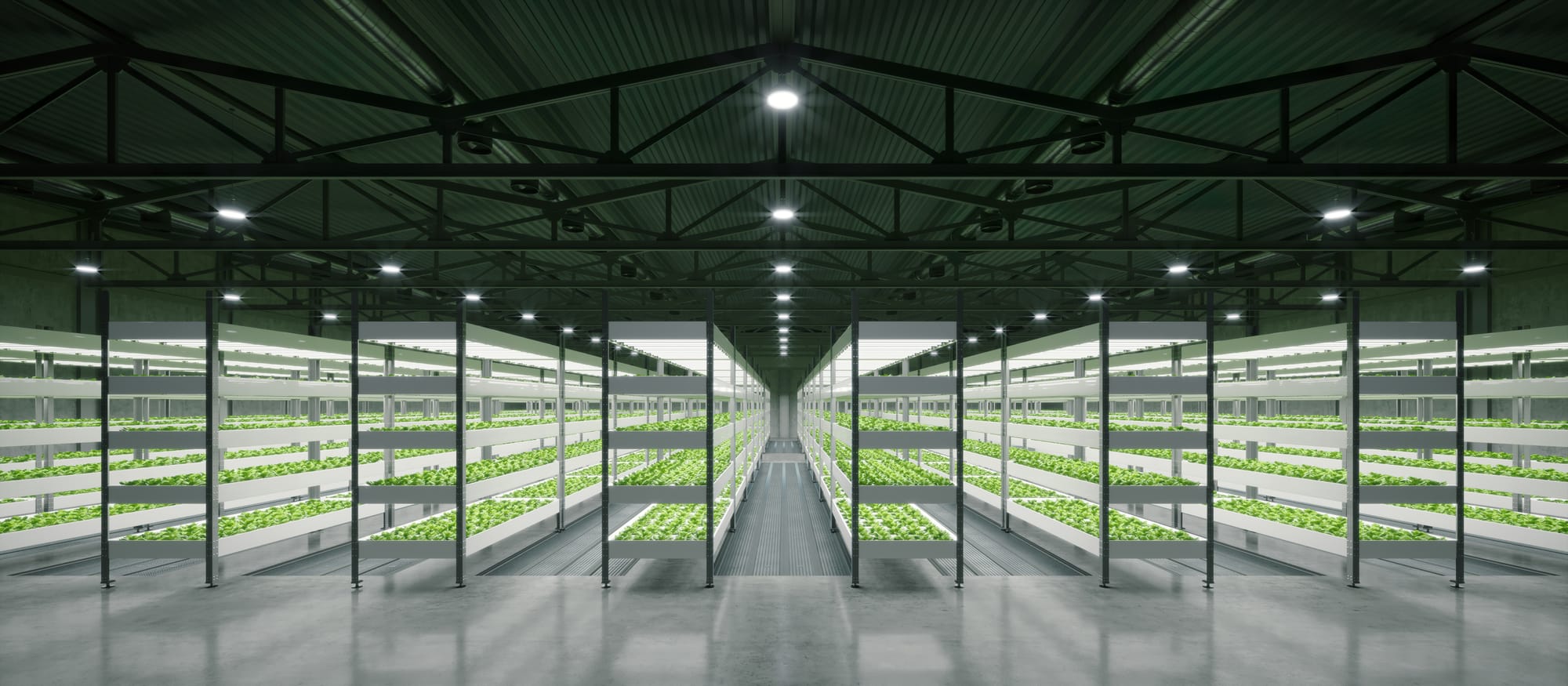
Vertical farming, as a subset of CEA, aims to address this by moving food production into urban and peri-urban environments, using stacked layers in climate-controlled settings. These systems can drastically reduce land use, eliminate dependence on seasonality, and significantly lower the water input required per kilogram of produce. In hydroponic vertical farms, for example, water use can be up to 90% less than in traditional soil-based farming. Moreover, these systems can be deployed almost anywhere: from repurposed warehouses and greenhouses to modular shipping containers and purpose-built urban farm towers.
Climate Resilience and Year-Round Production
One of the clearest advantages of vertical farming lies in its insulation from external environmental conditions. Extreme weather events, such as droughts, floods, storms, are becoming more frequent and intense due to climate change, creating volatility in agricultural yields. In contrast, CEA facilities maintain optimal conditions for crop growth throughout the year, allowing for consistent output regardless of climate or season. This continuity is particularly valuable for crops with short shelf lives and high perishability, such as leafy greens, herbs, and strawberries.
For countries with limited arable land or harsh climates, (i.e. Singapore, the UAE, or parts of Scandinavia) vertical farming provides an opportunity to enhance food security without compromising environmental sustainability. It also allows for greater independence from long global supply chains that are increasingly susceptible to disruption, whether due to geopolitical conflict, pandemic shocks, or logistical failures.
Resource Efficiency and Environmental Benefits
Vertical farms are designed to use fewer inputs per unit of output. By growing crops in a closed or semi-closed system, these operations can precisely control water, nutrients, light, temperature, and carbon dioxide levels. Waste can be minimised or even repurposed; in advanced systems, nutrient runoff is recaptured and reused, while CO₂ produced by nearby industrial activities can be channelled into plant-growing environments to enhance photosynthesis.
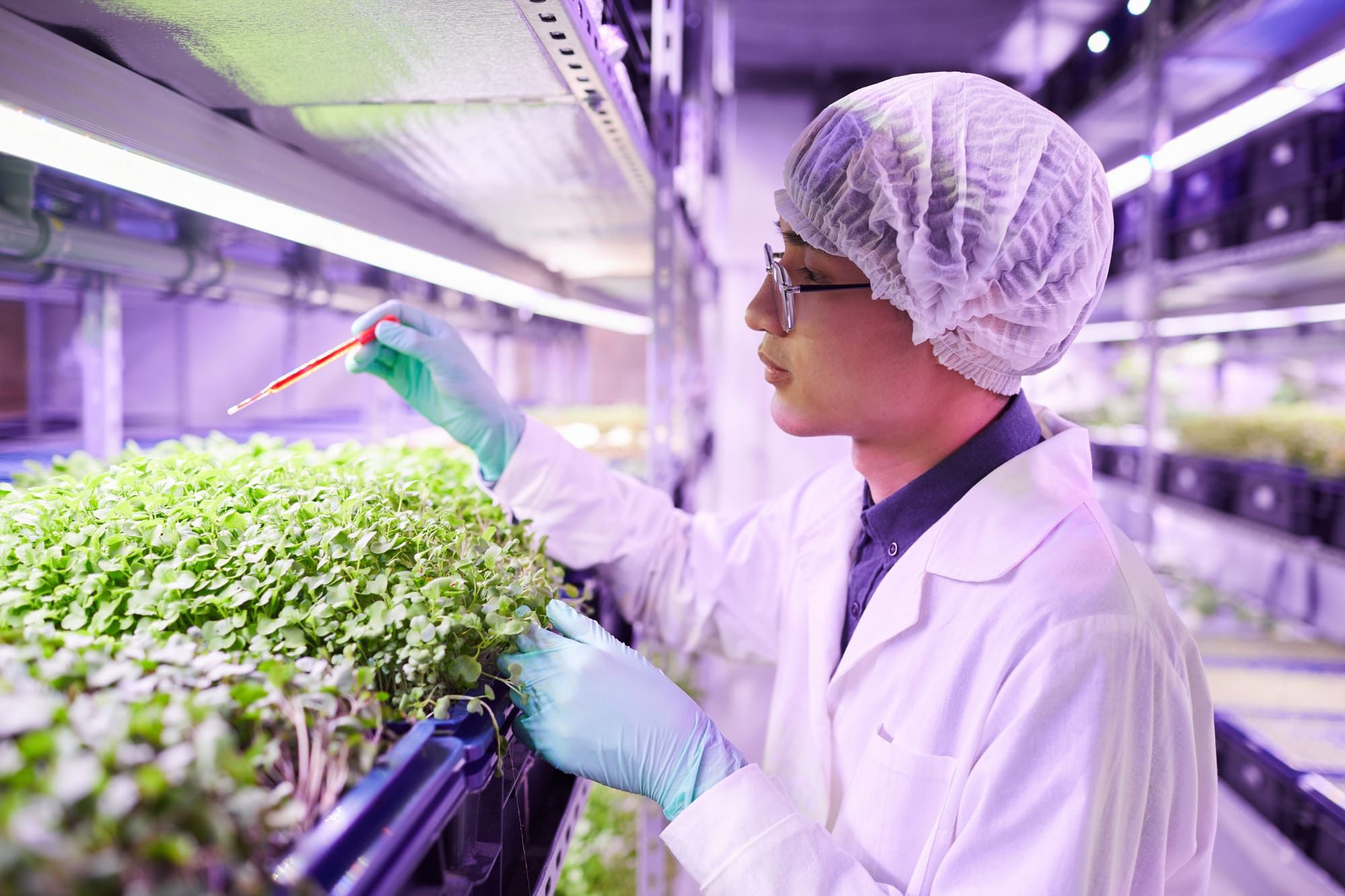
This degree of control also allows for the elimination of most pesticides and herbicides, which are not only environmentally damaging but also increasingly restricted under EU and UK regulations. In a CEA facility, plant health can be monitored using advanced sensors, imaging, and machine learning tools to detect disease or stress early and accurately, enabling targeted, minimal intervention.
From an emissions standpoint, there are trade-offs. While energy use for artificial lighting and climate control remains a significant consideration, improvements in LED efficiency and the integration of renewable energy sources are steadily improving the energy balance. In many urban contexts, the environmental cost of food transport (so-called “food miles”) is also reduced, cutting associated emissions and reducing spoilage.
Quality, Yield, and Consistency for a Changing Market
CEA and vertical farming also offer tangible benefits in crop quality, yield consistency, and the ability to meet evolving consumer demands. With greater control over environmental variables, vertical farms can produce crops with uniform taste, appearance, and nutritional profile, regardless of time of year. Yields per square metre often exceed those of conventional systems by orders of magnitude, especially for fast-growing, high-turnover crops.
This level of control is also conducive to innovation. It allows growers to experiment with new crop varieties or adjust flavour and nutritional content through “climate recipes”, specific combinations of light, temperature, and nutrients. These possibilities are already being explored in research-led urban farms and academic-industry partnerships, where the lines between agriculture, technology, and food science are increasingly blurred.
Urban Integration and the Future of Food Systems
Perhaps one of the most forward-looking aspects of vertical farming is its potential integration within urban infrastructure. As cities become more densely populated, embedding food production within or near consumption hubs may become not just practical but necessary. Urban vertical farms can supply nearby markets, retailers, and restaurants directly, shortening supply chains and providing fresher produce with longer shelf lives.
They can also contribute to urban resilience and public engagement with food systems. In educational, community-based, or municipal projects, vertical farms serve as visible reminders of where food comes from and how it is grown; something often absent from modern urban life. Their presence may help re-establish a connection between consumers and production systems, particularly in regions where agricultural heritage has been lost or obscured.
Ongoing Challenges and Considerations
Despite these advantages, vertical farming is not without its constraints. Energy consumption remains a central concern, especially where fossil-fuel-based power is the primary electricity source. The high capital costs of setting up technologically advanced CEA systems also pose barriers to entry, particularly for smaller growers or those in less affluent regions. Furthermore, while leafy greens dominate current vertical farming portfolios, expanding to staple crops such as cereals and tubers presents biological and economic hurdles not yet resolved.
There are also broader questions to consider: What is the optimal scale and business model for vertical farming? How can it complement, rather than compete with, rural agriculture? What regulatory frameworks are needed to support its responsible growth? And crucially, how will this sector evolve as energy grids decarbonise, urban planning shifts, and technological capabilities expand?
Conclusion: Towards a More Resilient Agricultural Future
The importance of vertical farming lies in its capacity to reframe agricultural production in the face of urgent global challenges. As part of the broader CEA landscape, it presents a promising, if not yet comprehensive, solution for improving food security, resource efficiency, and climate resilience. Its integration into future food systems will require ongoing technological innovation, policy support, and public engagement—but its relevance is only likely to increase as the pressures on traditional agriculture intensify.
What role will vertical farming ultimately play in the global food system? The answer is still unfolding, but its significance is already clear: it is not just a technical innovation, but part of a wider rethink of how food is produced, distributed, and valued in the 21st century.