As global food systems face intensifying pressure from climate volatility, urbanisation, and resource scarcity, future technology in Controlled Environment Agriculture (CEA) and vertical farming is emerging as a focal point of innovation. These systems promise to reshape how we produce food by tightly controlling environmental variables and decoupling agriculture from traditional land and climate constraints. The future of CEA technology is not merely an abstract vision; it is already taking shape through the integration of advanced hardware, intelligent systems, and data-driven processes that optimise every aspect of crop production. From next-generation lighting solutions to autonomous robotics and real-time biosensors, the technological evolution of CEA is setting new standards in efficiency, productivity, and sustainability.
The Role of Future Technology in a Controlled Environment
CEA systems differ fundamentally from conventional open-field agriculture by removing uncertainty from the equation. Technologies that enable precision control over temperature, humidity, light spectra, carbon dioxide levels, and nutrient delivery form the core of these systems. However, future technology in this space goes beyond basic control mechanisms: it involves a convergence of digital intelligence, automation, and materials science that allows growers to respond to minute changes in crop physiology and environment in real time.
For example, adaptive climate control systems now use machine learning algorithms to regulate environmental parameters based on plant feedback loops, rather than pre-set static conditions. This shift from reactive to predictive control enables finer tuning of microclimates tailored to specific crops and even cultivars. Similarly, nutrient delivery systems are evolving through the use of fertigation models that respond dynamically to changes in plant uptake, guided by continuous monitoring of root-zone chemistry.
Intelligent Monitoring and Data-Driven Decision Making
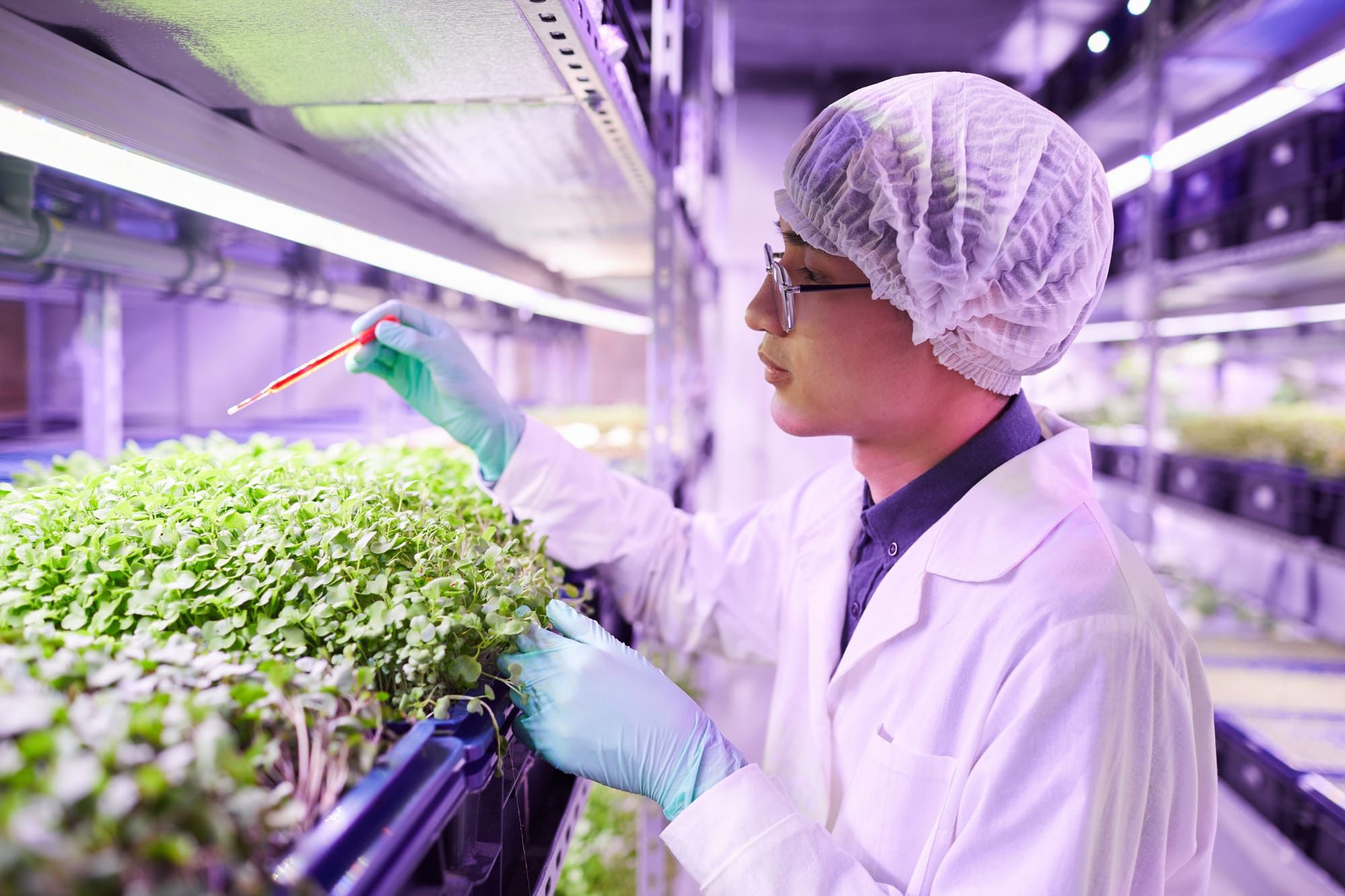
Data is fast becoming the most valuable input in CEA. Sensors that measure variables such as leaf temperature, transpiration rates, light absorption, and gas exchange are central to the development of intelligent growing environments. This wealth of data is processed by software platforms that support growers with actionable insights: identifying early signs of stress, predicting yield trajectories, and suggesting interventions to optimise growth.
One of the key developments in this area is the integration of computer vision with AI to automate phenotyping and disease detection. Cameras mounted within growth chambers or along vertical racks capture detailed images of plant morphology, which are then analysed for patterns that indicate suboptimal conditions or pathogens. These systems are increasingly moving towards autonomous crop management, where the feedback loop from observation to intervention is fully automated.
Moreover, digital twins (virtual models that mirror real-time physical conditions of a farm) are beginning to provide a simulation environment for testing interventions without risking crop failure. By modelling various scenarios, growers can make informed decisions about resource use, crop cycles, or even capital investment.
Advances in Lighting and Energy Efficiency
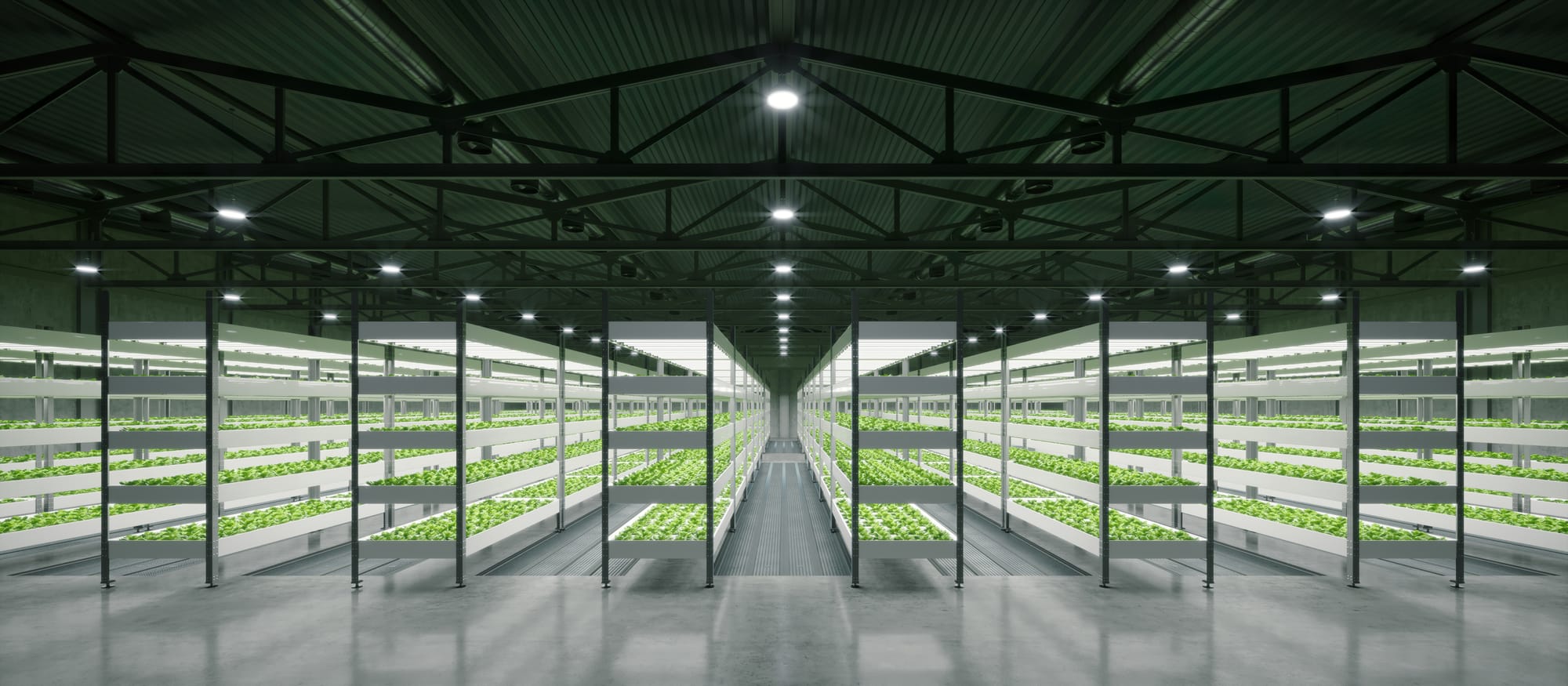
Light is both an essential input and one of the largest energy expenditures in vertical farming. Recent progress in lighting technology is reshaping this dynamic. Light-emitting diodes (LEDs), have the potential to offer programmable spectrum configurations, which can allow growers to tailor wavelengths to different stages of plant growth. Studies have shown that specific red:blue ratios, supplemented by far-red or green light, can influence not only biomass accumulation but also nutritional quality and taste.
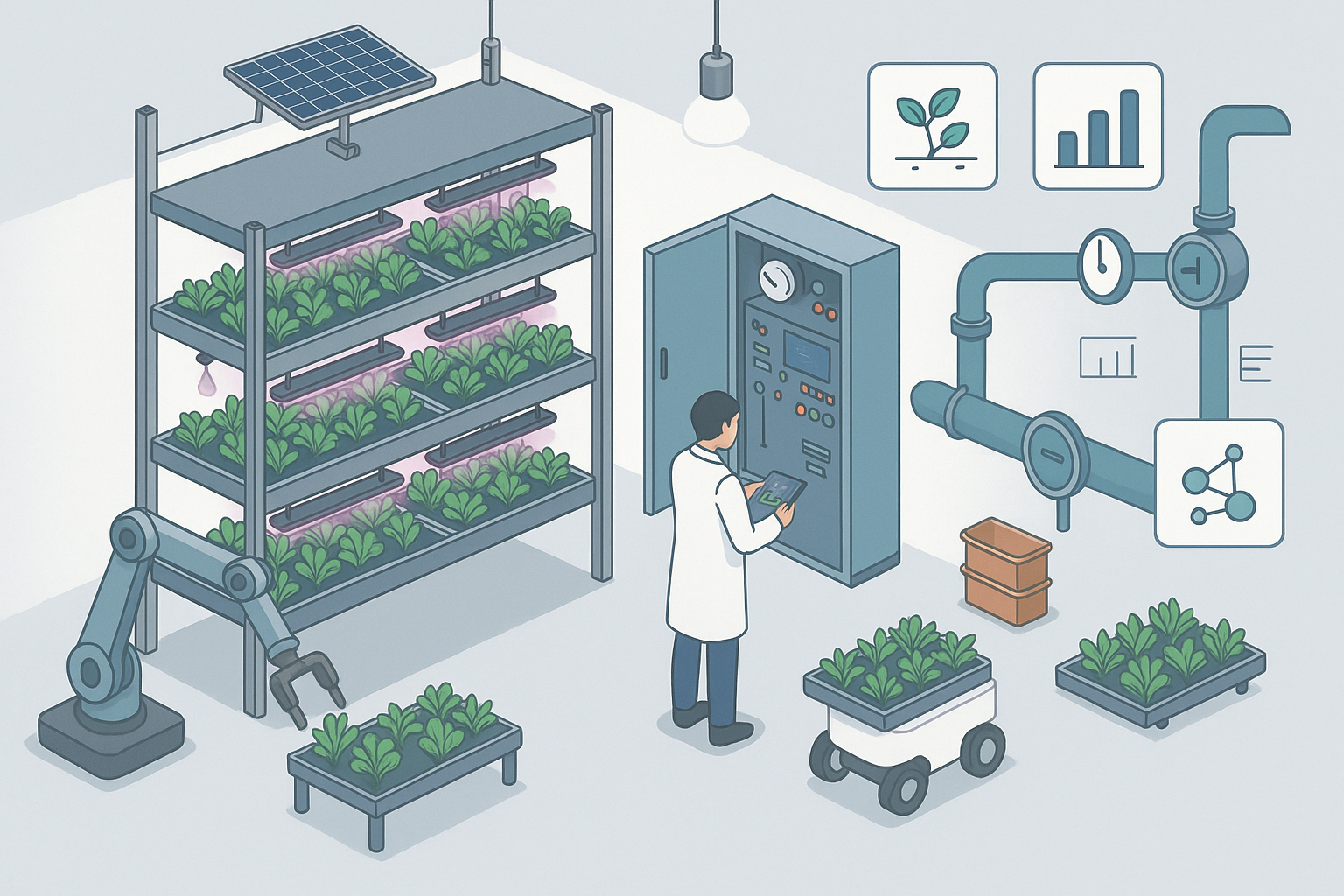
In tandem with spectrum optimisation, intelligent lighting control systems are being developed to adjust photoperiods and intensities based on real-time feedback, not merely time schedules. These advancements help reduce energy use while maintaining or even improving crop yields. Combined with renewable energy integration and improved insulation materials, energy-positive vertical farms are beginning to emerge, which is an important milestone for the long-term economic viability of the sector.
Robotics and Automation in Crop Handling
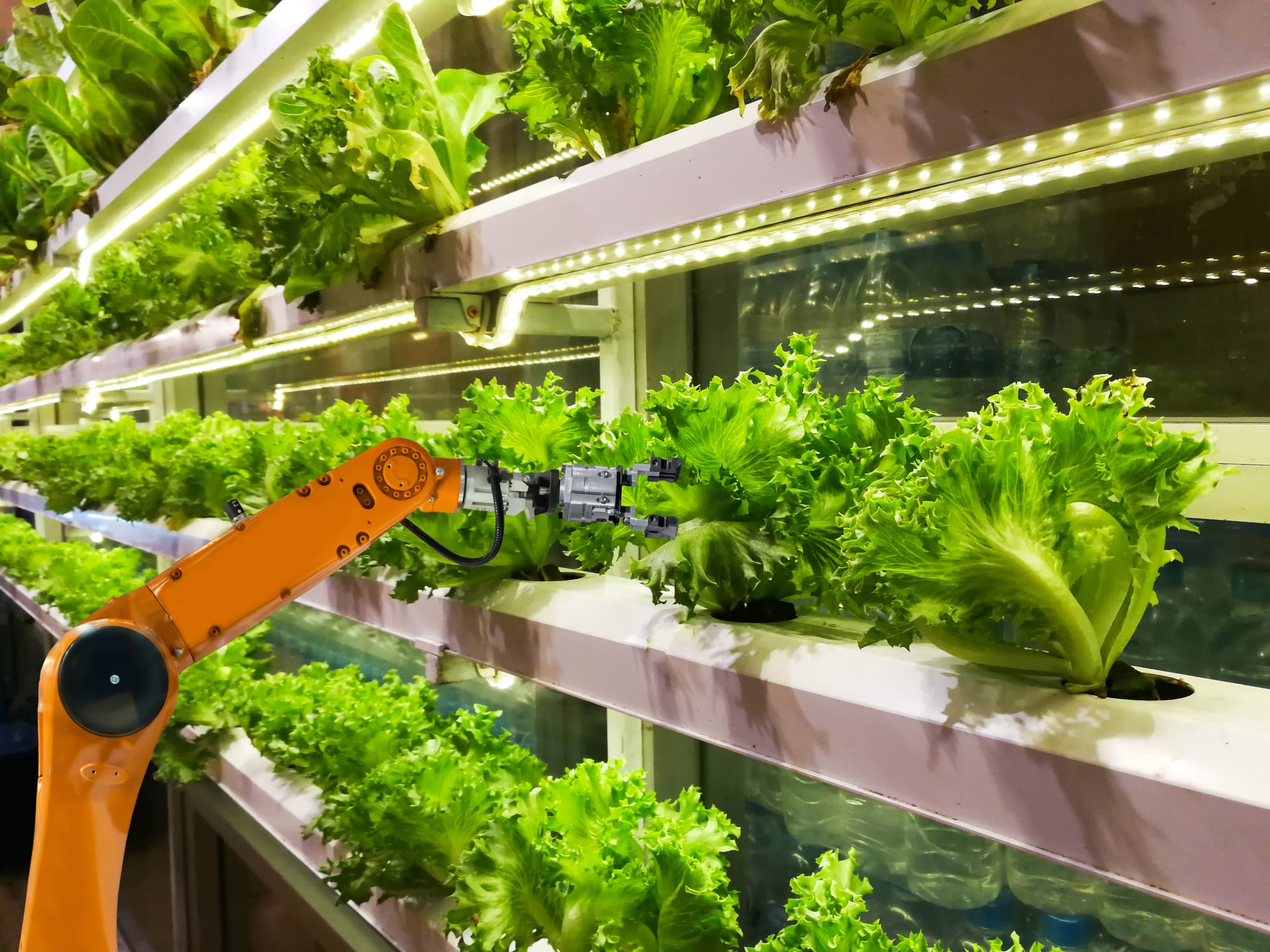
Labour costs and availability remain persistent challenges for CEA operations, particularly in urban settings. Automation is increasingly being deployed to mitigate this constraint, with robotic systems taking on roles in seeding, harvesting, packaging, and even pollination.
Robotic arms fitted with grippers and machine vision are now able to identify ripeness, handle delicate crops without damage, and work around the clock. In some systems, mobile robots navigate vertically-stacked aisles, conducting maintenance or repositioning trays for optimal light exposure. This mechanisation does not eliminate the need for skilled human labour but instead reallocates it towards supervisory, technical, and analytical roles, reflecting a broader trend of agricultural upskilling.
Sustainable Water and Nutrient Management
Resource circularity is a cornerstone of CEA, and future technology is driving new efficiencies in water and nutrient use. Closed-loop hydroponic and aeroponic systems can already reduce water consumption by up to 95 percent compared to traditional farming. However, innovations are now focusing on micronutrient recovery, microbial community management, and real-time chemical profiling.
For instance, nanotechnology is being trialled for the development of ultra-sensitive sensors that monitor trace elements and detect potential toxicity or deficiency before symptoms manifest. Biological filtration systems that incorporate beneficial microbial consortia are also gaining attention, both for nutrient cycling and pathogen suppression. These approaches signal a shift towards biologically-integrated, self-regulating systems.
Materials Science and Modular Infrastructure
The physical infrastructure of vertical farms is also evolving. Lightweight, durable, and thermally efficient materials are being developed to construct modular units that can be rapidly deployed in diverse settings, from urban warehouses to desert outposts. Advanced coatings and surface treatments reduce contamination risks and improve reflectivity, contributing to overall efficiency.
Some of the most exciting developments in this area involve bio-based and recycled materials, which offer an opportunity to lower the embodied carbon footprint of indoor farms. The future may well see fully recyclable or biodegradable growth substrates, energy-efficient composites for growth chambers, and transparent solar panels that both admit light and generate power.
The Road Ahead: Integration and Interoperability
Despite remarkable progress, many challenges remain. A key hurdle is the interoperability of different technologies: sensors, actuators, data platforms, and control systems must work seamlessly together for CEA to reach its full potential. Standardisation of data formats and communication protocols will be essential for achieving this level of integration.
Furthermore, affordability remains a concern. Many of the most advanced technologies are still cost-prohibitive for smaller growers or start-ups. Reducing capital expenditure through open-source platforms, modular design, and scalable components will be necessary to ensure wider adoption. Regulatory frameworks will also need to evolve to accommodate the novel characteristics of CEA operations, particularly in relation to food safety, energy use, and data privacy.
A Future Shaped by Innovation and Adaptation
The future of CEA technology will not be defined solely by the sophistication of its tools but by how effectively these tools are integrated into holistic systems that produce food sustainably, reliably, and affordably. As the sector matures, the emphasis is likely to shift from individual innovations to system-level optimisation, where environmental, economic, and social dimensions are considered together.
How will future innovations balance high-tech solutions with ecological stewardship? What role will artificial intelligence play in enabling fully autonomous farms? Can vertical farming become a cornerstone of urban food security, or will it remain a niche solution?
These questions will shape the direction of research, investment, and policy in the years to come. One thing is certain: the development of future technology in CEA and vertical farming is not a distant prospect, but a rapidly evolving frontier that demands attention, collaboration, and critical engagement.